Bonsai Tools for Beginners: What to Buy First
Published How we research
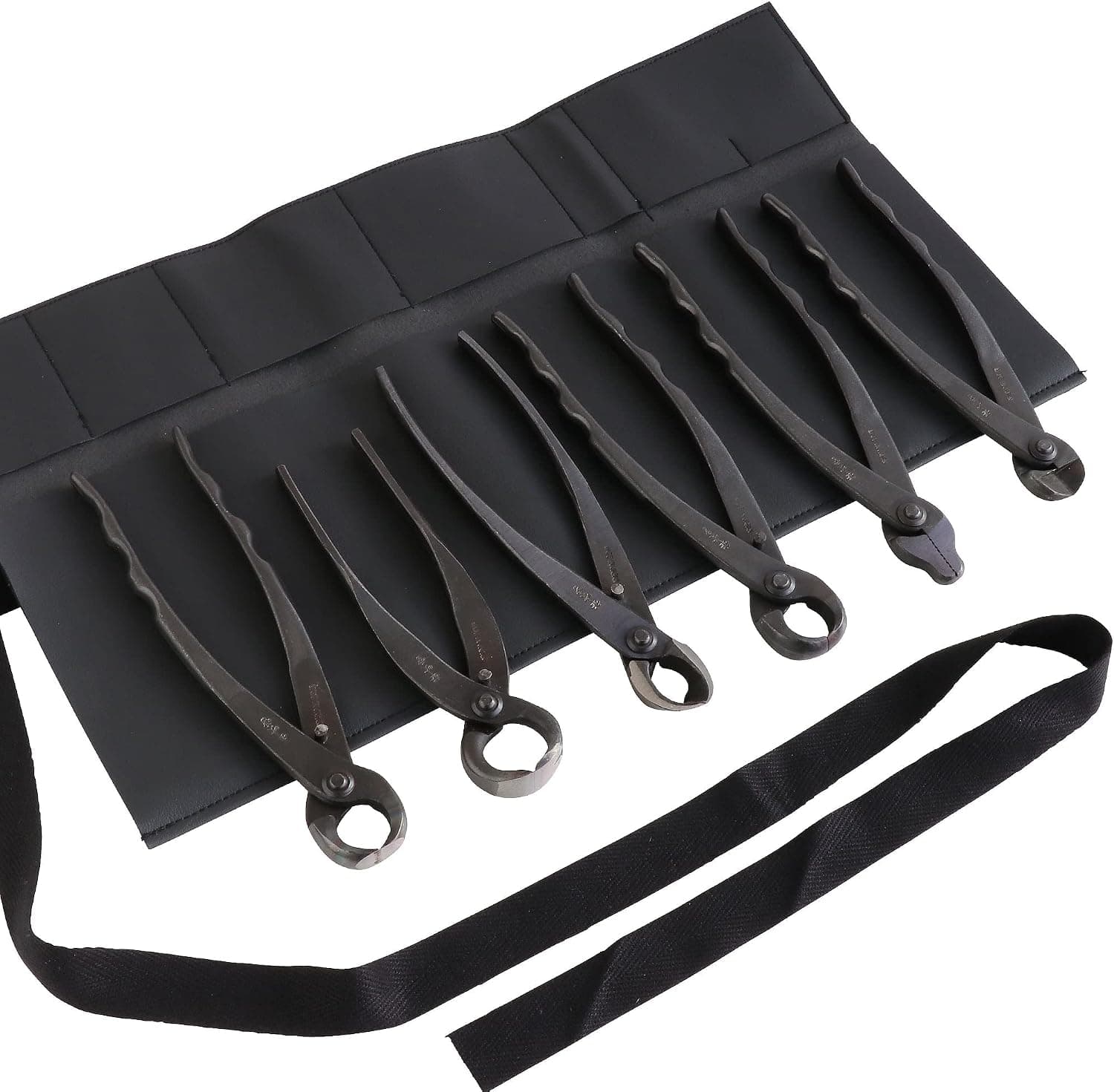
A beginner needs four things to do real bonsai work: a pair of bonsai shears, a concave cutter, a wire cutter and a few rolls of aluminum wire. Add a chopstick and a root hook at repotting time and you can prune, wire and repot any small tree. Everything else in a 15-piece kit is either a refinement tool for later years or a filler item. This article goes through the essential tools in the order you will need them, explains what each does that a household tool cannot, and covers the choice between a boxed set and buying single tools.
Shears are the tool you will use every week
Most bonsai work is trimming shoots, leaves and twigs, and that is shear work. Bonsai shears have short blades and long or wide handles, which lets you reach inside a dense canopy and cut one twig without disturbing the ones around it. Kitchen scissors and garden pruners have thick blades that cannot get in close, and bypass pruners crush thin green shoots rather than slicing them.
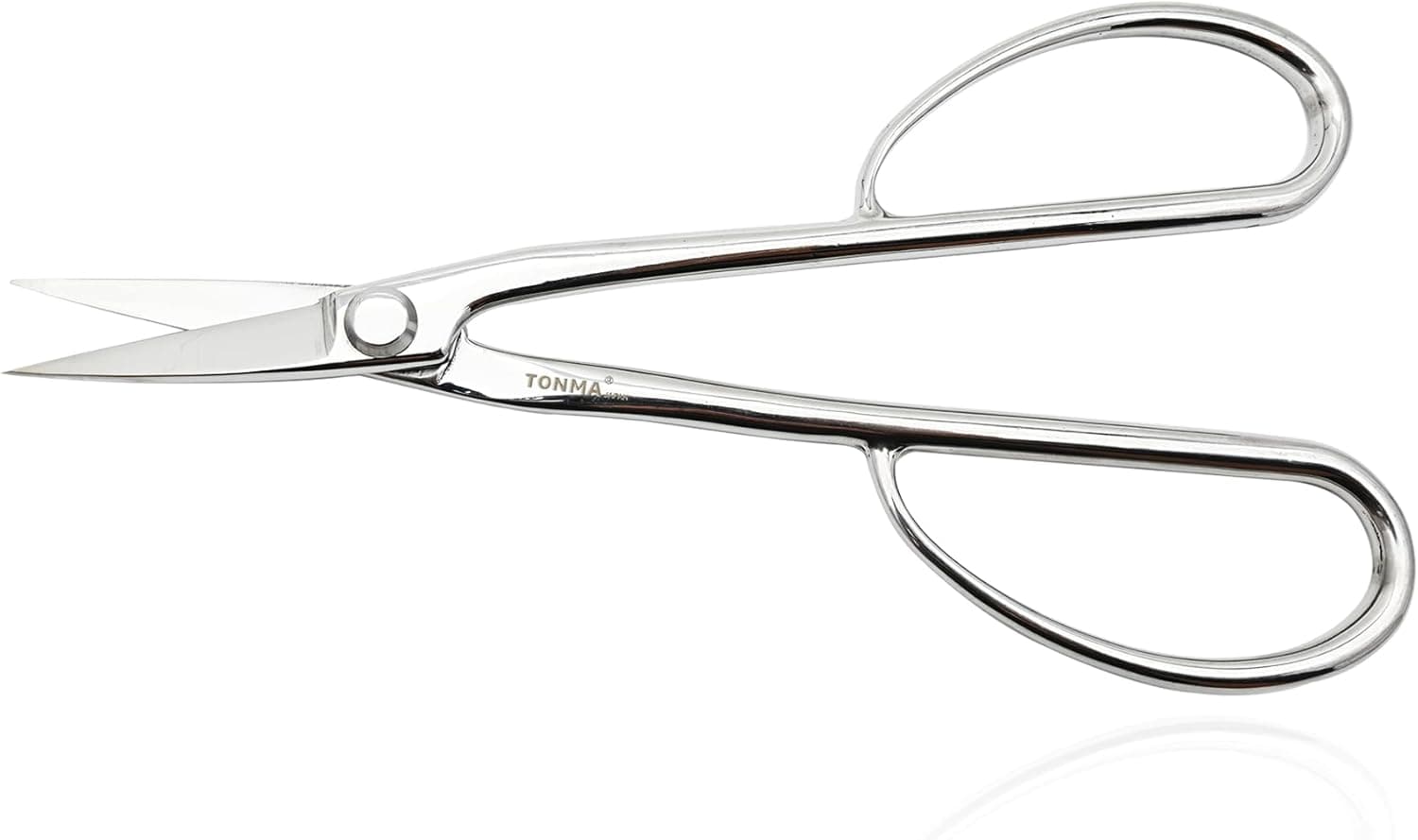
Two patterns cover nearly everything. Long-handled trimming shears, around 7 to 8 inches overall, are slim and precise for fine twigs and for work deep in the tree. Butterfly shears have large looped handles and stouter blades and will cut thicker twigs and light roots. If you buy one pair, a general-purpose pair around 7 inches is the usual first choice. Keep one rule from day one: the good shears never cut wire and never cut roots in gritty soil.
A concave cutter is the one specialist tool worth buying early
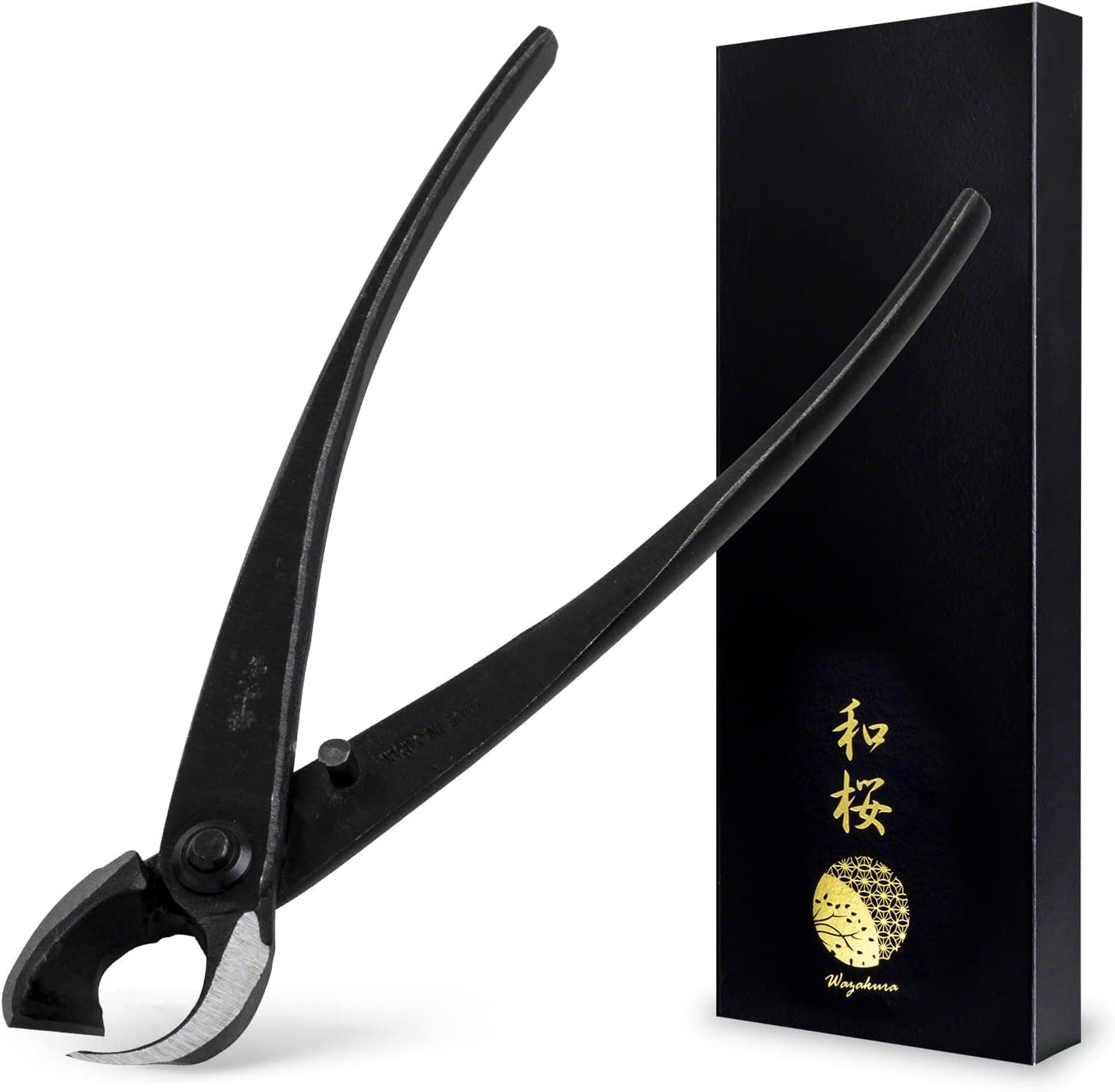
When you remove a branch with shears or pruners, a stub is left behind, and the tree heals over it as a bump. A concave cutter has curved jaws that bite slightly into the trunk and leave a shallow hollow instead. As the callus rolls in, the hollow fills and the scar finishes flat with the trunk. No household tool makes this cut, which is why the concave cutter is the first specialist tool most growers buy.
The standard size is about 8 inches (200 mm) long, which handles branches up to roughly half an inch thick on most species. Smaller cutters suit shohin trees and larger ones exist for heavy stock, but the 8 inch size is the one to start with. Use it for branches only. Cutting wire with a concave cutter chips the edge, and a chipped concave cutter tears bark instead of cutting it.
Wire and a proper wire cutter
Wiring is how branches are set into position, and beginners should start with anodized aluminum wire. It is soft, forgiving to apply and easy to remove. The working rule is that the wire should be about one third as thick as the branch, so an assortment of 1.0, 1.5, 2.0 and 2.5 mm rolls covers the branches on most small and medium trees. Copper holds harder for its thickness but is stiffer to apply, and it can wait until you are comfortable with aluminum.
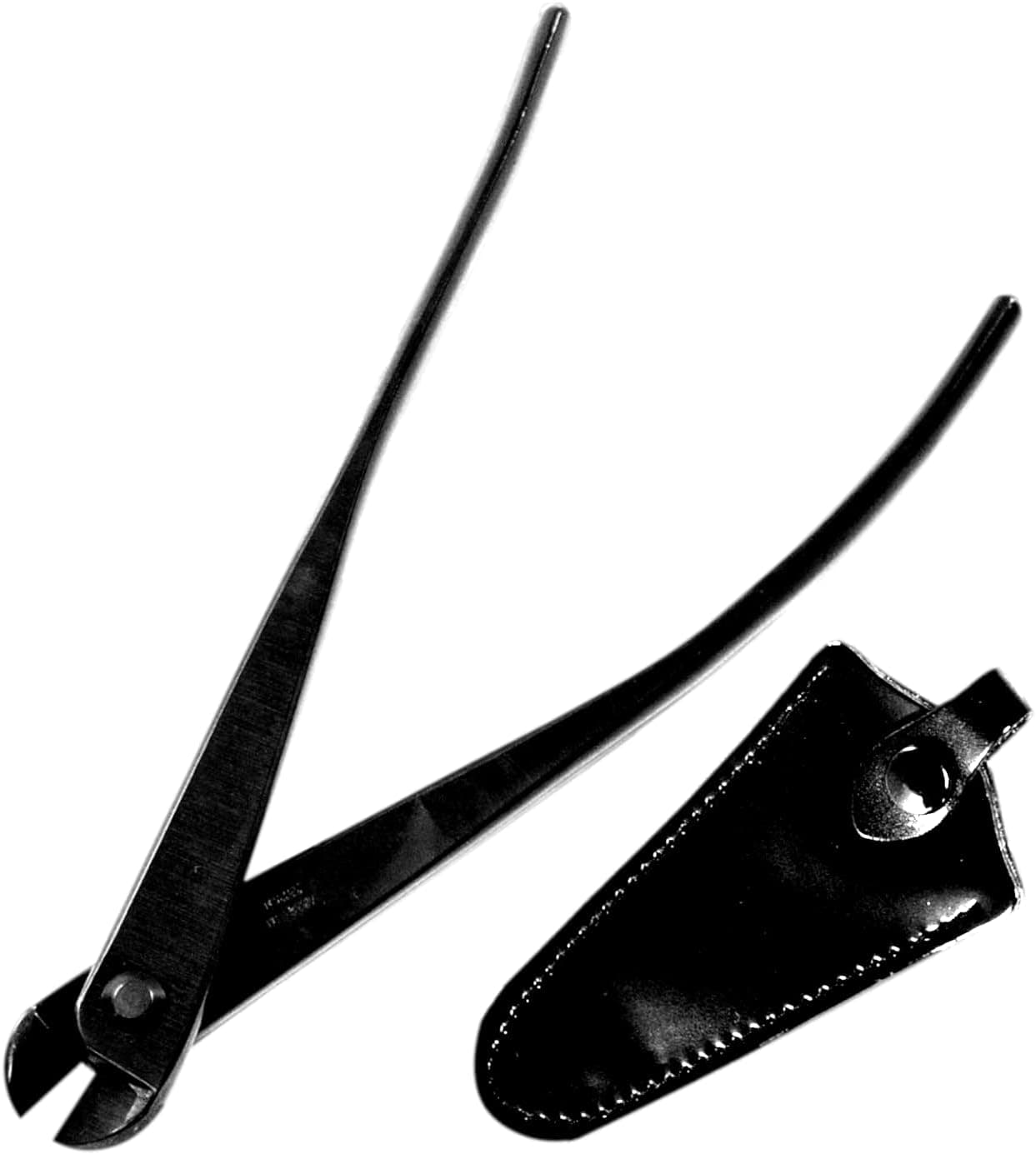
A bonsai wire cutter has short jaws with a blunt, rounded nose. That shape lets you cut wire right against the bark without the tip digging into the branch. Ordinary side cutters have angled, pointed jaws, so it is hard to cut wire that lies tight on a branch without the tips marking the bark. Wire should be cut off in short pieces at removal time, never unwound, so you will use this tool as much when wire comes off as when it goes on.
Repotting tools you can mostly improvise
Repotting happens only every one to two years for young trees and less often for older ones, so it does not justify much spending at the start. A wooden chopstick is the classic tool for working soil in between roots and for teasing out the old root ball. A single-prong root hook or a small root rake speeds up combing out compacted roots. An old pair of sturdy scissors or cheap shears handles root cutting, because soil grit blunts any edge it touches.
Two inexpensive supplies matter more than repotting tools: plastic drainage mesh to cover the pot holes, and wire to tie the tree into the pot so it cannot rock while new roots form. Tweezers with a spatula end are useful for weeding and pressing down moss or soil, and they usually come in any boxed set. A dedicated root shear, a soil scoop set and a sieve are worth adding once you repot several trees each spring.
Tool set or single tools, carbon or stainless
A boxed set is convenient and often cheaper per tool, but piece count is a poor guide to value. A 14 or 15 piece budget kit typically pads the count with a broom, a rake, several tweezers and a storage roll, while the tools that matter, the shears, concave cutter and wire cutter, are the same in a 5 or 6 piece set. A small set with those three tools in decent steel is a better buy than a large set of soft ones. Buying three single tools from a known maker costs more but lets you pick the size of each.
Most bonsai tools are sold in either carbon steel or stainless steel. Carbon steel, usually with a black finish, takes a very sharp edge and is easy to resharpen, but it rusts if it is put away wet or sticky with sap. Stainless steel resists rust and looks clean for years, and it usually costs more for the same pattern. For a beginner who will wipe and oil tools after use, carbon steel is the common choice. If your tools will live in a damp shed, stainless is the safer one.
Whatever you buy, care decides how long it lasts. Wipe sap off the blades after each session, dry them, and put a drop of light oil on the pivot and edges. Do not twist a cutter sideways in a cut, and do not use any cutting tool on something thicker than its jaws can close around easily. A fine sharpening stone will restore shears in a few minutes once they start to fold twigs instead of cutting them.
What can wait until later
Several tools in the catalogs are real tools with real uses, but not in your first year. A knob cutter has spherical jaws for hollowing out stubs and removing knuckles, and it becomes useful once you are correcting old pruning scars on thicker trunks. Jin pliers strip bark and crush fibers for deadwood work on conifers, and they double as wiring pliers. A folding pull saw is for branches and roots too thick for a concave cutter.
A turntable makes styling sessions easier on your back and lets you see the tree from every side, yet a lazy Susan or simply walking around the bench does the same job at the start. Branch benders, grafting knives and carving tools all belong to specific advanced techniques. Buy each of these when a tree in front of you needs it. Tools bought ahead of the need tend to sit in the roll and rust.
Frequently asked questions
What tools do I need to start bonsai? Bonsai shears, a concave cutter, a wire cutter and aluminum wire in a few thicknesses from 1.0 to 2.5 mm. For repotting, add a chopstick, a root hook, drainage mesh and an old pair of scissors for roots. That short list covers pruning, wiring and repotting on small and medium trees.
Are cheap bonsai tool kits worth it? A budget kit is fine for learning what each tool does, and it costs less than one good concave cutter. Expect softer steel that needs sharpening sooner and looser pivots. Judge a kit by its shears, concave cutter and wire cutter, not by the number of pieces, and replace those three first when you upgrade.
Is carbon steel or stainless steel better for bonsai tools? Carbon steel gets sharper and is easier to resharpen but rusts without care. Stainless steel resists rust and costs more. Both cut well when sharp. Choose carbon if you will wipe and oil your tools, stainless if they will be stored somewhere damp or you tend to put tools away dirty.
Can I use regular scissors and pruners on a bonsai? For light trimming of soft shoots, sharp scissors work. They cannot reach into tight spots as bonsai shears can, and garden pruners leave stubs where a concave cutter leaves a clean hollow. Ordinary wire cutters will cut bonsai wire, but their pointed jaws make it hard to cut close to the bark without marking it.
Products from this article
The highest-scoring picks from the buying guides mentioned above. Scores are our editorial assessment, not customer ratings.
+ Made in Japan carbon steel holds a sharp edge for clean cuts
From our guide: Best Bonsai Tool Sets
+ Micro serrated blades grip stems and avoid slipping on cuts
From our guide: Best Bonsai Shears
+ Hand forged Japanese steel keeps a keen edge for clean cuts
From our guide: Best Concave Cutters for Bonsai
+ Rounded head cuts wire flush without nicking the bark
From our guide: Best Bonsai Wire Cutters
Popular right now
- Common Bonsai Styles Explained and When to Use ThemArticle
- How to Bring Tropical Bonsai Indoors for WinterArticle
- One-third rule explainedGlossary
- Guy wire anchoring explainedGlossary
- Reviving a Neglected Bonsai Step by StepArticle
- Styling and Wiring KitCollection
Based on the last 28 days of search and visitor data.