Wazakura Hand Forged Bonsai Concave Branch Cutter, Made in Japan 8 inch (200mm), Japanese Gardening Tools, Straight Edge Black Review (2026)
Updated September 14, 2026 · Research-based review
Our verdict
Wazakura's hand forged 8 inch concave branch cutter uses S55C carbon steel and a straight edge to remove branches flush with the trunk for faster healing. The blade needs regular oiling to prevent rust, and the straight edge leaves a shallower hollow than round edge designs.
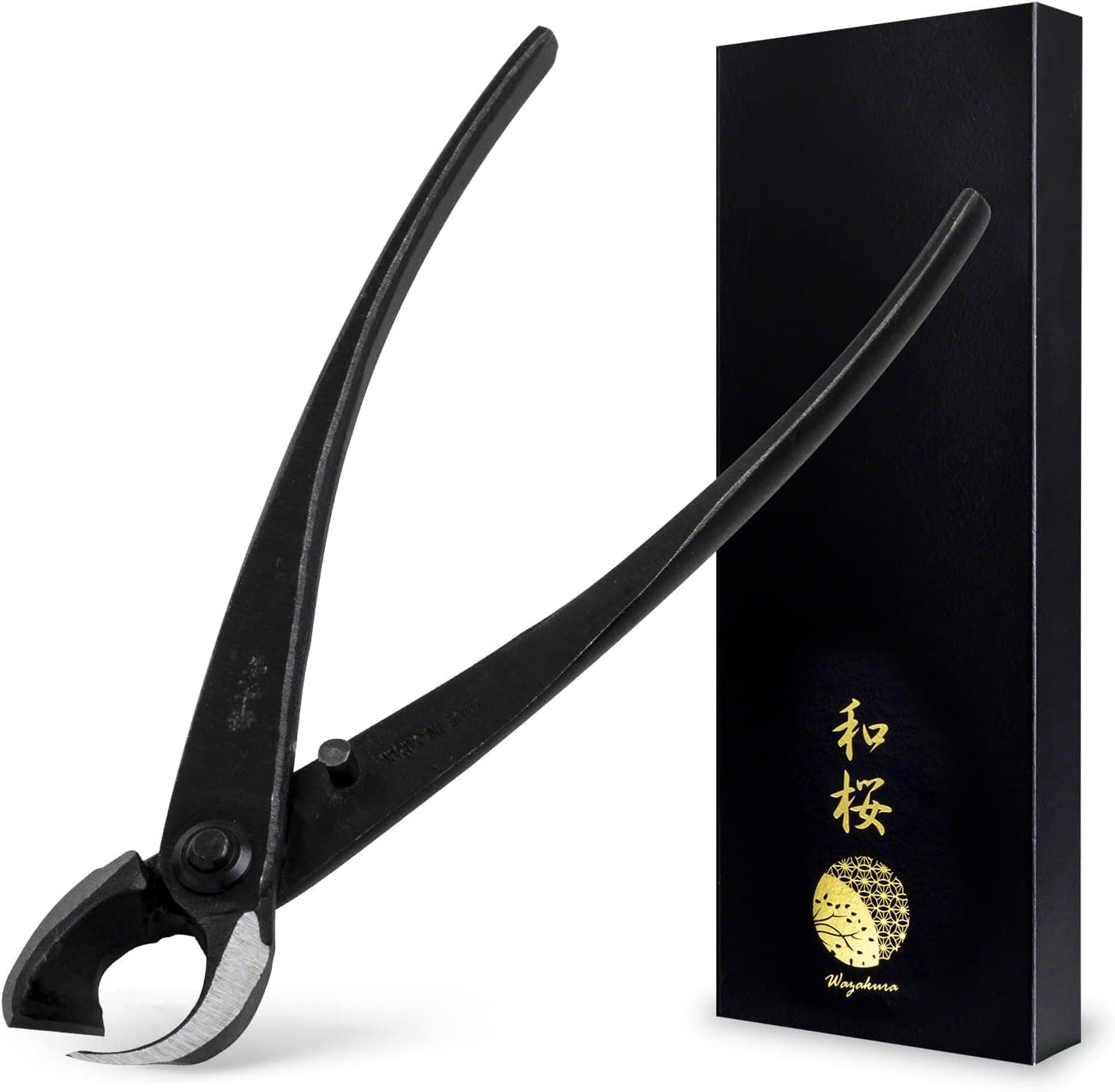
Wazakura's hand forged concave branch cutter made in Japan, 8 inch (200mm) with a straight edge in black.
Price range: $ (Budget)
What we liked
- + Hand forged Japanese steel keeps a keen edge for clean cuts
- + 8 inch length is the most versatile concave cutter size
- + Straight edge makes flush cuts close to the trunk
Trade-offs
- - Black carbon steel needs oiling to prevent rust
- - Straight edge leaves a less hollow cut than round-edge designs
Who this concave cutter is for
A concave branch cutter is one of the core tools in bonsai styling, used to remove unwanted branches in a way that leaves a shallow, healed over scar rather than a raised stub, and this 8 inch Wazakura version is sized for the branch range most hobbyists cut most often. Wazakura is a Japanese tool brand making bonsai tools since 2019 with artisans based in Sanjo, Niigata, a region with centuries of metalworking history, and the tool is hand forged rather than stamped from sheet steel. At 8 inches, the size sits at what the brand itself describes as its most versatile length, suiting growers with a handful of developing trees who need one reliable cutter for regular deadwood and branch removal rather than a specialist tool for one narrow task.
Construction and cutting capacity explained
The cutter is made from S55C carbon steel, heated and hand shaped by Sanjo artisans, then finished with a black coating, and measures roughly 7.87 by 1.96 by 0.78 inches with a 25mm blade length, weighing about 6.7 ounces. Wazakura rates its cutting capacity at 5/16 to 1/2 inch, meaning branches within that range should cut cleanly in one motion without excessive force on the handles. This particular version uses a straight edge rather than the rounder, more hollowed jaw shape found on some concave cutters, which produces a flatter, shallower recess at the cut site, still enough to encourage the wound to callus over cleanly but less dramatically concave than round edge alternatives.
Living with a carbon steel cutter
Carbon steel tools like this one cut and hold an edge well but are more reactive to moisture than stainless steel, so the black coating is a first line of defense rather than a substitute for care, and the blade should be wiped down and lightly oiled after use, especially after cutting sappy or wet branches. Wazakura's own maintenance guidance points to a sharpening oilstone and a sap eraser for keeping the edge and pivot clean between sessions. Stored dry, ideally with a thin film of oil on the blade, the tool should hold up well over repeated seasons, but growers who store tools in a humid shed or leave them out after a rainy pruning session risk surface rust developing faster than on a stainless equivalent.
How it compares with other concave cutters
KAKURI's 7 inch concave cutter uses a round curved blade rather than this Wazakura's straight edge, producing a deeper hollow cut in a slightly shorter, lighter tool, which suits growers who prioritize a more pronounced concave scar over an inch of extra reach. Senkichi's 8.3 inch cutter is close in size to this Wazakura pair and also uses high carbon forged steel, so the choice between the two often comes down to brand preference and jaw shape rather than a clear capability gap, since both are hand forged Japanese tools rated for similar branch diameters. Growers who want the least rust risk of the group would need to look outside carbon steel entirely, since none of these three concave cutters are stainless.
Verdict and who might choose differently
This 8 inch Wazakura cutter earns its site score of 8.6 out of 10 as a versatile, well made concave cutter suited to regular branch removal on developing bonsai, with hand forging and a documented cutting capacity that many unbranded alternatives do not state. The trade offs are the upkeep that any carbon steel tool demands and a shallower cut than round edge designs deliver. Growers who want the deepest possible concave scar should consider KAKURI's round bladed 7 inch cutter instead, and anyone unwilling to oil and dry a blade after every session should weigh whether a stainless tool, even without the same edge retention, might suit their routine better.
Frequently asked questions
What branch sizes can this cutter handle?
Wazakura rates the cutting capacity at 5/16 to 1/2 inch, so branches within that range should cut cleanly in one pass.
What steel is the blade made from?
It is made from S55C carbon steel, heated and hand forged by artisans in Sanjo, Niigata, then finished with a black coating.
Does the blade rust?
As a carbon steel tool it can develop rust if left wet, so wiping the blade down and applying a light coat of oil after use is recommended.
How is this different from a round edge concave cutter?
This version has a straight edge, which leaves a flatter, shallower recess at the cut site than a round curved blade design.
Prices change often, so check the current price and availability on Amazon.
Check price on AmazonBonsai Nest may earn a commission from the link above.