How Big Do Bonsai Trees Get? Size Classes and What Limits Growth
Published How we research
A bonsai can be anything from a tree small enough to sit on your palm to one that needs two people to lift. Most trees sold for homes land somewhere between 6 and 24 inches tall, but there is no single official limit. What matters is that the tree stays in proportion to its pot and keeps its shape through regular trimming. Left alone, the same plant would try to grow to the size of its species. Understanding the size classes and the things that hold a tree back helps you pick one that fits your space and keep it that way.
Products from this article
The highest-scoring picks from the buying guides this article links to. Scores are our editorial assessment, not customer ratings.
As an Amazon Associate we earn from qualifying purchases. This does not change our picks. Affiliate disclosure
New to Prime? Try Prime free for fast, free shipping on eligible items.
+ Dwarf jade tolerates dry indoor air and missed waterings very well
From our guide: Best Bonsai Starter Trees for Beginners
+ Repotting mat keeps soil contained when working indoors
From our guide: Best Bonsai Pots
+ Micro serrated blades grip stems and avoid slipping on cuts
From our guide: Best Bonsai Shears
+ Named cultivar Juniperus procumbens Nana tells you exactly what you are getting
From our guide: Best Bonsai Starter Trees for Beginners
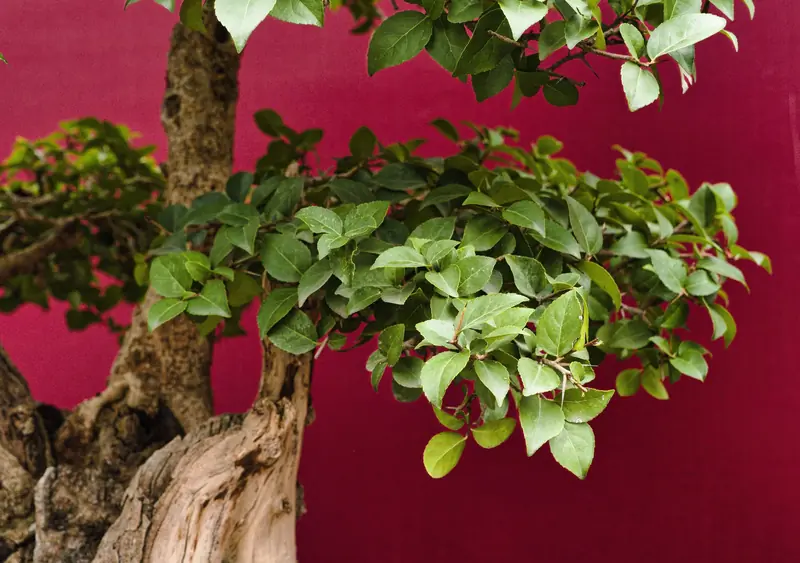
The common bonsai size classes
Bonsai growers group trees into rough size classes, usually by height. Names and exact cutoffs vary between clubs and countries, so treat the numbers below as approximate rather than a fixed standard.
The smallest trees, often called mame, are only a few inches tall and can fit in the palm of a hand. Shohin trees are small enough to carry in one hand and are often described as around 8 inches or less. Medium trees, commonly called chu, sit roughly in the 12 to 24 inch range, and are the classic size for a tabletop or stand.
Larger trees, sometimes called dai or omono, run from about 24 inches upward and can reach several feet. They are heavy once the pot is full of wet soil, so they usually live on sturdy benches or the ground rather than a windowsill.
Keep in mind that class names are a convention among hobbyists, not a rule. If a nursery labels a tree as small or medium, check the actual height in inches before you buy, because labels are applied loosely.
What actually keeps a bonsai small
No single trick does it. A bonsai stays small because several limits work together. The pot restricts the roots, root pruning at repotting time keeps the root mass in check, and trimming removes the shoots that would otherwise extend the branches.
Leaf size also tends to shrink slightly on trees that are regularly pruned and kept in a modest amount of soil, though how much depends on the species and how it is managed. Do not expect a large-leaved plant to produce tiny leaves just because it is potted.
Feeding and light play a role as well. A tree that is fed and lit well grows vigorously, which means more trimming. A tree that is underfed may stay small, but it will also look weak. Growers aim for steady, controlled growth rather than starvation.
Why the species decides the ceiling
A bonsai is a normal tree in miniature, so the species sets how fast it grows and how thick its trunk can become. A fast-growing fig can fill a pot and need cutting back several times in a season, while a slow juniper or pine may take years to add noticeable thickness.
Species with small leaves or needles are usually easier to keep in proportion at small sizes, which is one reason junipers, elms and certain figs are popular. A tree with big leaves can still work, but it generally looks better at larger sizes where the leaves do not overwhelm the trunk.
It also helps to know that very small trees of any species still have full-size roots in miniature, so they are not tolerant of neglect. A species that is forgiving at 12 inches can become demanding at 4 inches, because the little pot leaves almost no buffer.
Why a bonsai can outgrow its pot or its shape
A bonsai that is neglected does not stay small. The roots fill the pot, the branches lengthen and the canopy loses its outline. If you buy a young tree that looks neat today, expect to trim it regularly to keep it that way.
Another common surprise is that the tree grows taller than expected after a good season. Pruning back to a reference point, such as a node with a bud facing the right direction, brings the height down again without harming a healthy tree. Timing depends on the species, so check what suits yours.
If you are growing from seed or a cutting, size is a long game. A young plant is not yet a bonsai in proportion, and trunk thickness comes mainly from letting the tree grow freely in a larger container before you refine it. Many growers deliberately keep young trees large and then reduce them later.
Matching size to your space and your routine
Smaller is not automatically easier. Very small pots hold little soil and can dry out quickly in warm weather, which makes watering a daily job. Medium trees in medium pots are often more forgiving for beginners because the larger soil volume buffers swings in moisture.
Think about where the tree will live. A windowsill suits a small or medium tree, while a larger specimen needs a stand or bench and a spot you can reach easily for watering. Also consider weight: a big tree in a ceramic pot with wet soil is heavy, so plan the lifting before you buy.
Finally, think about how much time you want to spend. A tree that grows fast will need more trimming to stay at its target size, whereas a slow grower holds its shape longer between sessions.
Keeping the size you want over the years
Set a target height and width when the tree is in good shape, then trim back to that outline during the growing season. Many growers take a photo at the end of each session so they can compare how the tree changes over time.
Repot on a schedule suited to the species, trimming the roots and refreshing the soil, so the root system does not fill the container. Use clean, sharp tools for every cut and take care with sharp blades. Never cut away more than a tree can recover from in one session, especially if it is weak or recently repotted.
If a tree has outgrown the space you gave it, you can reduce it gradually over several seasons rather than in one drastic cut. Patience gives a better result than a sudden chop, and the tree usually recovers more reliably.
Popular right now
- Common Bonsai Styles Explained and When to Use ThemArticle
- Bonsai Wire Gauge ChartArticle
- How to Bring Tropical Bonsai Indoors for WinterArticle
- One-third rule explainedGlossary
- Guy wire anchoring explainedGlossary
- Best Bonsai Tool SetsBuying guide
Based on the last 28 days of search and visitor data.