Choosing the Right Bonsai Pot for Your Tree
Published How we research
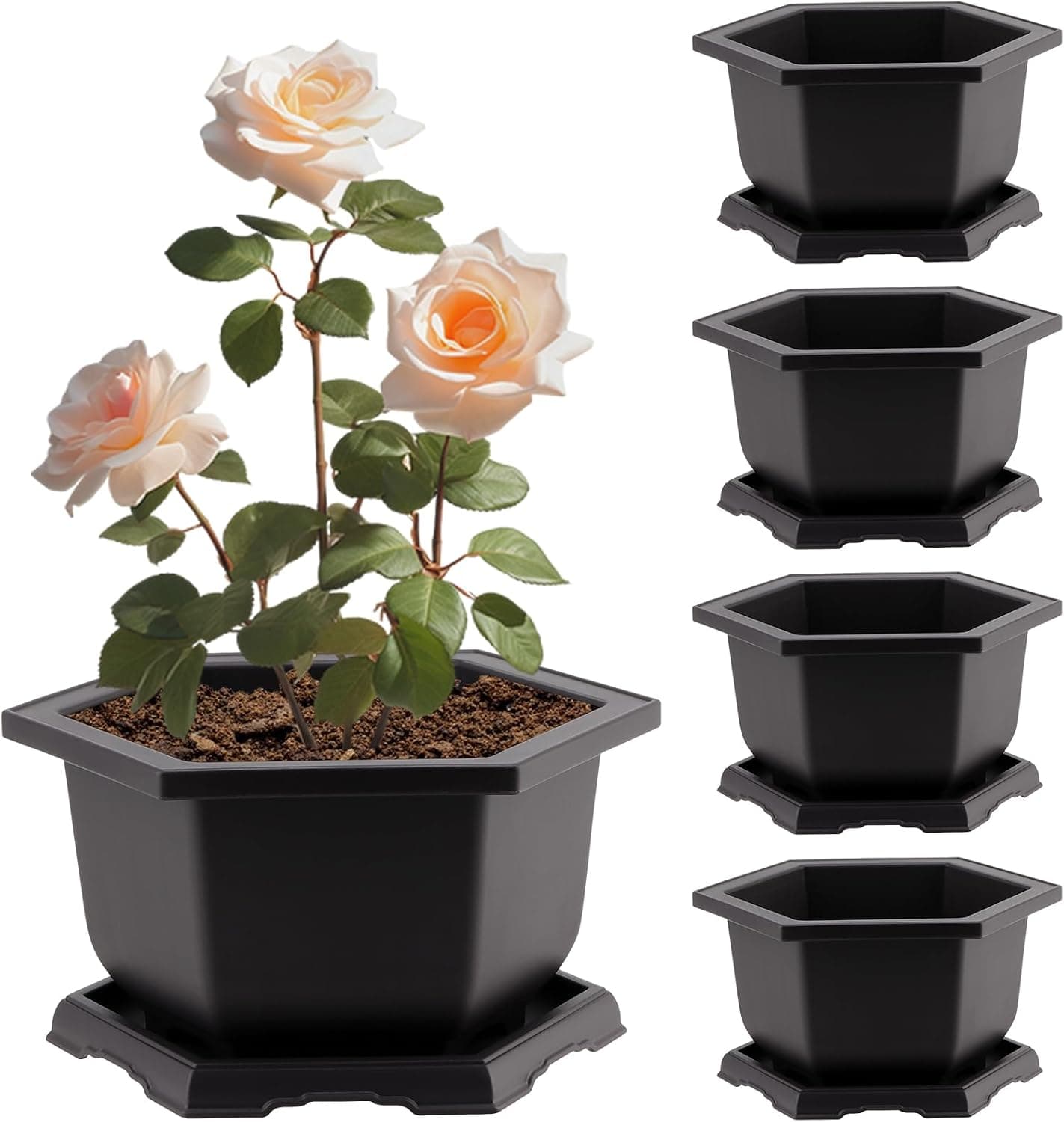
Pot selection is a late-stage refinement decision; a developing tree belongs in a large training container, not an expensive display pot. Traditional sizing guides pot length to roughly two thirds of tree height or canopy width, with depth about equal to trunk thickness. Shape carries expressive weight, deep rectangular pots suit masculine trees, shallow oval ones suit graceful species. Unglazed earth-toned pots suit conifers while glazed pots suit deciduous and flowering trees. Practical needs include generous drainage, wire holes, and frost-proof stoneware for outdoor use. When choosing, place candidates beside the tree and pick the one that visually disappears into the composition. A bonsai pot is not just a container. It is the second half of the composition, and the wrong one undermines a good tree while the right one makes an ordinary tree look considered. That said, pot selection is a refinement decision, and it comes late. A tree still building its trunk belongs in a large training container where it can grow, and moving it into an expensive display pot early is one of the more common ways beginners stall their trees for years.
Size is the first question with the clearest conventions
When the time does come, size is the first question and the one with the clearest conventions. The traditional guidance is that pot length should be roughly two thirds of the tree's height for a tall tree, or two thirds of the canopy width for a tree that is wider than it is tall. Depth is usually about equal to the thickness of the trunk at its base. These are starting points rather than laws, and they exist because they tend to produce visual balance. A pot too large makes the tree look small and unfinished; a pot too small makes it look precarious and cramps the roots more than the tree can tolerate.
Shape carries a lot of expressive weight
Shape carries a lot of expressive weight. Deep rectangular pots with angular corners and strong feet feel solid and are traditionally paired with heavy, rugged, masculine trees such as thick-trunked pines. Shallow oval and round pots feel softer and suit graceful, feminine trees such as maples and flowering species with fine branching. Very deep narrow pots are used for cascade styles, both because they balance the downward movement and because they raise the tree. Wide shallow trays suit forests and group plantings, where the composition needs a landscape rather than a container.
Glaze and colour follow a similar logic
Glaze and colour follow a similar logic. Unglazed pots in earth tones are the standard choice for conifers, where the muted surface stays quiet and lets the tree's texture dominate. Glazed pots are more usual for deciduous, flowering and fruiting trees, where a colour can pick up something in the foliage, blossom or fruit. The general principle is that the pot should complement rather than compete: a striking glaze on a subtle tree turns the pot into the subject. Muted glazes, soft blues, greens, creams and greys, are safer than bright ones, and matching a glaze to a colour the tree actually shows for part of the year is usually more successful than choosing a colour you simply like.
Practical qualities matter as much as aesthetics
Practical qualities matter as much as aesthetics. The pot must have generous drainage holes, and it should also have wire holes so the tree can be tied down securely, since a tree that rocks in its pot cannot form new roots. It must be frost proof if it will live outdoors through winter, which means high-fired stoneware rather than low-fired earthenware that absorbs water and cracks. Feet that raise the pot off the shelf improve drainage and airflow underneath. Unglazed interiors are usual and help roots grip.
For most of a tree's life, none of this applies
For most of a tree's life, none of this applies, and that is worth saying plainly. Training pots, plastic containers, wooden grow boxes and colanders are all better homes for a developing tree than a display pot, because they hold more soil and let the root system and trunk build. Colanders and mesh containers are particularly useful, since air reaching the root tips through the sides encourages dense fibrous rooting that transfers well to a shallow pot later.
Choose by looking, not just measuring
When you finally choose, put the tree next to candidate pots and look rather than measure. Sit the tree at the height and angle it will occupy, step back several paces, and see whether the pot disappears into the composition or asks for attention. A pot that you stop noticing is usually the right one. And remember that pots are not permanent: as the tree develops, its proportions change, and a pot that suits it today may be replaced twice more over the decades that follow.
Frequently asked questions
What size pot should I use for a bonsai tree? Traditional guidance suggests pot length should be roughly two thirds of the tree's height for a tall tree, or two thirds of the canopy width for a wider tree, with depth about equal to the trunk's base thickness.
Should bonsai pots be glazed or unglazed? Unglazed pots in earth tones are the standard choice for conifers, letting the tree's texture dominate, while glazed pots are more usual for deciduous, flowering, and fruiting trees where color can complement the foliage.
When should a developing bonsai be moved into a display pot? Not until it has finished building its trunk; training pots, plastic containers, and wooden grow boxes are better homes for a developing tree since they hold more soil and let the root system build.
What practical features does a good bonsai pot need? Generous drainage holes, wire holes so the tree can be tied down securely, and frost-proof high-fired stoneware construction if it will live outdoors through winter.
Products from this article
The highest-scoring picks from the buying guides mentioned above. Scores are our editorial assessment, not customer ratings.
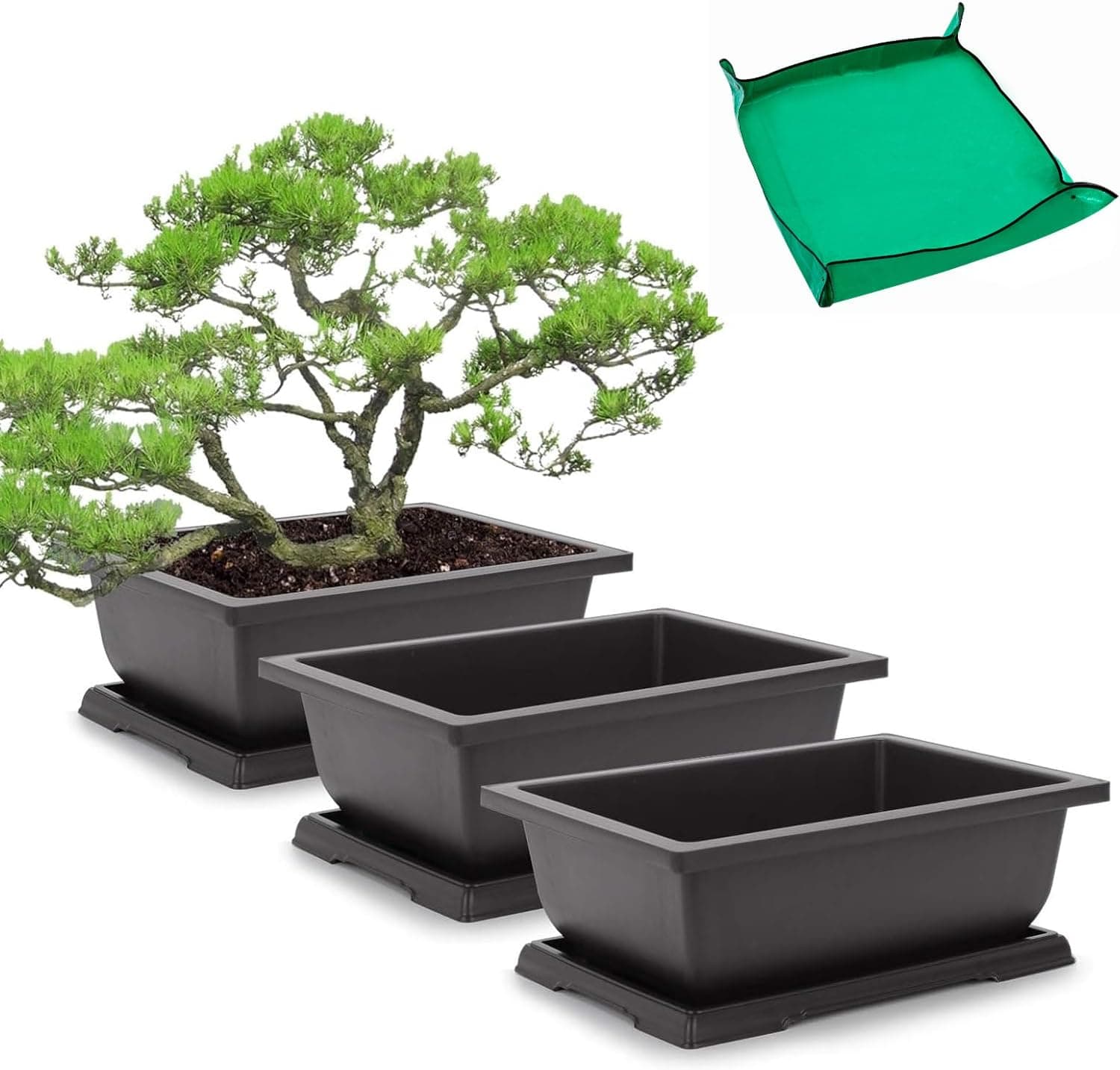
+ Repotting mat keeps soil contained when working indoors
From our guide: Best Bonsai Pots
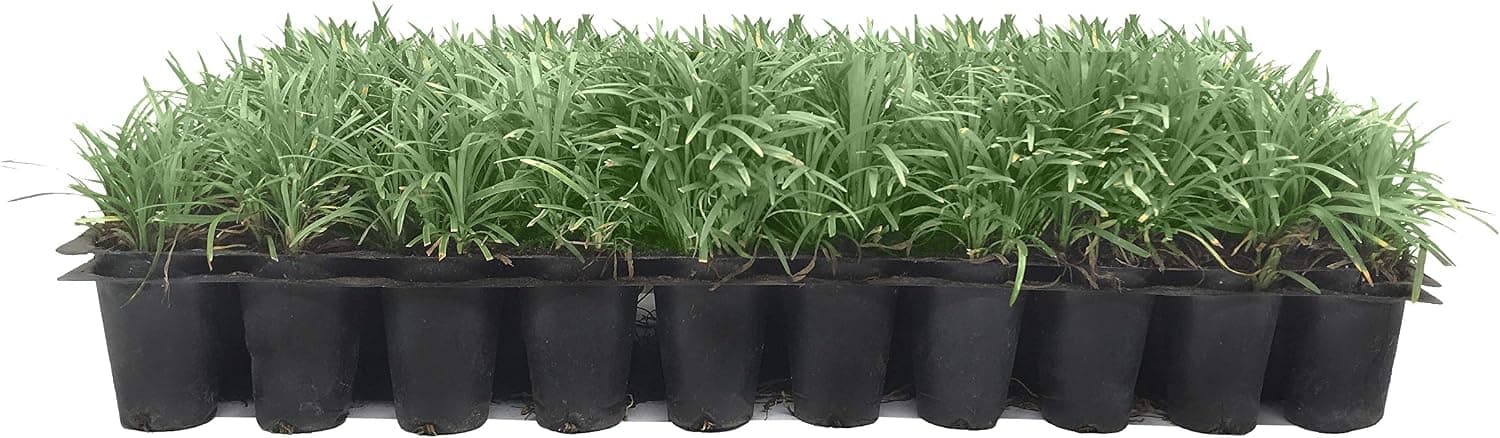
+ 20 live plants give plenty of divisions for accent pots
From our guide: Best Accent Plants and Kusamono
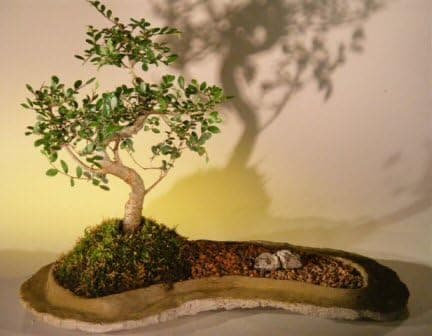
+ Chinese elm is one of the most forgiving species for indoor growers
From our guide: Best Indoor Bonsai Trees
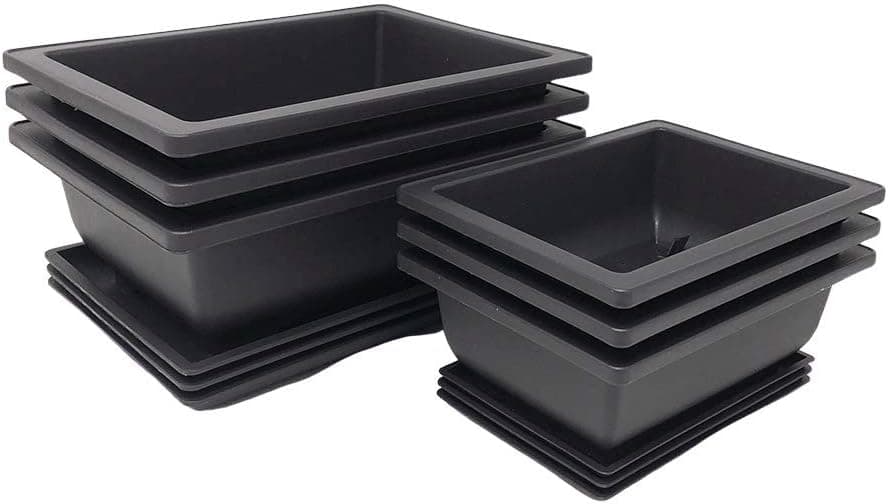
+ Mixed 6 inch and 8 inch sizes let you pot trees at different stages
From our guide: Best Bonsai Pots
Popular right now
- Best Raffia and Wrapping for BonsaiBuying guide
- Bonsai Display and Presentation Basics at Home and at ShowsArticle
- Moss and Accent PlantingArticle
- Best Bonsai Seed KitsBuying guide
- Pinching vs CuttingArticle
- Reviving a Neglected Bonsai Step by StepArticle
Based on the last 28 days of search and visitor data.