Growing Bonsai From Seed
Published How we research
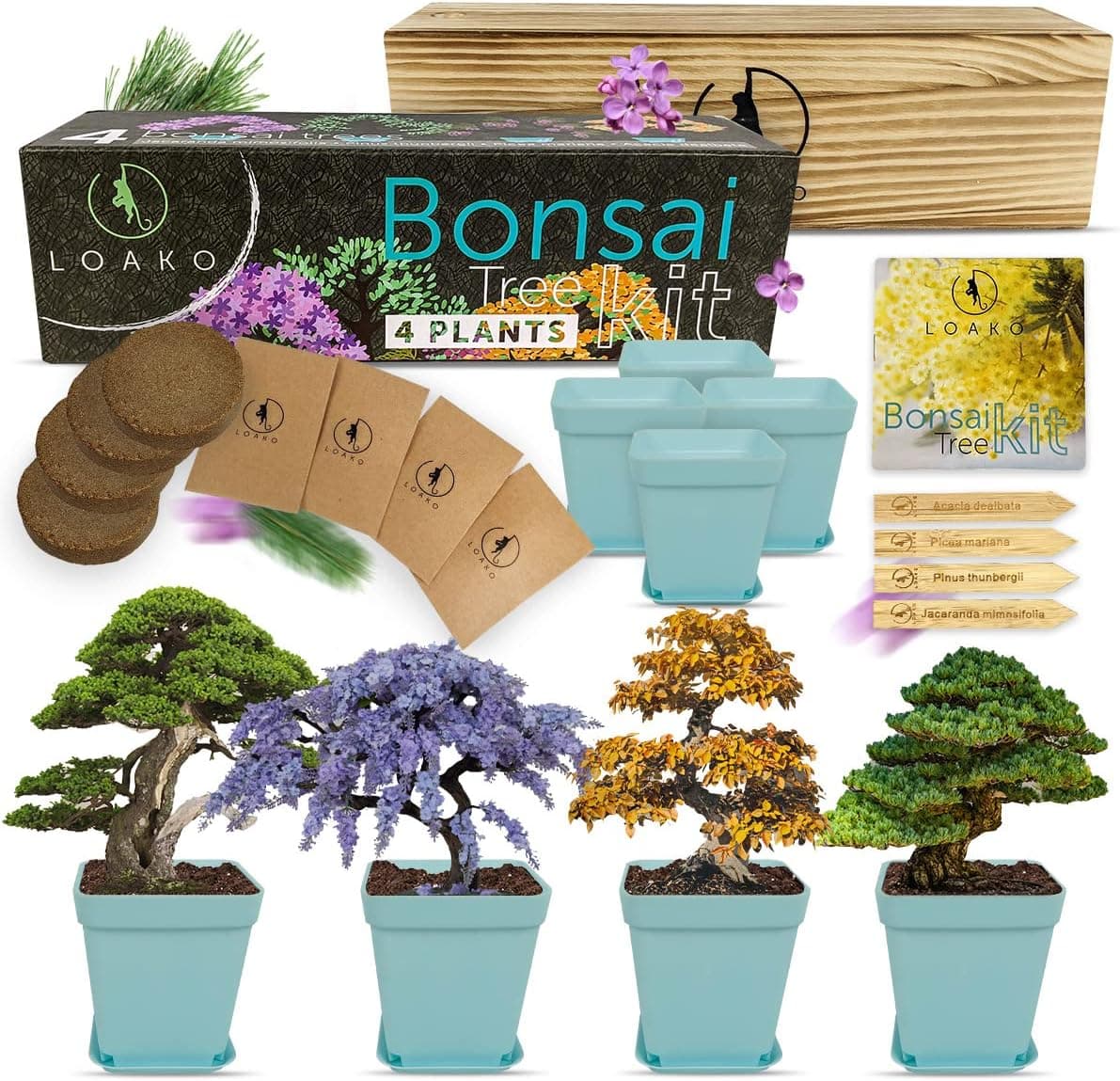
Growing bonsai from seed is a decades-long project, not a three-year one: germination takes weeks, a viable seedling takes two to three years, and building real trunk thickness takes most of a decade before styling even begins. There's no such thing as a special bonsai seed, so buy from reputable suppliers or collect locally. Many temperate species need stratification, cold moist storage for one to three months, and sometimes scarification, before they'll germinate. Early years are about unrestricted growth, not shaping, in a large container. Seed-grown trees offer full control over root spread and low trunk movement that can't be corrected later, so treat it as a background project alongside faster-developing material. Bonsai seed kits sell extremely well and disappoint almost everyone who buys one. The packaging usually shows a mature styled tree beside a packet of seeds, which sets an expectation that no seed can meet. Growing bonsai from seed is a legitimate and rewarding practice, but it is a long-term project measured in decades rather than seasons, and understanding that before you start is the difference between a satisfying hobby and a shoebox of dead sprouts.
Start with the timeline, because everything follows from it
Start with the timeline, because everything else follows from it. A seed germinates in weeks or months depending on species and stratification. The seedling spends the first two or three years simply becoming a viable young plant. Building a trunk of any real thickness takes most of a decade of unrestricted growth, usually in the ground or in large containers. Only after that does the styling work that people associate with bonsai begin, and refinement continues indefinitely from there. Anyone telling you a seed will produce a display-worthy tree in three years is selling something.
There is no such thing as a bonsai seed
There is also no such thing as a bonsai seed. Kits marketed that way contain ordinary tree seeds, frequently species poorly suited to the buyer's climate, sometimes tropical species sold to people in cold regions or the reverse. Buying seed from a reputable horticultural supplier, or collecting it yourself locally, gets you better material at lower cost with an honest description of what it is. Local species have the additional advantage of already suiting your conditions.
Germination usually requires more than soil and water
Germination usually requires more than putting seed in soil. Many temperate species need stratification, a period of cold moist conditions that mimics winter and breaks dormancy. This is typically done by mixing seed with damp sand or vermiculite in a bag and refrigerating it for one to three months depending on species. Some seeds additionally need scarification, meaning the hard coat is nicked or abraded so water can enter. Skipping these steps is the usual reason a packet produces nothing at all. Sow into a free-draining mix, keep it moist but not saturated, provide warmth and light once shoots appear, and expect a germination rate well below one hundred percent.
The early years are about growth, not shaping
The early years are about growth, not shaping. Resist the urge to put seedlings into small pots or start pruning them into shapes. A young tree needs to run freely to build the trunk that everything later depends on, so it belongs in a large container or a growing bed with generous feeding. The main interventions worth making early are practical: cutting the taproot on a young seedling to encourage lateral roots, and occasionally wiring gentle movement into the trunk while it is still soft and flexible, which is much easier at this stage than later.
There are real advantages to seed-grown trees
There are real advantages to seed-grown trees, and they are worth naming. You control every aspect of the tree from the beginning, including the root spread and the movement in the lowest section of trunk, which are exactly the features that cannot be corrected later on collected or nursery material. You can grow multiple seedlings cheaply, which makes group plantings and forests affordable. And species unavailable commercially in your area become accessible. Growers who want the finest nebari often start from seed for precisely these reasons.
Run seed as a background project, not your main one
The sensible approach is to run seed as a background project rather than your main one. Sow a tray, keep the survivors in grow boxes, spend ten minutes a month on them, and in the meantime develop nursery stock or collected material that will give you something to work on now. In fifteen years the seedlings will be ready for real work, and you will have the skills to do it well. Treated that way, seed growing is a pleasure. Treated as a shortcut to a bonsai, it is a guaranteed letdown.
Frequently asked questions
How long does it take to grow a bonsai from seed? Building a trunk of real thickness takes most of a decade of unrestricted growth, and only after that does styling work begin, with refinement continuing indefinitely, so the whole process is measured in decades.
Do bonsai seeds exist as a special product? No, there is no such thing as a bonsai seed; kits marketed that way contain ordinary tree seeds, often species poorly suited to the buyer's climate, so buying from a reputable supplier or collecting locally is better.
Why won't my tree seeds germinate? Many temperate species need stratification, a period of cold moist conditions mimicking winter, typically done by refrigerating seed in damp sand for one to three months, and skipping this step is the usual reason a packet produces nothing.
What is the advantage of growing bonsai from seed instead of buying nursery stock? You control every aspect of the tree from the beginning, including root spread and movement in the lowest trunk section, features that cannot be corrected later on collected or nursery material.
Products from this article
The highest-scoring picks from the buying guides mentioned above. Scores are our editorial assessment, not customer ratings.
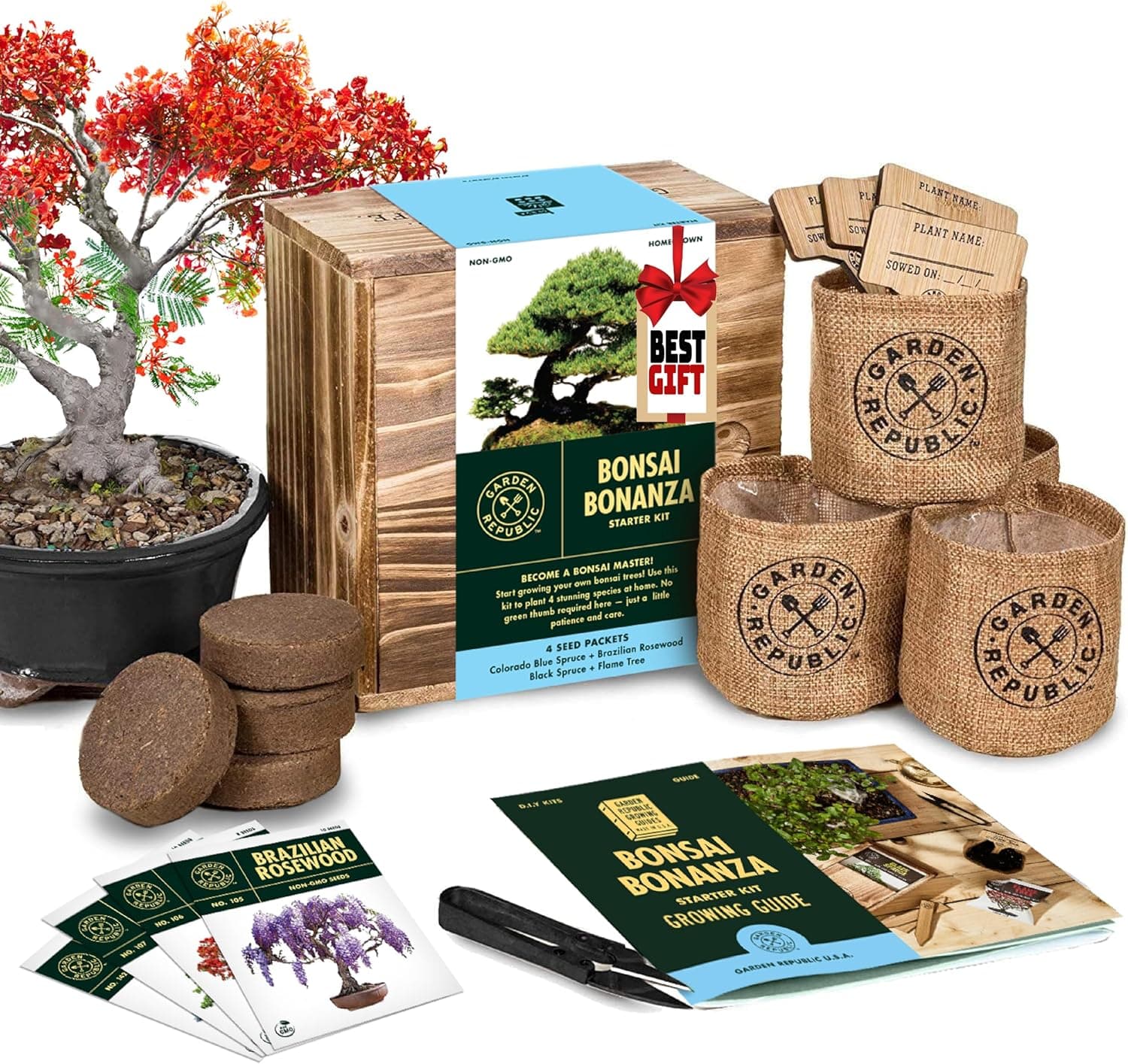
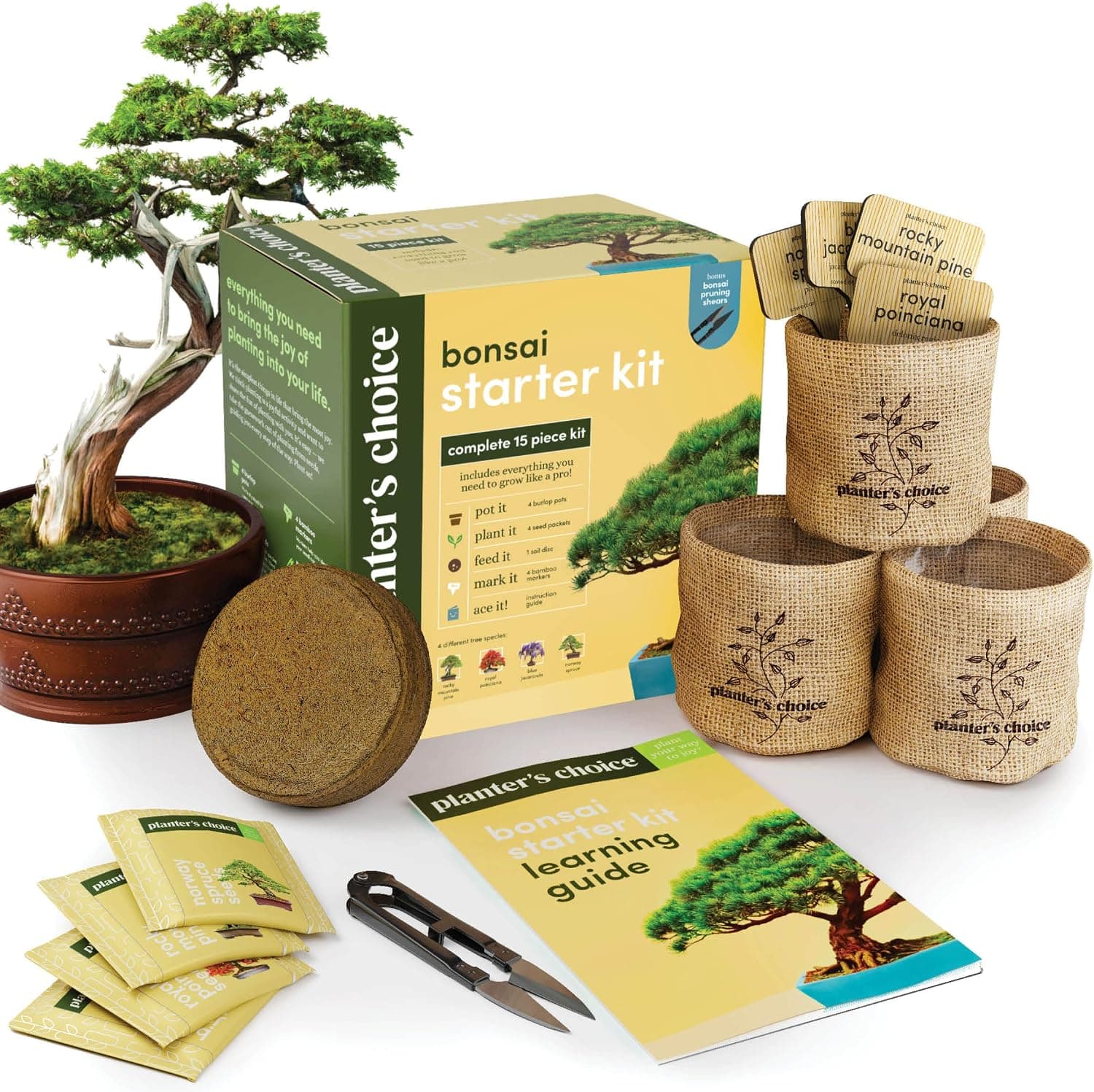
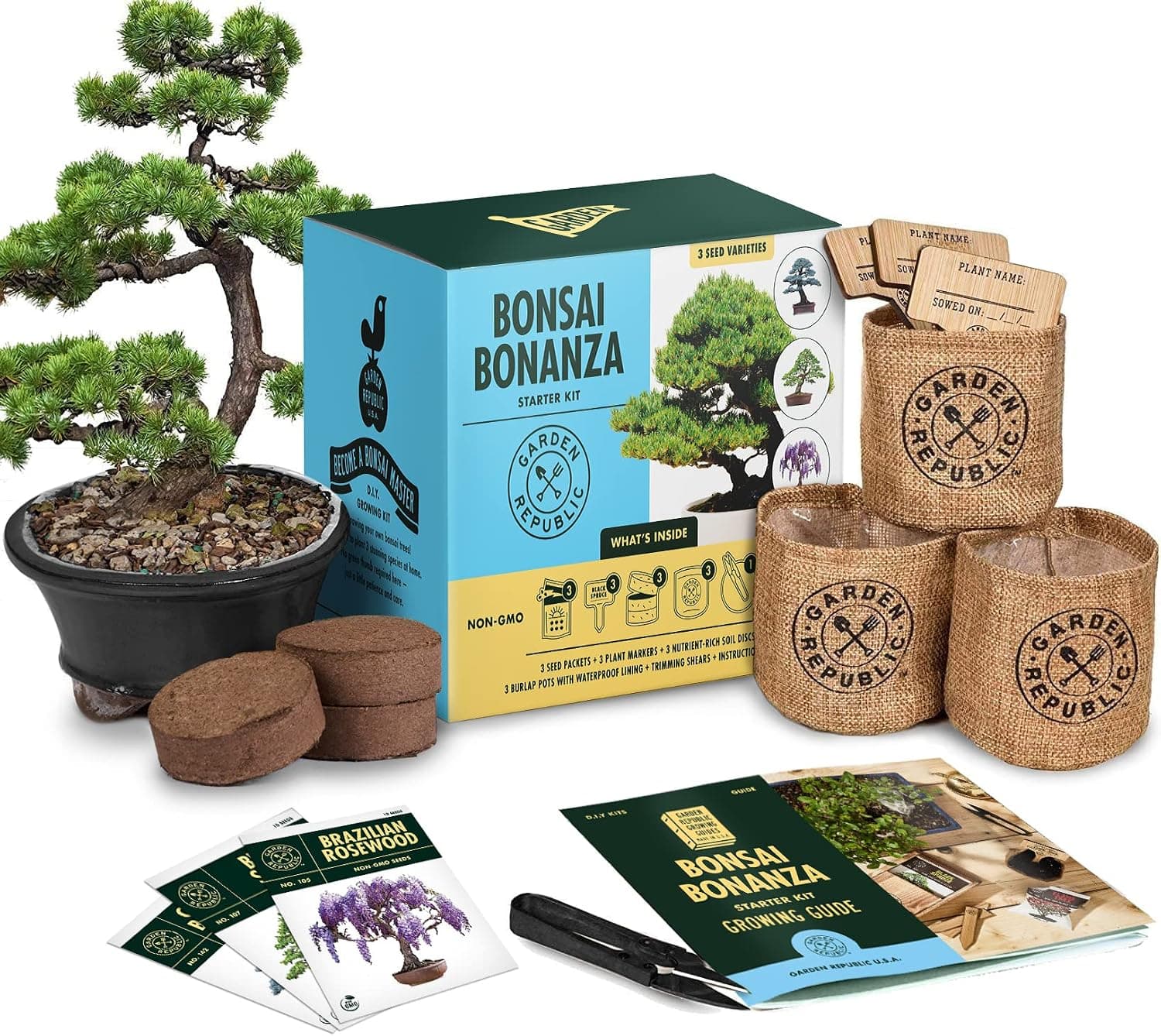
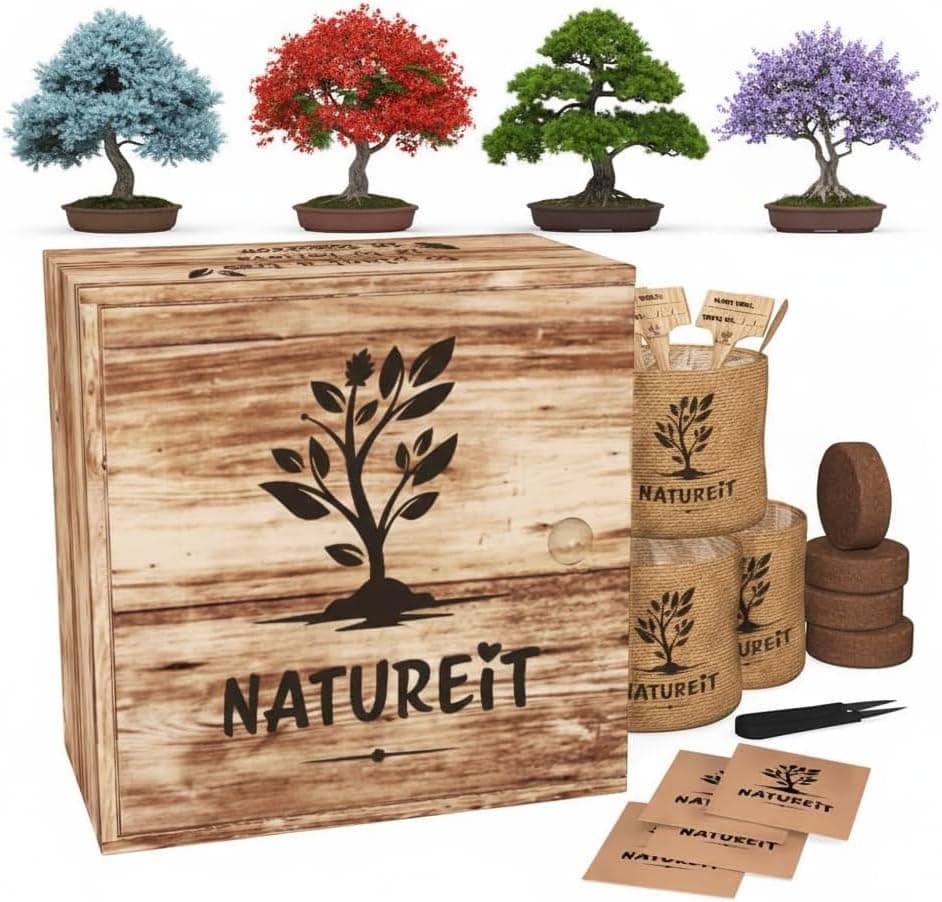
+ Plant markers help track which seedling is which as they sprout
From our guide: Best Bonsai Seed Kits
+ Compressed soil disc expands with water, so setup is clean and simple
From our guide: Best Bonsai Seed Kits
+ Shears are included, a useful extra many seed kits leave out
From our guide: Best Bonsai Seed Kits
+ Wooden kit design looks better on a desk than plastic seed trays
From our guide: Best Bonsai Seed Kits
Popular right now
- Choosing the Right Bonsai Pot for Your TreeArticle
- Best Raffia and Wrapping for BonsaiBuying guide
- Bonsai Display and Presentation Basics at Home and at ShowsArticle
- Moss and Accent PlantingArticle
- Best Bonsai Seed KitsBuying guide
- Pinching vs CuttingArticle
Based on the last 28 days of search and visitor data.