Bonsai Pot Size Chart: What Size Pot Your Tree Needs
Published How we research
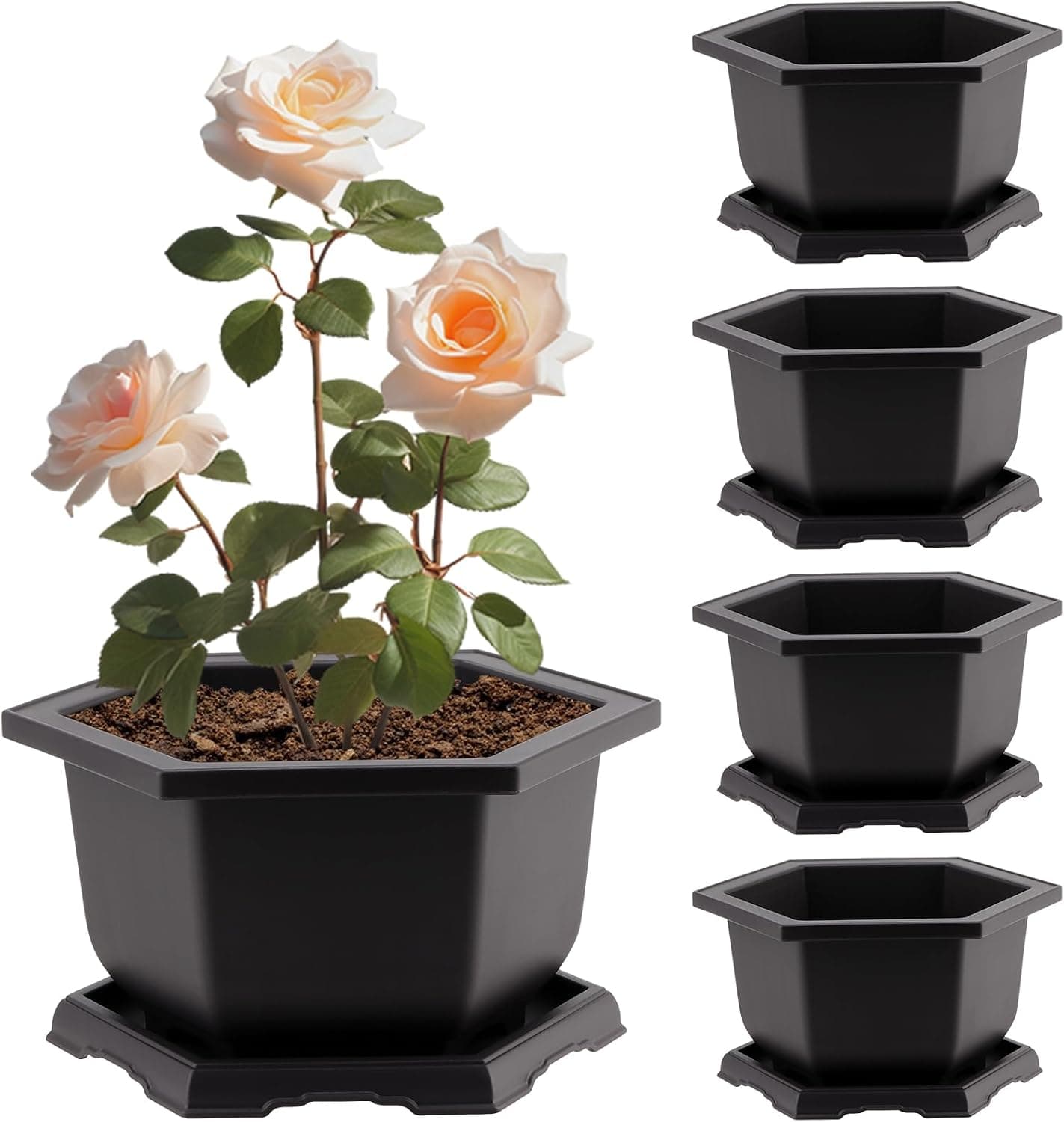
A bonsai pot should be about two thirds as long as the tree is tall, and about as deep as the trunk is thick at its base. For round or square pots, the diameter should be about one third of the tree's height. Those three ratios cover most finished trees, and the chart below turns them into actual pot sizes in inches and centimeters. They are proportion guides for a tree that is ready for a display pot. A tree that is still thickening its trunk needs more root room than any of these numbers allow, and a few styles, cascade above all, follow different rules.
The three ratios behind every pot size
Length comes first. For an oval or rectangular pot, take two thirds of the tree's height, measured from the soil surface to the apex. If the tree is wider than it is tall, which is common with broad deciduous canopies, use two thirds of the canopy width instead. A 12 inch tree therefore sits in a pot about 8 inches long.
Depth follows the trunk. The pot should be roughly as deep as the trunk is wide just above the root flare. A trunk 1.5 inches across suggests a pot about 1.5 inches deep. This is why thick, powerful trees sit in deeper pots and slender, elegant trees sit in shallow ones.
Round and square pots use a different length rule because they have no long axis. Their diameter, or side length, should be about one third of the tree's height. Round pots suit tall, slender trees such as literati, where a pot two thirds of the height would look heavy under so little foliage.
Pot length chart by tree height
Tree 6 inches tall (15 cm): oval or rectangular pot about 4 inches long (10 cm), or a round pot about 2 inches across (5 cm). Pots this small hold very little soil and can need water more than once a day in summer.
Tree 8 inches tall (20 cm): oval or rectangular pot about 5.5 inches long (13 to 14 cm), or a round pot about 2.5 to 3 inches across (7 cm). This is around the upper limit of the shohin size class, where every half inch of pot length changes the look.
Tree 10 inches tall (25 cm): oval or rectangular pot about 6.5 to 7 inches long (17 cm), or a round pot about 3.5 inches across (8 to 9 cm). Many shop-bought starter trees fall in this band once they have been pruned back.
Tree 12 inches tall (30 cm): oval or rectangular pot about 8 inches long (20 cm), or a round pot about 4 inches across (10 cm). Pots around 8 inches long are widely sold, so the choice of shapes and glazes is good at this size.
Tree 16 inches tall (40 cm): oval or rectangular pot about 10.5 inches long (27 cm), or a round pot about 5.5 inches across (13 to 14 cm). In practice a 10 or 11 inch pot both work, so let trunk thickness decide between them.
Tree 20 inches tall (50 cm): oval or rectangular pot about 13 inches long (33 cm), or a round pot about 6.5 to 7 inches across (17 cm). At this size a ceramic pot full of wet soil is heavy, so check that your bench and stand can take it.
Tree 24 inches tall (60 cm): oval or rectangular pot about 16 inches long (40 cm), or a round pot about 8 inches across (20 cm). Tree 30 inches tall (75 cm): pot about 20 inches long (50 cm), or a round pot about 10 inches across (25 cm). Pots in this range are a real investment, so measure twice before ordering.
How deep a bonsai pot should be
The trunk rule works well for trunks from about 1 inch to 3 inches thick: a 1 inch trunk goes in a pot about 1 inch deep, a 2 inch trunk in a pot about 2 inches deep. Measure the trunk just above the point where the roots flare out, not at the flare itself, or you will overestimate.
Below about 1 inch of trunk the rule breaks down, because a pot only half an inch deep cannot hold enough soil to keep a tree alive through a hot day. For thin trunks, go deeper than the rule says and accept that the pot will look slightly heavy until the trunk catches up. Health comes before proportion.
Some trees want extra depth whatever the trunk says. Flowering and fruiting species, and thirsty trees in general, are usually potted a little deeper so the soil holds more water. Forest and group plantings go the other way and use very shallow trays or slabs, because the composition is a landscape and the shallow line makes the trees look taller.
When the chart does not apply
Cascade and semi-cascade trees use pots that are as deep as they are wide, or deeper. The tall pot balances the downward line of the trunk and lifts the tree so the cascading branch has room to fall. Ignore the two thirds length rule for these and choose a pot whose height visually answers the length of the cascade.
Trees in development do not belong in a chart-sized pot at all. If the trunk still needs to thicken, the tree should be in a training pot, pond basket, grow box or the ground, with far more root room than a display pot gives. Moving a thin tree into a correctly proportioned bonsai pot slows growth dramatically, and that is the point of a bonsai pot: it holds a finished tree at its size.
Unusually heavy or sparse foliage also shifts the numbers. A tree with a very wide, dense canopy can take a pot slightly longer than two thirds of its height, and a tree with a tall bare trunk and a small crown looks better in something smaller. Use the chart to get within an inch, then judge by eye.
Measuring the tree and reading pot listings
Measure tree height from the soil line to the top of the apex, not from the bench. Measure canopy width at its widest point. Measure trunk thickness with a ruler held behind the trunk just above the root flare. Write the three numbers down before you shop, because pots look very different online than they do under a tree.
Pot listings almost always give outside dimensions, measured across the rim. The inside is smaller by twice the wall thickness, often half an inch or more in total on a stoneware pot, and the usable depth is less than the outside height because of the feet and the thickness of the base. If a listing gives only one set of numbers, assume they are external.
The root ball has to fit as well as the proportions. After root pruning at repotting time, the remaining root mass should sit in the pot with a finger width of fresh soil all around and underneath. If you would have to remove more than about a third of the roots to make the tree fit, the pot is too small for this repot, however good it looks. Choose the next size up or wait a cycle.
Frequently asked questions
What size pot does a 12 inch bonsai need? An oval or rectangular pot about 8 inches long, which is two thirds of the tree's height, or a round pot about 4 inches across. Set the depth by the trunk: about as deep as the trunk is thick at its base, and a little deeper if the trunk is under an inch.
How deep should a bonsai pot be? About as deep as the trunk is wide just above the root flare. Go deeper for thin trunks, for flowering and fruiting trees and for cascade styles. Go shallower only for forest plantings and for refined trees with a wide, flat root spread.
Can a bonsai pot be too big? Yes, for a finished tree. An oversized pot makes the tree look small, and the unused soil stays wet for longer, which roots dislike. For a tree that is still being grown on, a large container is correct, as long as the soil is coarse and drains fast.
Do I need a bigger pot every time I repot? No. A refined bonsai usually goes back into the same pot after its roots are trimmed, with fresh soil filling the space the old roots took up. You change pot size only when the tree's proportions have changed, or when it moves from a training container to its first display pot.
Products from this article
The highest-scoring picks from the buying guides mentioned above. Scores are our editorial assessment, not customer ratings.
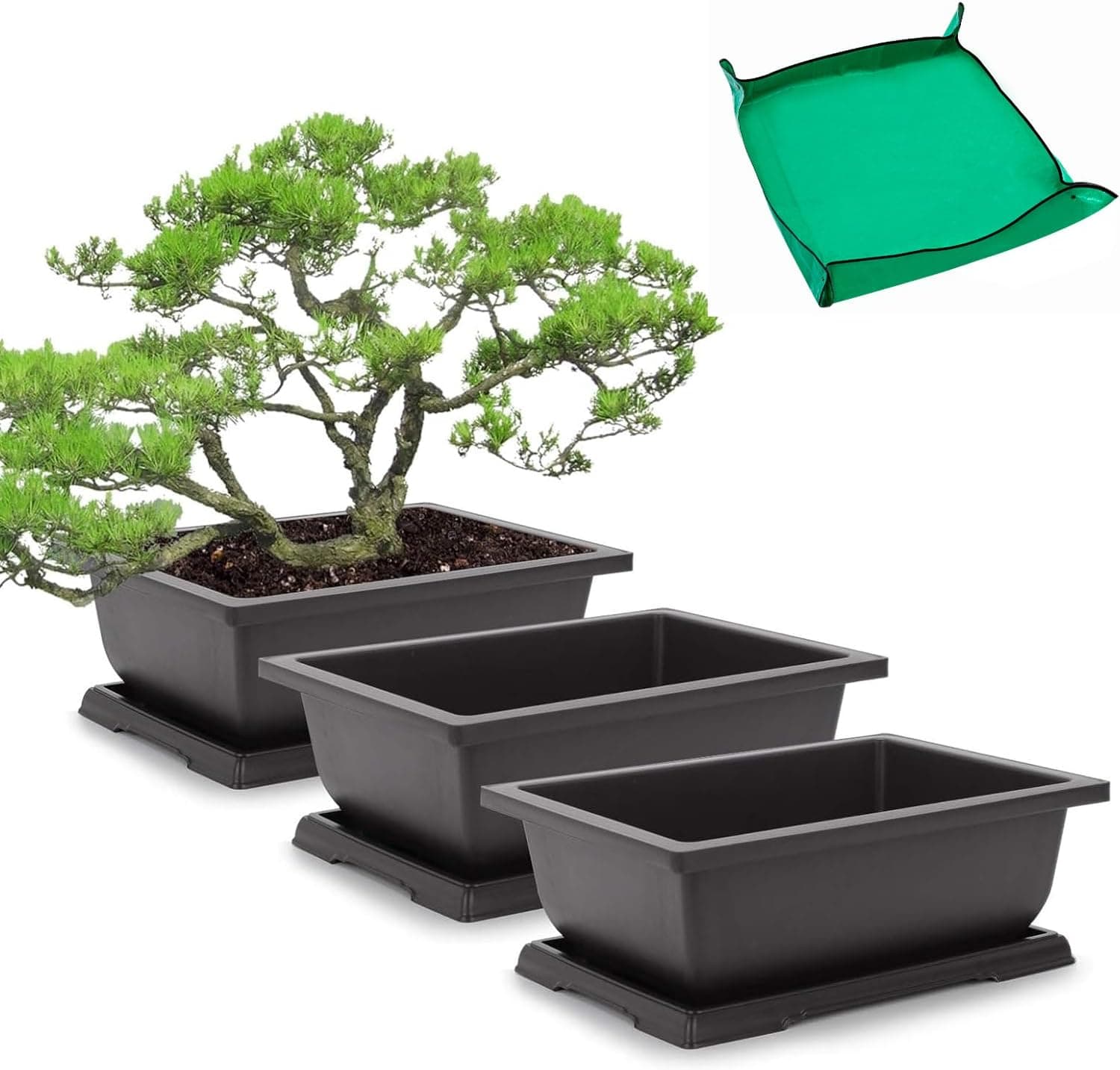
+ Repotting mat keeps soil contained when working indoors
From our guide: Best Bonsai Pots
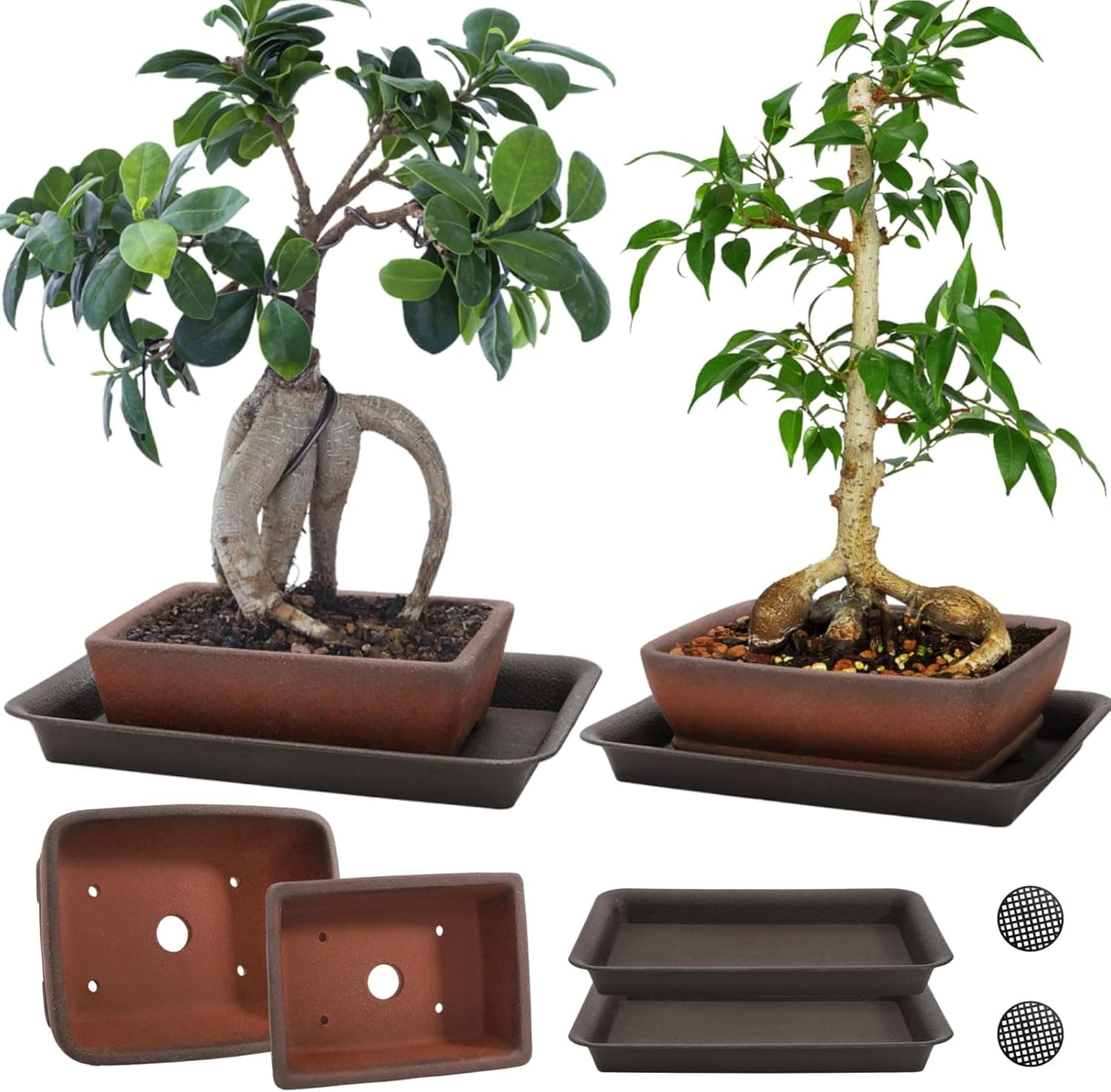
+ Unglazed finish is the traditional choice for pines and junipers
From our guide: Best Ceramic Bonsai Pots
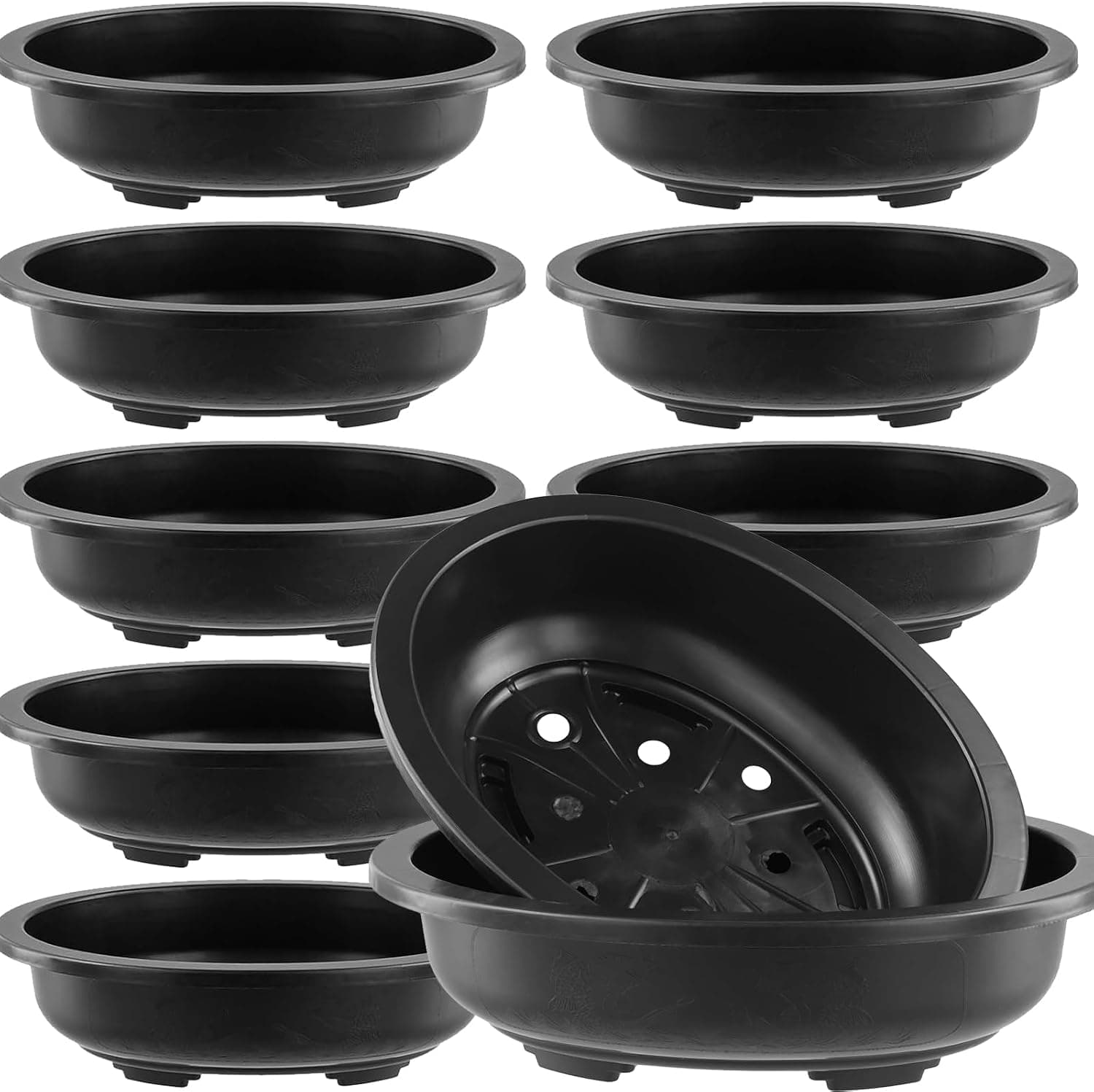
+ 10 large oval pots handle a whole batch of nursery trees at once
From our guide: Best Bonsai Training Pots
+ 12.25 x 8.75 inch size fits medium junipers, elms and maples
From our guide: Best Mica Bonsai Pots
Popular right now
- Common Bonsai Styles Explained and When to Use ThemArticle
- How to Bring Tropical Bonsai Indoors for WinterArticle
- One-third rule explainedGlossary
- Guy wire anchoring explainedGlossary
- Reviving a Neglected Bonsai Step by StepArticle
- Styling and Wiring KitCollection
Based on the last 28 days of search and visitor data.