DUSPRO Premium Bonsai Soil Mix Ready to Use Pre-Mixed with Akadama, Pumice, Vermiculite and Peat Moss, 2 Qrt Review (2026)
Updated September 14, 2026 · Research-based review
Our verdict
DUSPRO's ready to use mix blends akadama with pumice, vermiculite and peat moss, suiting owners who want convenient moisture retention for indoor trees like ficus or jade. Growers of pines and junipers that prefer drier roots should look at a more inorganic blend instead.
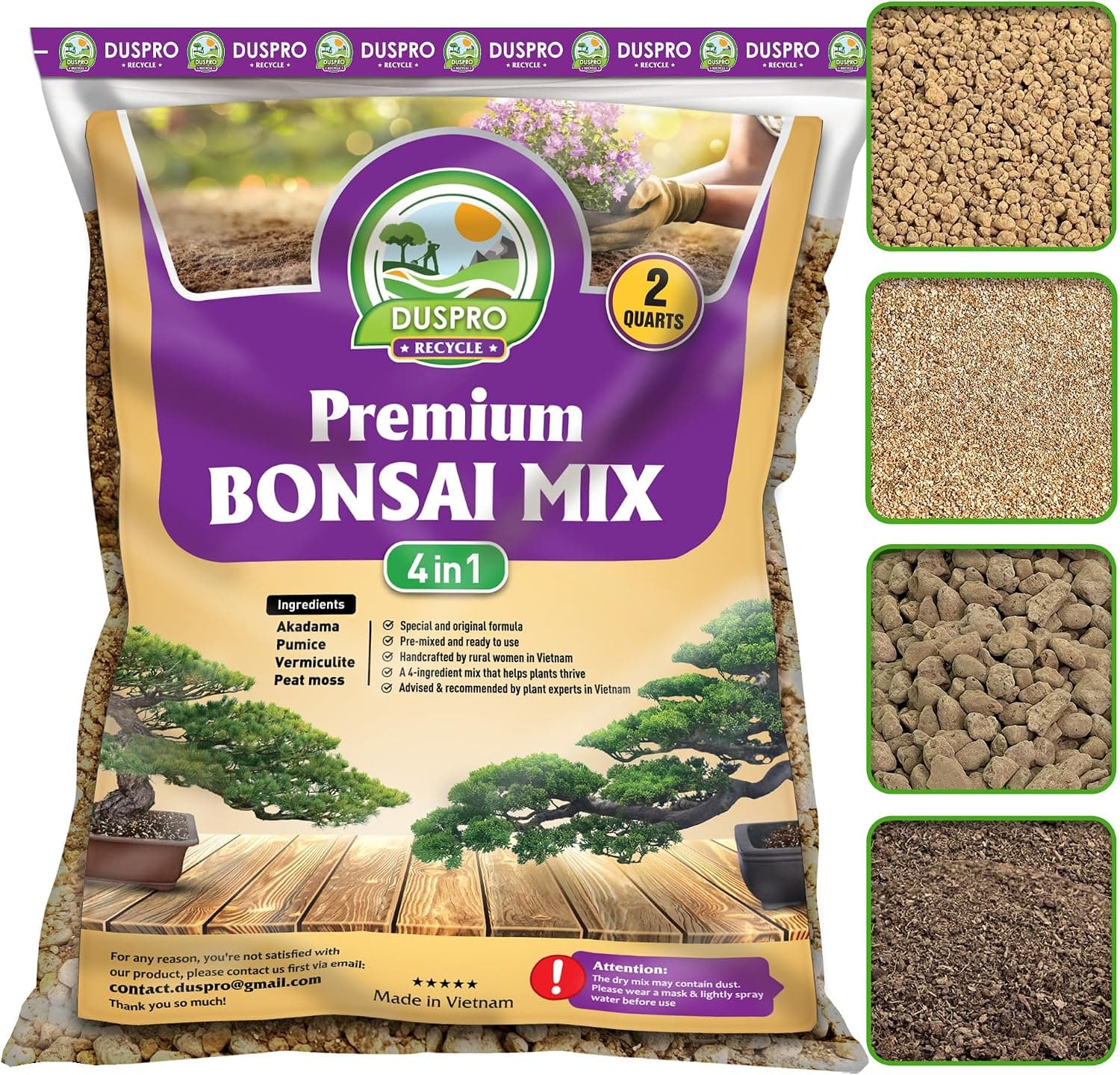
DUSPRO's ready to use premium bonsai soil mix with akadama, pumice, vermiculite and peat moss, 2 qrt.
Price range: $ (Budget)
What we liked
- + Akadama in the blend helps roots develop fine feeder growth
- + Vermiculite and peat add moisture retention for indoor trees
- + Ready to use mix is convenient for first-time repotting
Trade-offs
- - Peat and vermiculite can hold too much water for junipers and pines
- - Organic content breaks down sooner than all-inorganic blends
Who this soil mix fits
This is a pre mixed, ready to use bonsai soil aimed at owners who do not want to source and blend individual components themselves, our score of 7.6 out of 10 reflects a genuinely useful mix with a couple of tradeoffs baked in. The four ingredient blend of akadama, pumice, vermiculite and peat moss is built around moisture retention, which makes it a reasonable match for tropical and subtropical species that prefer their roots to stay evenly moist, such as ficus, jade and similar houseplant style bonsai grown indoors. It is less suited to growers whose collection leans toward conifers, since those species generally want a soil that drains faster and dries out more between waterings than a peat and vermiculite heavy mix allows. Beginners repotting their first tree will likely appreciate not having to source akadama and pumice separately and mix ratios by hand.
What is in the mix and why it matters
Akadama is a hard baked Japanese clay that is popular in bonsai soil because it holds water well while still allowing roots to breathe, though independent bonsai guides note that it is not cheap and that the granules gradually break down over a couple of years, which is part of why repotting on a schedule matters more with akadama heavy mixes. Pumice is a volcanic rock that absorbs water and nutrients while helping roots branch out, and it is generally considered a dependable, less expensive component in a blend like this. Vermiculite and peat moss both push the mix toward higher moisture retention, vermiculite by holding water in its layered structure and peat by acting like a sponge, which is useful for houseplant style bonsai but works against species that specifically want their roots to dry between waterings.
Living with it: repotting and ongoing care
Because this is sold ready to use, the main hands on step is simply repotting the tree into it, the pumice and akadama combination should support root development while the peat and vermiculite buy some forgiveness if watering is inconsistent. Owners should still watch drainage closely in the first few waterings after repotting, since any pre mixed soil can settle differently depending on pot shape and root mass. The organic components in this blend, namely the peat moss, will break down faster than an all inorganic mix made purely of fired clay and volcanic rock, so growers should expect to repot on a somewhat shorter cycle to keep aeration from declining as the peat decomposes. Storing the unused portion in a sealed bag in a cool, dry spot out of direct sun helps keep the mix from absorbing excess moisture before it is used.
How it compares with other premixed soils
In a guide ranking eight premixed bonsai soils this one lands in the middle of the pack at fifth, behind fully inorganic blends built from akadama, black lava, pumice and charcoal that score as high as 8.6, and a fast draining pumice, lava, calcined clay and pine bark blend that scores 8.4. Those higher ranked mixes lean more heavily on inorganic material, which drains faster and does not break down the way peat does, so they tend to suit a broader range of species including pines and junipers more comfortably. This DUSPRO mix still holds its own on convenience and moisture retention for softer, more tropical trees, it just is not the first choice for a grower whose collection is mostly conifers that prefer to dry out between waterings.
Verdict and who should choose a different mix
With scores of 8 out of 10 for fit and for features, and 7 out of 10 for build and value, this mix earns its place as a convenient option for indoor, tropical leaning bonsai rather than an all purpose soil for every species. Buyers repotting a ficus, jade or similar houseplant bonsai indoors should find the moisture retention and ready to use convenience genuinely helpful. Anyone building a collection of pines, junipers or other conifers that want faster drainage would be better served by one of the more inorganic, akadama and lava heavy blends that rank higher in the same premixed soil comparison.
Frequently asked questions
What species of bonsai does this soil mix work best for?
The akadama, vermiculite and peat combination retains more moisture, which generally suits tropical and houseplant style bonsai such as ficus and jade better than conifers like pine and juniper that prefer faster drainage.
How often will I need to repot a tree grown in this mix?
Because the peat moss content breaks down faster than an all inorganic blend, expect to repot somewhat more often than you would with a pure akadama, lava and pumice mix, following your species' general repotting schedule as a guide.
Is this soil ready to use straight from the bag?
Yes, it is sold pre mixed and ready to use, so the main step is repotting your tree directly into it rather than blending components yourself.
How should unused soil be stored?
Keep it sealed in a cool, dry place away from direct sunlight to stop it from absorbing extra moisture before you are ready to use it.
Prices change often, so check the current price and availability on Amazon.
Check price on AmazonBonsai Nest may earn a commission from the link above.