Bonsai Soil Mix - Premium Professional All Purpose Sifted Ready to Use Blend - Akadama, Black Lava, Pumice & Charcoal, Boons Mix (6 Quart) Review (2026)
Updated September 14, 2026 · Research-based review
Our verdict
A 6 quart bag of the widely used Boon style bonsai substrate, sifted and blended from akadama, black lava, pumice and charcoal so it is ready to fill pots straight from the bag. It suits growers repotting several trees who want a bigger, lower cost per quart supply.
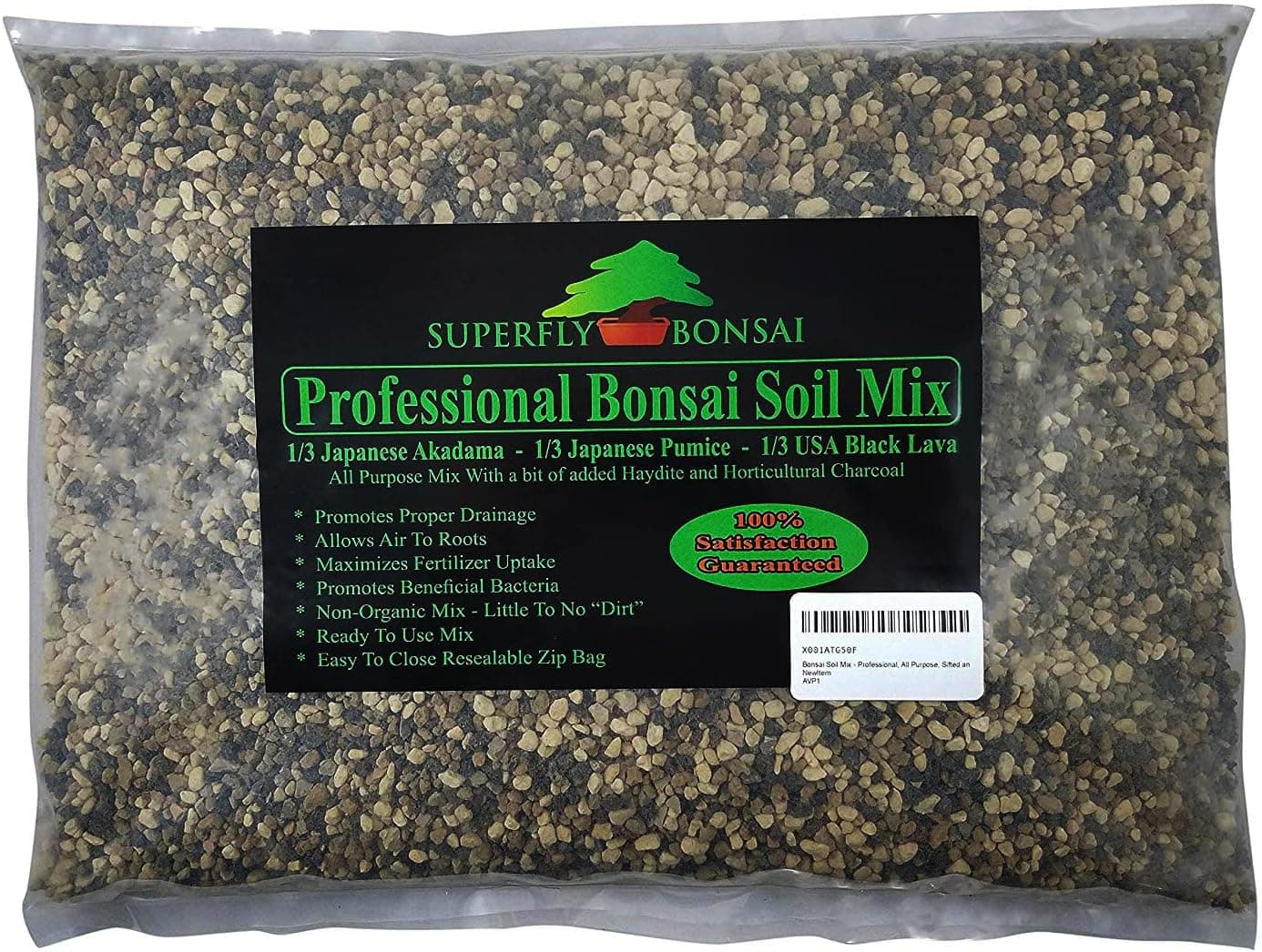
The Boons Mix version of a sifted akadama, black lava, pumice and charcoal bonsai soil in a larger 6 quart bag.
Price range: $ (Budget)
What we liked
- + 6 quart bag lowers the cost per quart for bigger collections
- + Boons-style recipe is a widely used all purpose bonsai blend
- + Ready to use, so no screening or mixing is needed at repotting
Trade-offs
- - Inorganic blend dries quickly, so summer watering is more frequent
- - Heavier bag to store once opened, and it should be kept dry
Who this premixed soil is for
This 6 quart bag targets growers who are repotting more than one bonsai in a season and do not want to buy, sift and blend akadama, lava, pumice and charcoal themselves. The recipe follows the mix popularized by bonsai teacher Boon Manakitivipart, generally around equal parts hard akadama, pumice and black lava with charcoal added, and it is sold sifted and ready to use so there is no screening step before potting. Growers with a single small tree who repot once every year or two will likely use only a portion of a 6 quart bag, so a smaller 1.25 or 2.5 quart size of the same blend may suit them better and cost less upfront. For anyone maintaining a bench of several trees, or restocking a home workshop, the bigger bag avoids running out mid repotting and lowers the price paid per quart compared with the smallest packs.
What is actually in the bag
The blend combines akadama, a fired Japanese clay that holds water and nutrients while gradually breaking down over a few years, with black lava rock and pumice for structure, drainage and aeration, plus a smaller portion of horticultural charcoal. This inorganic combination, with no bark, dirt or mulch, is the substrate style widely taught in North American bonsai circles under the Boon Mix name, chosen because it drains quickly after watering while still holding enough moisture and nutrients between waterings. Being sifted and ready to use means the fine dust and oversized chunks have already been removed, so growers can fill a pot directly from the bag rather than running the mix through their own sieves first, which saves a step at repotting time.
Using and storing the mix
Because the blend is entirely inorganic, it drains fast and dries out faster than a soil containing organic matter, so trees potted in it generally need more frequent watering during hot weather, sometimes daily in peak summer depending on pot size and climate. The bag itself is heavier than a small starter pack once you account for the akadama and lava content, so growers should plan storage that keeps it dry, since damp storage can cause the akadama particles to break down prematurely before they ever reach a pot. Opened bags reseal reasonably well for short term storage between repotting sessions, though using the mix within a season or two keeps the akadama's structure intact for when it is needed.
How it stacks up against other premixed options
The Bonsai Supply sells a comparable all purpose pre blend using pumice, lava, calcined clay and pine bark rather than akadama, packaged in a smaller 2 quart bag, which suits growers who prefer a calcined clay based mix over one built around Japanese akadama. Bonsai Outlet's Tinyroots ready to use blend covers a similar all purpose niche in a 2.5 gallon size, giving growers another premixed option if they want a different brand's sourcing or a different bag size than this 6 quart option. Because all of these are inorganic, fast draining blends aimed at general bonsai use, the practical differences tend to come down to exact ratios, bag size and price per quart rather than large performance gaps between them.
Verdict and who should choose differently
For growers who want a dependable, sifted Boon style substrate in a size that covers several repottings without reordering, this 6 quart bag is a solid, low effort choice, matching the site's own score of 8.6 out of 10 for fit and value. It asks more frequent watering in return for the drainage it provides, which is the expected trade off with any inorganic bonsai mix rather than a flaw specific to this bag. Growers with only one or two small trees, or anyone who prefers to build a custom ratio of akadama, lava and pumice themselves, would likely be better served by a smaller premixed bag or buying the individual components separately instead of this larger blended bag.
Frequently asked questions
What is in this bonsai soil mix?
It is a sifted, ready to use blend of akadama, black lava rock, pumice and horticultural charcoal, following the recipe commonly known as Boon Mix.
Do I need to sift this soil before using it?
No, the seller sells it already sifted and ready to use, so it can be filled directly into a pot without an extra screening step.
How often do trees in this mix need watering?
Because the blend is fully inorganic and fast draining, trees potted in it typically need more frequent watering than in an organic potting soil, especially in hot weather.
How big is the 6 quart bag compared with smaller sizes?
The same blend is also sold in smaller sizes such as 1.25 quart bags, so the 6 quart option is aimed at growers repotting multiple trees who want a lower cost per quart.
Prices change often, so check the current price and availability on Amazon.
Check price on AmazonBonsai Nest may earn a commission from the link above.