Introduction to Bonsai: The Complete Illustrated Guide for Beginners by Bonsai Sekai Magazine and Kyosuke Gun Review (2026)
Updated September 14, 2026 · Research-based review
Our verdict
A heavily illustrated beginner's reference from Japan's long running Bonsai Sekai magazine, covering more than 40 species with monthly care schedules and over 2,000 diagrams. The Japanese species focus and translated text will not match every reader's local climate or read as smoothly as a book written directly in English.
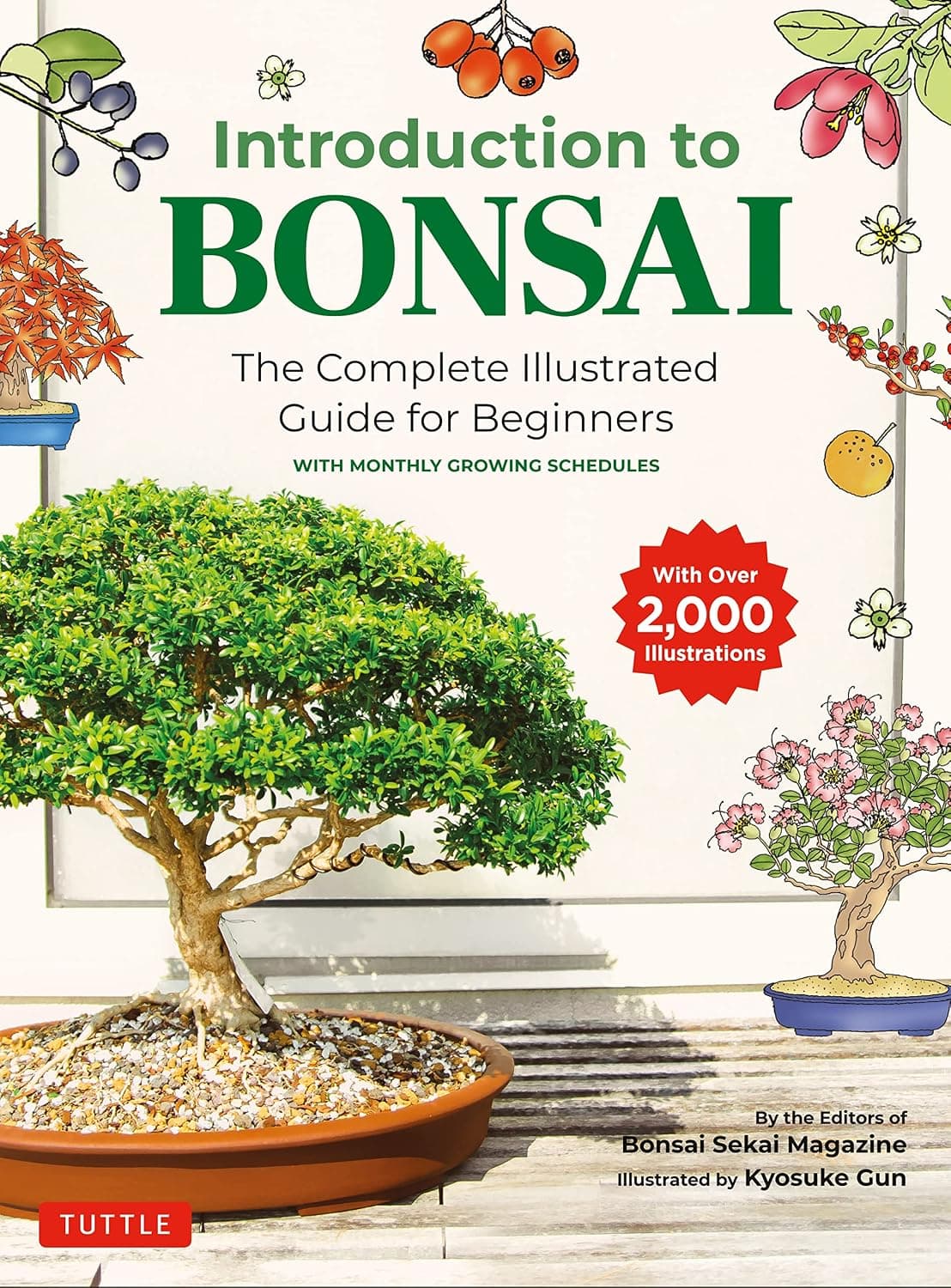
Introduction to Bonsai by Bonsai Sekai Magazine and Kyosuke Gun, a complete illustrated guide for beginners.
Price range: $ (Budget)
What we liked
- + Illustrated guide shows techniques visually for beginners
- + Japanese authors bring a traditional bonsai perspective
- + Complete beginner scope covers care and basic styling
Trade-offs
- - Japanese species focus may not match every local climate
- - Translated text can read a little stiffly in places
Who this guide is for
Published by Tuttle in January 2022 as a 192 page paperback, this book is produced by Bonsai Sekai, Japan's leading bonsai magazine since 1970, with illustrations by Kyosuke Gun, a botanical illustrator and bonsai practitioner with nearly fifty years of experience across roughly 450 species and thousands of plants. That pedigree shows in the format, this is built as a true beginner's reference rather than a technique deep dive, walking from fundamentals like seeds and root systems through basic watering and transplanting before getting into species-specific care, which suits someone just starting out more than someone already comfortable with the basics.
What is covered and how
The book covers care for more than 40 popular bonsai species grouped by type, flowering trees like cherry blossom and azalea, fruiting types like crab apple and persimmon, and coniferous or deciduous species like black pine and maple. Over 2,000 illustrations and diagrams accompany the text, and each species includes a monthly maintenance schedule laying out when to water, prune, wire and transplant across the year, which turns abstract seasonal advice into a concrete calendar a reader can actually follow month to month rather than guessing at timing on their own.
Strengths of the illustrated, Japanese-authored approach
Coming from a Japanese magazine with decades of publishing history and an illustrator with half a century of practical bonsai experience gives the content real authority, and the heavy use of illustrations helps techniques land visually in a way that is often clearer than text alone, especially for physical actions like wiring angles or pruning cuts. The monthly schedule format is genuinely useful structure for a beginner who does not yet have an intuitive sense of a bonsai calendar, turning general seasonal advice into specific monthly tasks per species covered in the book. Flipping to a single species entry and following its calendar page by page is a much easier workflow for a new owner than piecing together general advice from several different sources.
Where the translation and species focus show
Because the book originates from a Japanese publication and has been translated for an English-speaking audience, some passages read a little stiffer than text written natively in English, a common trade-off with translated technical books. The species selection and monthly schedules also lean toward a Japanese growing climate, so a reader in a very different climate zone, hot and humid, or arid, for example, will need to adapt some of the monthly timing rather than follow it exactly as printed, particularly for outdoor species with specific dormancy and protection needs. Cross-checking a species entry against a regional bonsai club or local extension resource is a sensible extra step for anyone growing well outside a temperate Japanese-style climate.
Verdict against other bonsai books
Against The Little Book of Bonsai or The Essential Bonsai Book, both aimed more at technique and general care across species, this one stands out for its species-by-species monthly schedule format and sheer illustration count, which suits a visual learner working with one of the more than 40 covered species. It earns our score of 8.4 out of 10, strong on features given the depth of species coverage and the clarity of the monthly format. Readers outside a temperate climate similar to Japan's, or those who want technique explained in fluid native English prose rather than translated text, may prefer a book written directly for their region instead.
Frequently asked questions
How many bonsai species does this book cover?
More than 40 species, grouped into flowering, fruiting and coniferous or deciduous categories, each with its own monthly maintenance schedule according to the publisher.
Is this book good for absolute beginners?
Yes, it starts from fundamentals like seeds and root systems before moving into species-specific monthly care, making it more beginner-oriented than a technique-focused book.
Who wrote and illustrated the book?
It was produced by Bonsai Sekai, a Japanese bonsai magazine publishing since 1970, with illustrations by Kyosuke Gun, a bonsai practitioner and illustrator of nearly fifty years.
Will the monthly care schedules match my local climate?
Not necessarily. The schedules are based on a Japanese growing climate, so readers in significantly different climates should treat the monthly timing as a guide to adapt rather than follow exactly.
Prices change often, so check the current price and availability on Amazon.
Check price on AmazonBonsai Nest may earn a commission from the link above.