Wazakura Yasugi Steel Made in Japan Ashinaga Bonsai Scissors 8.2 in (210 mm), Bonsai Tree Pruning Shears Review (2026)
Updated September 14, 2026 · Research-based review
Our verdict
A long handled Ashinaga scissor in Yasugi steel for anyone who prunes roots and thin branches on a regular rotation of trees. The steel holds an edge longer than typical carbon blades, and the slim body reaches into tight canopies, though the premium steel means it costs more than a basic pair.
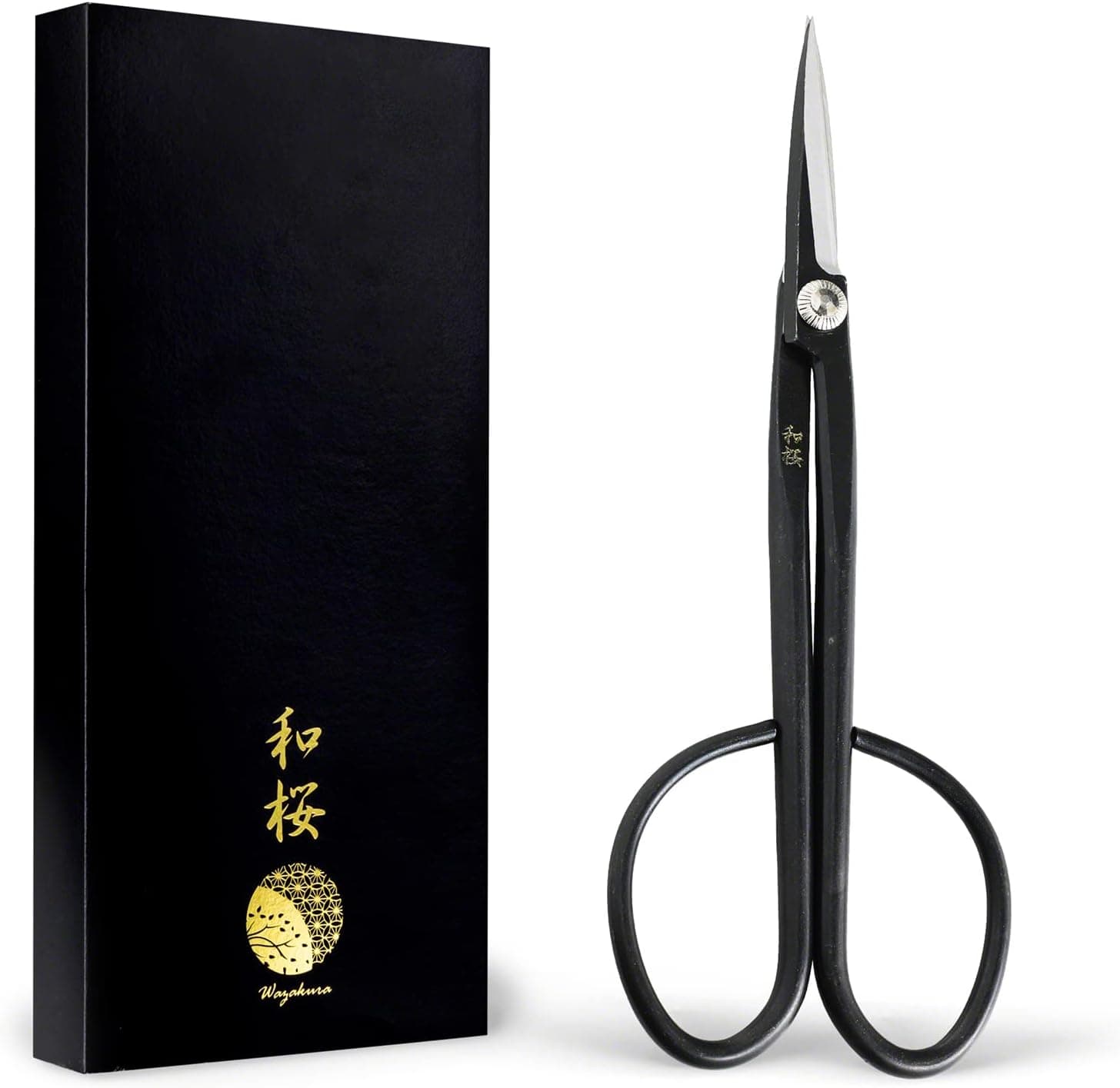
Wazakura's Ashinaga bonsai scissors in Yasugi steel made in Japan, 8.2 in (210 mm), for pruning and roots.
Price range: $ (Budget)
What we liked
- + Yasugi steel is a premium Japanese steel known for edge retention
- + 8.2 inch Ashinaga form handles root pruning and branch trims
- + Long blades cut through root masses in fewer strokes
Trade-offs
- - Premium Yasugi steel raises the price over standard carbon versions
- - Needs careful drying and oiling after wet repotting work
Who this scissor suits
This is a tool for a grower who already owns a basic shear and wants a dedicated long handled scissor for root work and thin branch trimming. The Ashinaga, or long leg, shape puts distance between your hand and the cutting edge, which matters when you are working down inside a root ball or reaching past outer branches to a twig near the trunk. Beginners with one tree and one pair of shears do not need this yet. Someone managing several trees through repotting season, where roots need combing out and trimming in one sitting, gets real use from the reach. It also works as a everyday branch scissor when you want a cleaner, more controlled cut than a shorter tool gives on awkward angles.
Steel and build explained
Wazakura makes this pair from Yasugi steel, a Japanese tool steel associated with the Sanjo region of Niigata Prefecture, where the brand says its bonsai tools are hand forged by third generation artisans. Yasugi steel is prized in Japanese cutlery and garden tools for holding a sharp edge through repeated use and for taking a fine polish when sharpened. The blade runs 8.2 inches, or 210 millimeters, in total, which is on the longer end for an Ashinaga scissor and gives extra leverage on thicker roots compared with the brand's shorter 200 millimeter version. The narrow body and small handle loop keep the tool light in hand despite the length, which helps during long repotting sessions.
Using and maintaining it
Like other carbon and alloy tool steel scissors, this pair needs to be wiped dry after use, especially after cutting through wet root balls or freshly watered soil, since damp sap and moisture left on the blade invite rust. Wazakura points owners toward periodic sharpening with an oilstone and cleaning off sap buildup, which is standard practice for Japanese bonsai steel rather than something unique to this model. A light coat of camellia or machine oil between sessions keeps the pivot smooth and the blade protected in storage. Because the blades are long and thin, avoid twisting them sideways in dense root masses, which can spring the edge out of alignment faster than a straight pull cut would.
Trade offs and how it compares
The main trade off is cost relative to a plain carbon steel Ashinaga scissor, since Yasugi steel carries a premium that shows up in the price versus simpler alternatives. Against Wazakura's own 8 inch carbon steel Ashinaga model, this Yasugi steel version trades a slightly lower cost for better edge retention, which matters more if you use the tool weekly rather than a few times a year. Compared with a Master Grade 215 millimeter root cutter built from alloy steel, this scissor is lighter and more precise on fine roots but has less raw cutting power on thick, woody root stubs, where a dedicated root cutter with a stronger jaw does the job faster.
Verdict and who should look elsewhere
Buy this if you already prune multiple bonsai through the season and want a long handled scissor that will hold its edge better than an entry level pair, and if the reach of an Ashinaga design fits how you work inside root balls and dense canopies. Skip it if you have a single starter tree and a limited budget, since a basic multi purpose bonsai shear will cover root trimming and branch work well enough for occasional use. Woodworkers dealing mainly with thick, lignified roots may also be better served by a proper root or knob cutter, since this scissor is built for precision rather than brute cutting force.
Frequently asked questions
What is Yasugi steel and why does it matter for bonsai tools
Yasugi steel is a Japanese tool steel associated with the Sanjo, Niigata region, known in cutlery and garden tools for holding a sharp edge through repeated use. It is a step up from basic carbon steel in edge retention, which is why it costs more.
Is this scissor meant for roots or branches
Both. The Ashinaga, or long leg, shape is designed to reach into root balls during repotting and also handles thin branch and twig pruning where a longer handle helps you reach past outer growth.
How do I stop the blade from rusting
Wipe the blade dry after each use, especially after cutting wet roots or damp soil, and apply a light coat of camellia or machine oil before storing the tool between sessions.
How does it compare with the 8 inch carbon steel Ashinaga version from the same brand
The Yasugi steel version costs more but holds its edge longer between sharpenings, which suits owners who prune often. The carbon steel version is a reasonable choice for lighter, occasional use.
Prices change often, so check the current price and availability on Amazon.
Check price on AmazonBonsai Nest may earn a commission from the link above.