Tinyroots Black Lava Rock for Plants, 2.25 Quarts, Premium Sifted Bonsai and Cactus Soil Aggregate, 1/8 to 1/4 Inch Particle Size Review (2026)
Updated September 14, 2026 · Research-based review
Our verdict
This sifted black lava rock suits growers blending their own bonsai soil who want a consistent, dust free aggregate without extra screening. The 1/8 to 1/4 inch sifted particle range is the main strength, and the trade-off is that 2.25 quarts is a modest quantity that depletes quickly once mixed into soil for more than a couple of pots.
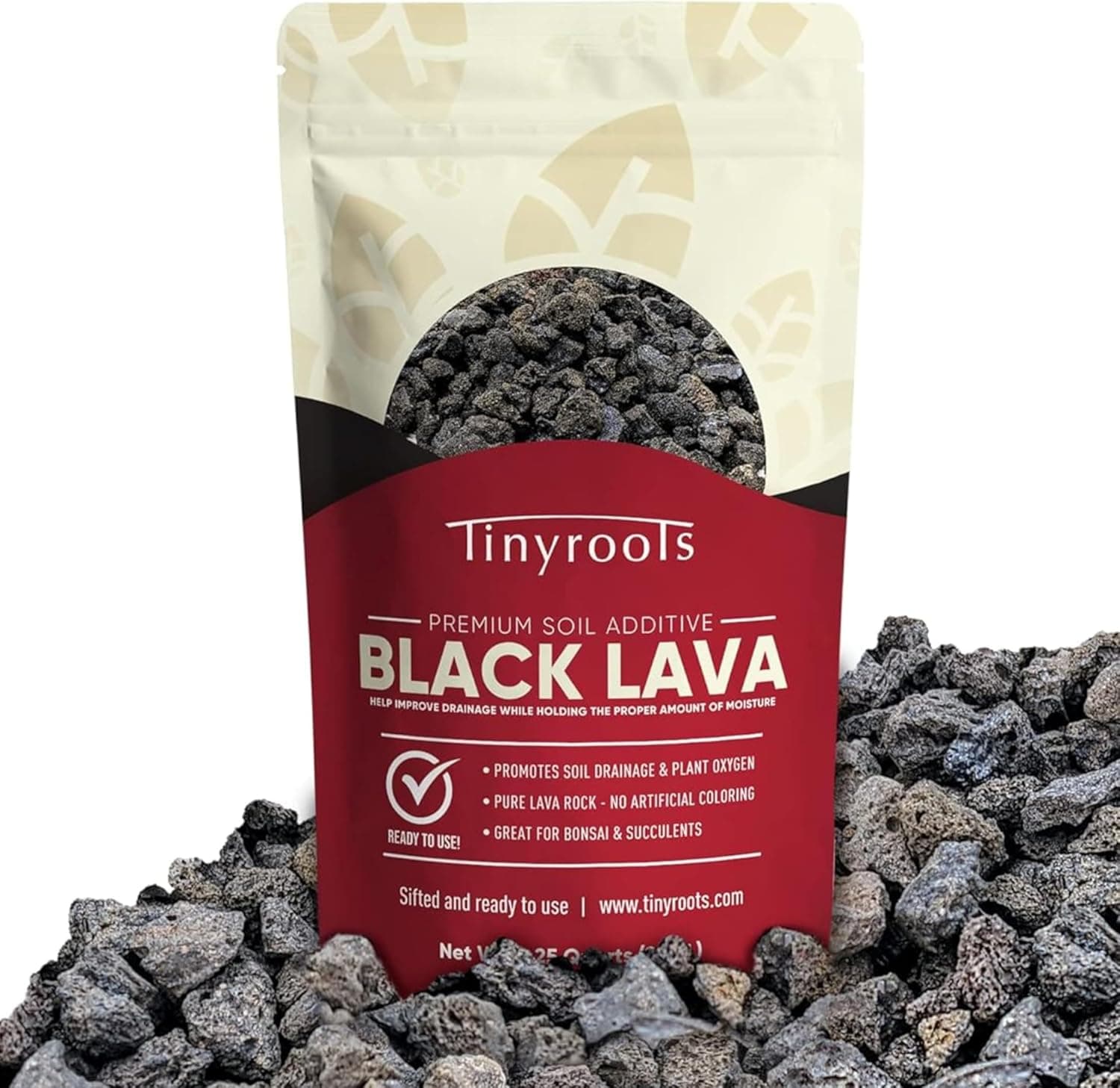
Tinyroots' black lava rock, 2.25 quarts sifted to a 1/8 to 1/4 inch particle size for bonsai and cactus soil.
Price range: $ (Budget)
What we liked
- + 1/8 to 1/4 inch range suits small to medium bonsai pots
- + Pre-sifted to reduce dust and fines before mixing
- + Tinyroots grading matches their akadama and pumice products
Trade-offs
- - 2.25 quarts runs out fast for large outdoor trees
- - Costs more than unsifted lava from landscape suppliers
Who this sifted lava rock fits
This bag suits a grower who mixes their own bonsai soil from separate components and wants a lava rock aggregate that has already been sifted to a consistent particle size rather than an unsifted bulk bag that needs screening at home. Lava rock is a common ingredient in bonsai soil mixes because it is a stable, porous volcanic aggregate that does not break down the way clay based akadama eventually does, so it holds its structure in the pot for longer between repottings. Someone who needs a large volume for repotting several outdoor trees, or who already owns coarse landscape lava and just needs to supplement it, will get better value from a bulk bag rather than this smaller sifted quantity.
Particle size and what sifting removes
The lava rock is sifted to a 1/8 to 1/4 inch particle range, described by the manufacturer as free of dust and chemical dyes, which matters because unsifted lava rock straight from a landscape supplier often contains a mix of fine dust and oversized chunks that need to be screened out before use in a bonsai pot. That consistent particle size helps the aggregate perform predictably when blended with akadama and pumice, since large size variation between soil components is one of the more common causes of uneven drainage in a mixed pot. As a volcanic rock rather than a clay, it does not absorb and release water the way akadama does, so its main role in a mix is structural, keeping air pockets open and preventing compaction over time.
Using it in a blend or as top dressing
In a typical bonsai soil recipe, lava rock like this is combined in roughly equal parts with akadama and pumice to create a fast draining, well aerated mix suited to most conifer and deciduous species, though the exact ratio varies by tree type and climate. It can also be used on its own as a top dressing layer, where its dark color and stable structure resist washing away during watering better than loose dust or fine soil would. Because the manufacturer states it is dust free and dye free, it should not need additional rinsing before use the way some unsifted or dyed lava products do, though rinsing before potting remains a reasonable habit regardless of the source.
How the small bag compares with bulk lava rock
Against a 2 gallon bulk bag of horticultural lava rock from a supplier like Bonsai Jack, this 2.25 quart Tinyroots bag costs more per unit of volume but saves the step of sifting yourself, which may be worth it for a grower with only a few pots to service. Against red lava rock alternatives, black lava is chosen mainly for its darker, more neutral appearance as a top dressing or visible surface layer, while the structural benefits in a soil blend are similar between the two colors regardless of which one a grower picks for their bench.
Verdict and who should buy in bulk instead
For a grower blending their own soil for a handful of pots, or wanting a clean, pre sifted lava rock for top dressing, this bag is a convenient, ready to use option that removes a preparation step most growers otherwise do by hand. Anyone repotting a larger collection in one season should plan on a bulk sized bag instead, since 2.25 quarts will not go far once split across several soil mixes. Growers who specifically want red lava rock for a lighter colored top dressing should also look at that color variant rather than this black version.
Frequently asked questions
What particle size is this lava rock sifted to?
It is sifted to a 1/8 to 1/4 inch range, which the manufacturer states is free of dust and chemical dyes.
Does lava rock absorb water the way akadama does?
No, lava rock is a stable volcanic aggregate used mainly for structure and drainage in a soil mix, while akadama clay is the component that absorbs and gradually releases water.
Can this be used as a top dressing instead of mixed into soil?
Yes, its dark color and stable structure make it suitable as a visible top dressing layer, in addition to being blended into a soil mix.
How much lava rock does a typical bonsai soil mix use?
A common approach blends roughly equal parts lava rock, akadama and pumice, though exact ratios vary by tree species and local climate.
Prices change often, so check the current price and availability on Amazon.
Check price on AmazonBonsai Nest may earn a commission from the link above.