KAKURI Bonsai Tweezers Curved Serrated Tips with Spatula 8.8 inch - Made in Japan - Black Coated Japanese Stainless Steel Review (2026)
Updated September 14, 2026 · Research-based review
Our verdict
These curved Japanese tweezers suit growers who spend real time picking needles, pulling weeds, and dressing moss inside a dense canopy where a straight tool cannot reach cleanly. The curved reach and built in spatula are the main strength, and the trade-off is a learning curve for anyone used to straight picking tools.
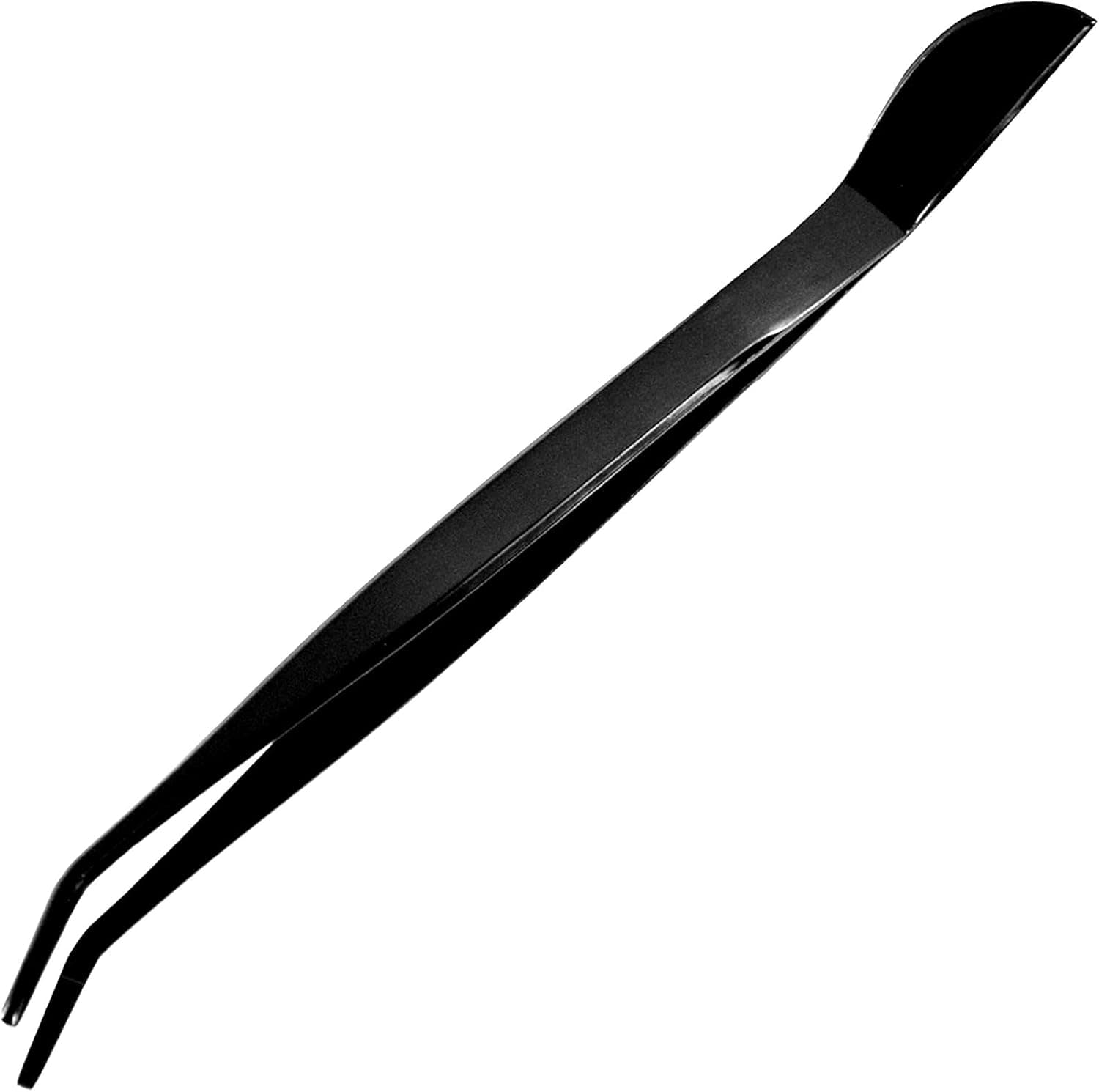
KAKURI's 8.8 inch bonsai tweezers with curved serrated tips and a spatula in black coated Japanese stainless steel.
Price range: $ (Budget)
What we liked
- + Curved tips reach under branches to pluck needles and weeds
- + Spatula end helps tamp soil and place moss
- + Made in Japan stainless steel is precise and rust resistant
Trade-offs
- - Curved tips take some practice for straight picking tasks
- - Premium price compared with generic bonsai tweezers
Who these curved tweezers are made for
Detail work on a filled out bonsai canopy, plucking spent pine needles, pulling small weeds from between branches, or lifting debris off moss, is awkward with a straight tool because the tips cannot bend around foliage to reach the base of a branch. KAKURI's curved design solves that by angling the serrated tips so they slip under and around growth instead of only reaching straight down. It suits growers maintaining mature, densely branched trees where reach and angle matter more than raw grip strength, as well as anyone doing regular moss work, since the flat spatula on the opposite end presses moss into place or scoops small amounts of soil. Growers whose main need is picking from open, sparse young trees will not notice much advantage over a straight pair.
Materials, size, and what makes it Japanese made
The tweezers are made in Japan from black coated Japanese stainless steel, measuring 8.8 inches long and weighing under 2 ounces, light enough for extended use without hand fatigue. KAKURI Corporation, the maker, was founded in 1946 in Sanjo City, a region long known as Japan's center for cutlery and edge tool manufacturing, which is part of why the serrated tips hold their bite over repeated use. The black coating adds a layer of protection against rust and fingerprints compared with bare polished steel, though like any coating it can wear at the very tips with years of heavy use. The curved serrated jaws are tuned to close firmly on small objects like weeds or dead needles without the tips slipping open under grip pressure.
Working with the curve and keeping it sharp
Getting used to a curved tool takes a short adjustment period for anyone coming from straight tweezers, since the natural approach angle to a branch changes, but most growers adapt within a few sessions of pinching practice. The serrated tips grip cleanly on wet or dry material, useful when picking damp moss or fresh weeds after watering. Rinsing and drying the tips after use, especially after contact with wet soil or fertilizer residue, keeps the black coating and the steel underneath from corroding over time. The spatula end should be wiped clean of any dried soil paste before storage so it does not build up a crust that affects how cleanly it presses moss on the next use.
Trade-offs against straight tweezers and other Japanese picks
The main trade-off against KAKURI's own straight serrated version is that the curve is less convenient for simple straight-down picking tasks, like lifting a single weed from open soil, where a straight tip is more direct. Against the Wazakura curved tip tweezers in a similar 8 to 9 inch range, the tools are closely matched on both reach and steel quality, and the choice often comes down to handle feel and coating preference. Compared with basic bent nose garden tweezers sold at a lower price, the KAKURI's forged Japanese steel and serrated grip hold an edge and a bite noticeably longer, which matters for anyone using the tool weekly rather than a few times a year.
Verdict and who should pick the straight version instead
For anyone doing regular detail work on a filled out canopy, needle picking, weeding, or moss dressing, these curved tweezers reach places a straight tool cannot and hold their serrated grip well thanks to genuine Japanese made steel. The spatula end adds real utility for moss and soil work without needing a second tool. Growers who mostly work open, young material, or who simply prefer the more direct feel of a straight pick, should choose KAKURI's straight serrated version instead, since the steel quality and price are the same either way. Anyone on a tighter budget who does not need Japanese made precision could consider a basic bent nose tweezer, accepting a shorter working life on the grip.
Frequently asked questions
What is the difference between curved and straight KAKURI bonsai tweezers?
The curved version angles its serrated tips to reach under and around foliage inside a dense canopy, while the straight version is more direct for picking on open, sparse growth; both share the same steel and spatula design.
What are these tweezers made of?
They are made in Japan from black coated Japanese stainless steel, measuring 8.8 inches long, with serrated curved tips and a flat spatula on the opposite end.
Can the spatula end be used for anything besides moss?
Yes, it works for pressing moss into place and can also scoop or level small amounts of soil, making it useful for general surface dressing tasks.
Do these tweezers need special care to prevent rust?
Rinsing and drying the tips after contact with wet soil or fertilizer, and wiping the spatula clean of dried residue, helps the black coating and steel resist corrosion over time.
Prices change often, so check the current price and availability on Amazon.
Check price on AmazonBonsai Nest may earn a commission from the link above.