KAKURI Bonsai Scissors Made in Japan 7.5 inch, Japanese Stainless Steel Blade, Traditional Bonsai Shears for Pruning and Trimming Review (2026)
Updated September 14, 2026 · Research-based review
Our verdict
KAKURI's 7.5 inch bonsai scissors pair a traditional butterfly handle with a plain Japanese stainless steel blade from a maker with over 70 years of history. The size and plain edge suit general pruning on most bonsai, though they are not meant for thick branches or heavy root work.
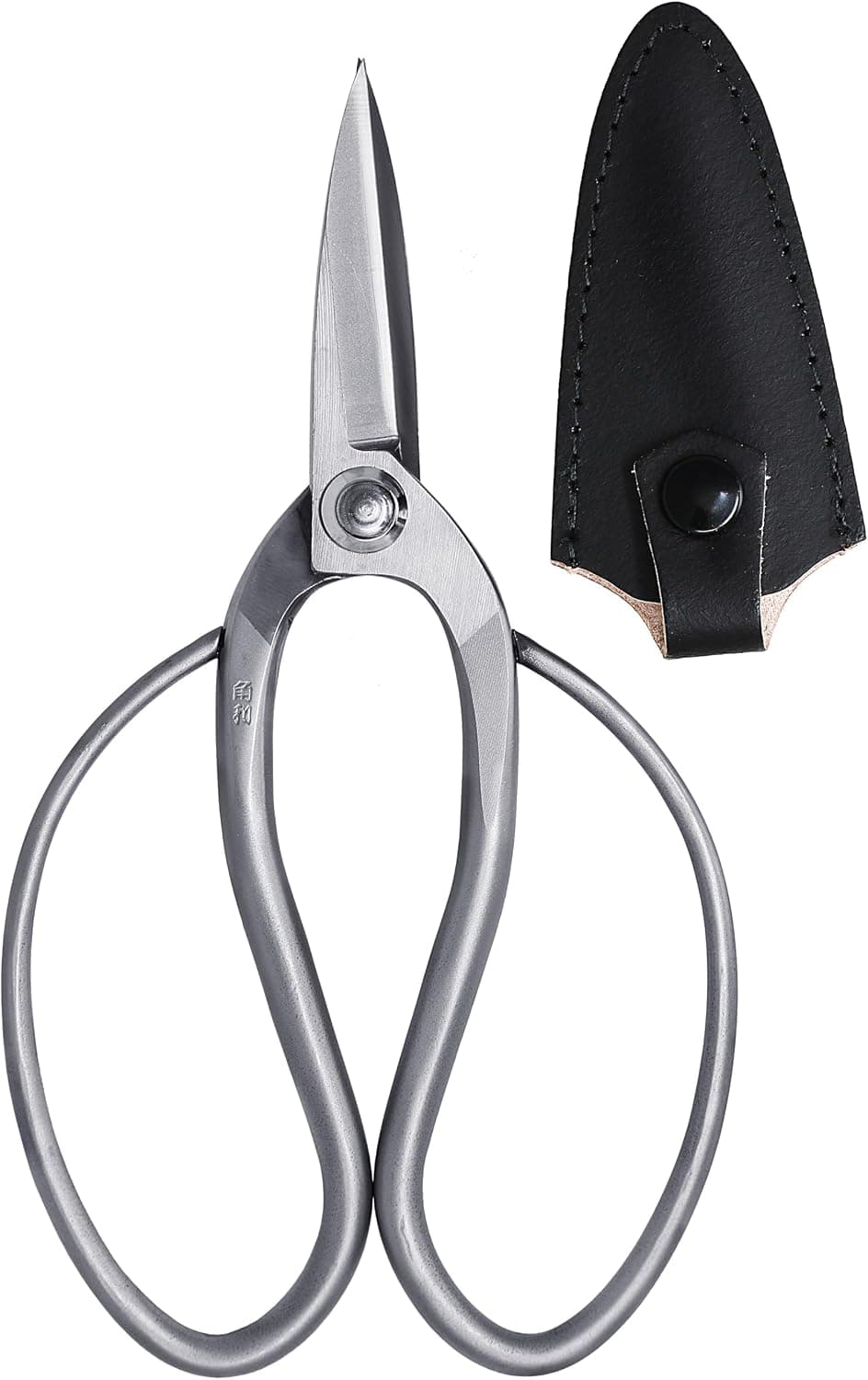
KAKURI's traditional bonsai scissors made in Japan, 7.5 inch shears with a Japanese stainless steel blade.
Price range: $ (Budget)
What we liked
- + Traditional butterfly-handle design gives controlled cuts
- + Japanese stainless steel blade stays sharp and resists rust
- + 7.5 inch length suits general pruning on most bonsai sizes
Trade-offs
- - Not built for thick branches or heavy root cutting
- - Costs more than generic stainless bonsai scissors
Who these scissors are for
This is a general purpose bonsai pruning scissor for growers who want a traditional Japanese tool without the added cost or maintenance of a serrated edge. KAKURI Corporation was founded in 1946 in Sanjo City, a historic Japanese cutlery region, and the company states every product is made in Japan by its own craftsmen, which positions this pair as a mid tier step up from generic stainless scissors without reaching the price of longer, specialty shears. At 7.5 inches, the scissors handle the kind of everyday leaf, twig and small branch pruning most bonsai owners do regularly, making them a sensible first purpose built pruning scissor for someone who has outgrown a basic garden snip but does not yet need a longer Satsuki or Ashinaga style tool for deeper canopy work.
Design and blade explained
The scissors use a traditional butterfly handle shape, where the finger loops flare outward, a design meant to give more leverage and control during repeated small cuts compared with straight handled snips. The blade is Japanese stainless steel rather than carbon steel or a serrated edge, which trades some of the grip a serrated blade offers during a cut for an edge that is easier to touch up at home with a standard whetstone. Weighing under 6 ounces with a blade length of roughly 2.1 inches, the tool is light enough for extended pruning sessions without fatiguing the hand, and the stainless construction resists the rust that carbon steel tools are prone to if left damp after a session in wet soil or morning dew.
Using and maintaining the scissors
Because the blade is plain rather than serrated, these scissors are easier to keep sharp at home than a serrated pair, needing only a basic Japanese whetstone and occasional wiping down after use to stay in good condition. They are built for pruning and trimming leaves, buds and small to medium branches rather than cutting through thick wood or fibrous root balls, and pushing them past that intended range risks chipping the edge or straining the pivot. Stored in a dry tool roll between uses, stainless steel needs less active rust prevention than carbon steel bonsai tools, though a light wipe of oil on the blade and pivot after cleaning still helps the mechanism move smoothly over time.
How it compares with other bonsai shears
TONMA's 8.5 inch Satsuki scissors add a micro serrated, mirror finished blade and roughly an inch more reach, which suits growers pruning larger canopies but makes home resharpening harder than this plain edged KAKURI pair. Against lower cost generic stainless scissors from brands like CastleGreens or SKINNYBUNNY, this KAKURI pair costs somewhat more but comes from a maker with a documented multi decade manufacturing history and a fully Japan made supply chain, which is not always stated clearly by cheaper competitors. For growers who specifically want the added stem grip of a serrated edge, the TONMA pair is the better fit, while those who prioritize easy home sharpening will likely prefer this KAKURI blade.
Verdict and who should pick something else
For a first dedicated bonsai pruning scissor or a reliable everyday pair from an established Japanese maker, this 7.5 inch KAKURI scissor matches its site score of 8.6 out of 10, offering a plain, easily maintained edge at a size that covers most routine pruning. The clear trade off is capability at the extremes, since the tool is not designed for thick branches or heavy root cutting, so growers doing regular root work should plan on a separate root scissor or Ashinaga style tool. Anyone who wants extra stem grip on the cut itself, or more reach for a fuller canopy, would be better served by TONMA's longer serrated Satsuki pair instead of this general purpose KAKURI scissor.
Frequently asked questions
What size branches can these scissors handle?
They are built for general pruning of leaves, buds and small to medium branches, not for thick branches or heavy root cutting.
Is the blade serrated?
No, KAKURI's 7.5 inch scissors use a plain Japanese stainless steel blade, which is easier to resharpen at home than a serrated edge.
Where are these scissors made?
KAKURI states its products are made in Japan by its own craftsmen, with the company founded in 1946 in Sanjo City, a historic Japanese cutlery region.
How do I keep the blade sharp?
Because the edge is plain stainless steel rather than serrated, a standard Japanese whetstone along with occasional wiping and light oiling is enough to maintain it.
Prices change often, so check the current price and availability on Amazon.
Check price on AmazonBonsai Nest may earn a commission from the link above.