KAKURI Bonsai Tweezers Straight Serrated Tips with Spatula 8.8 inch - Made in Japan - Black Coated Japanese Stainless Steel Review (2026)
Updated September 14, 2026 · Research-based review
Our verdict
KAKURI's straight tip tweezers pair a serrated grip for weeding and debris removal with a flat spatula end for pressing moss and leveling soil, made from black coated Japanese stainless steel. They are a precise, refined feeling tool for surface work, though the straight tips reach less easily under dense foliage than a curved pair.
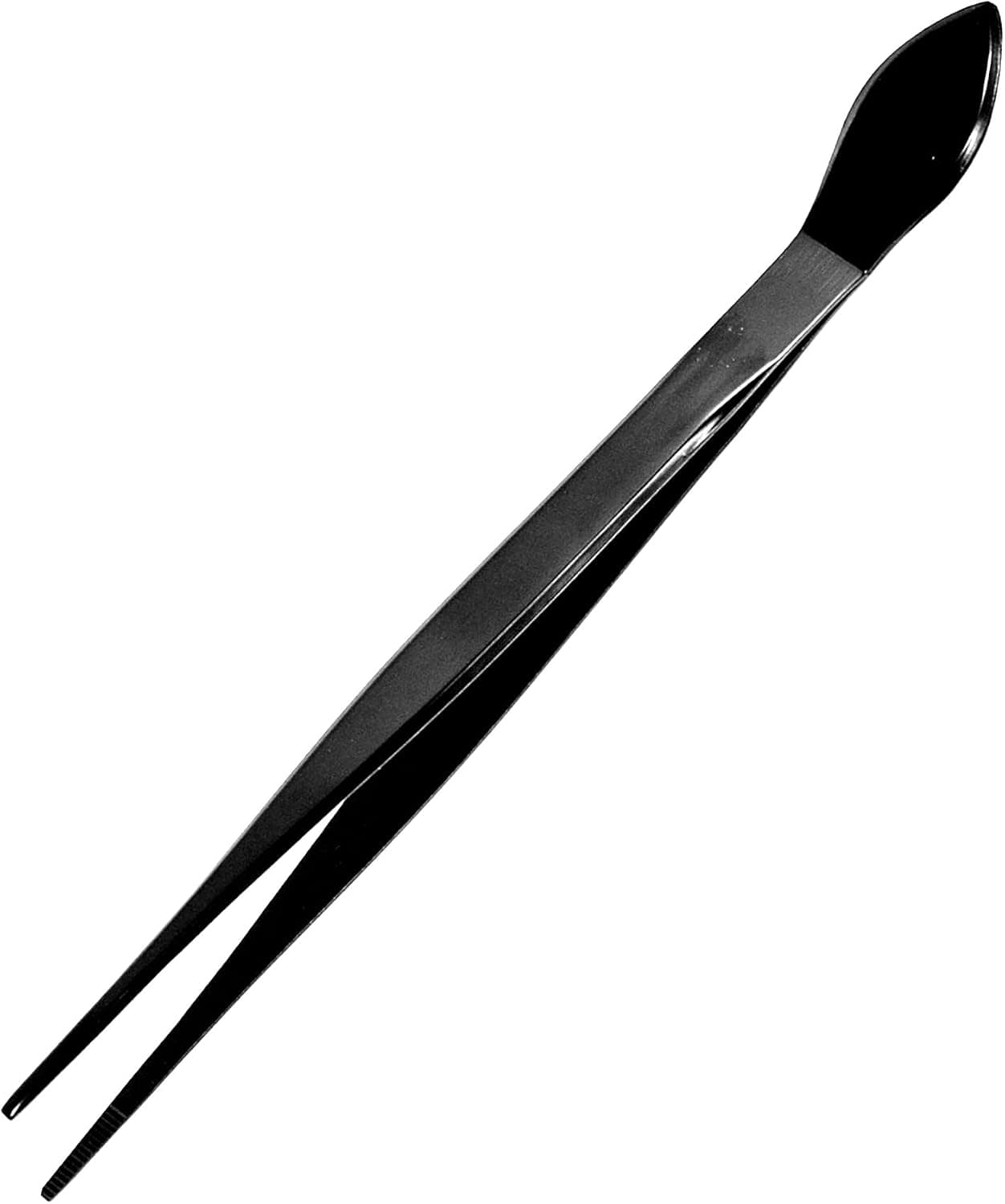
KAKURI's 8.8 inch bonsai tweezers with straight serrated tips and a spatula, black coated Japanese stainless steel.
Price range: $ (Budget)
What we liked
- + Serrated straight tips pick weeds and debris precisely
- + Spatula end presses moss and smooths the soil surface
- + Black coating reduces glare and looks refined
Trade-offs
- - Coating can wear off with heavy use over time
- - Straight tips reach less easily under foliage than curved tips
Who these tweezers fit
These tweezers are built for the detail work that happens on top of the soil rather than deep inside the canopy, our score of 8.6 out of 10 puts them at the top of their comparison group for a reason. They suit growers who spend time weeding moss beds, lifting stray debris off the soil surface, picking out small unwanted buds, and tidying the finished look of a display tree before a show or a photo. The spatula end doubles as a soil leveling and moss pressing tool, which makes this a two in one accessory rather than a single purpose tweezer. Growers who mostly need to reach deep under thick foliage to pull weeds or debris from tight spots will find the straight tip shape less convenient than a curved pair for that specific task.
Materials and design
The tweezers measure 8.8 inches long and weigh under 2 ounces, made from Japanese stainless steel with a black coating that KAKURI states is handcrafted by Japanese craftsmen. KAKURI Corporation was founded in 1946 in Sanjo City, a region long known in Japan as a center for cutlery and blade production, which is part of the brand's positioning around traditional craftsmanship. The serrated straight tips are designed to grip small debris, moss and buds securely without the item slipping free, while the opposite spatula end is flat and wide enough to press moss into place or smooth soil around a trunk. Stainless steel construction means less rust risk than the carbon steel used in some other KAKURI bonsai tools, trading a small amount of edge retention for easier day to day upkeep.
Living with them day to day
Because these are stainless rather than carbon steel, care is straightforward, a wipe down after use is generally enough to keep them looking clean, unlike carbon steel tools that need oiling to avoid rust. The black coating gives the tool a refined, low glare look that many owners appreciate on a display shelf or tool roll, though like most coatings it can show wear at contact points after heavy repeated use over time, which is cosmetic rather than functional. The straight serrated tips take a bit of practice to use precisely on very small buds compared with curved tips, but most growers adapt quickly since the grip itself is confident once the jaws close on an object.
How they compare with other tweezers and spatulas
In a guide of eight tweezers and spatulas, this pair ties for the top score of 8.6 alongside its sibling, the KAKURI Bonsai Tweezers with curved serrated tips and a spatula in the same 8.8 inch size, which trades the straight grip for easier access under foliage while keeping the same materials and coating. It also ties with the Wazakura Bonsai Curved Tip Tweezer with Spatula, an 8.6 inch curved option in plain stainless steel without the black coating. The choice between this straight tip version and those curved alternatives comes down to whether a grower prioritizes precise surface and moss work, where the straight tip excels, or frequent reaching under branches, where a curved tip has the edge.
Verdict and who might prefer a different pair
With fit and build quality both scoring 9 out of 10, these tweezers are a well made, precise tool for surface level detail work on a bonsai display, backed by KAKURI's long standing reputation for Japanese made blade tools. They fit growers who spend real time on moss beds, soil surfaces and fine grooming rather than deep pruning work. Anyone whose main use case is reaching under dense foliage to pull weeds or debris from tight spots should consider the curved tip version in the same KAKURI line instead, since the shape difference genuinely changes which jobs each pair handles best.
Frequently asked questions
What is the spatula end of these tweezers used for?
It is a flat, wide tip used for pressing moss into place around the base of a tree or smoothing and leveling soil after weeding or repotting.
Are straight or curved tweezer tips better for bonsai?
It depends on the task, straight serrated tips like these are precise for surface work such as weeding moss and picking debris, while curved tips reach more easily under foliage and branches.
Will the black coating on these tweezers wear off?
It can show wear at contact points with heavy repeated use over time, this affects appearance rather than how the tool functions.
Do these tweezers need any special care?
Being stainless steel, they need less upkeep than carbon steel bonsai tools, a simple wipe down after use is generally enough to keep them in good condition.
Prices change often, so check the current price and availability on Amazon.
Check price on AmazonBonsai Nest may earn a commission from the link above.