KAKURI Bonsai Tweezers Straight Serrated Tips with Spatula 8.8 inch - Made in Japan - Japanese Stainless Steel Review (2026)
Updated September 14, 2026 · Research-based review
Our verdict
These straight Japanese tweezers suit growers who want a direct, no-nonsense picking tool for open growth, weeding, and moss work without a coating to wear off over time. Plain Japanese stainless steel is the main strength, and the trade-off is that the polished finish shows scratches and fingerprints more than a coated tool.
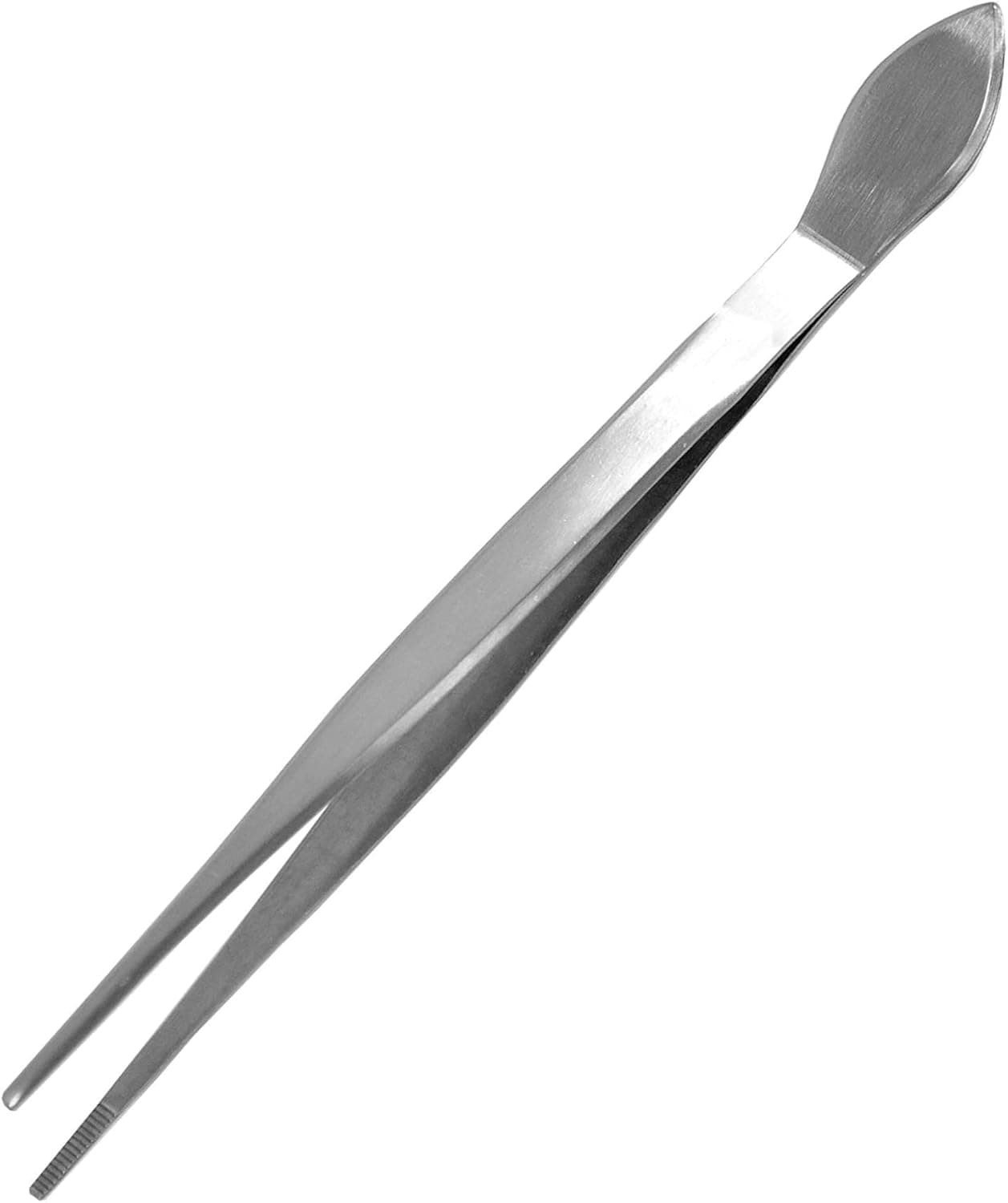
KAKURI's 8.8 inch straight serrated bonsai tweezers with spatula in plain Japanese stainless steel, made in Japan.
Price range: $ (Budget)
What we liked
- + Plain stainless finish avoids any coating wearing off
- + Serrated tips hold small roots and weeds firmly
- + Spatula end is useful for moss and top dressing work
Trade-offs
- - Shiny steel shows scratches and fingerprints
- - Straight design is less handy for reaching inside canopies
Who a straight, uncoated pick suits best
Straight tweezers are the more direct tool for picking a single weed from open soil, lifting a bud, or reaching straight down into a pot without needing to angle around foliage the way a curved tool does. KAKURI's plain steel version pairs that straightforward shape with an uncoated finish, so growers who want to see the bare stainless steel rather than a black coating, and who do not mind a bit of shine showing wear over time, are the target buyer here. It suits anyone doing general picking and moss dressing on younger or more open trees, where reach around dense canopy is less of a concern than on a mature, filled out specimen. Growers working mostly inside dense canopies will likely prefer the curved version instead for its ability to angle around branches.
Materials, size, and finish
The tweezers are made in Japan from Japanese stainless steel, without the black coating applied to KAKURI's other tweezer models, measuring 8.8 inches long and weighing under 2 ounces. The serrated straight tips are forged and tuned to grip firmly without slipping open under pressure, and the flat spatula on the opposite end handles moss pressing and light soil leveling, the same dual function found across KAKURI's tweezer line. Being uncoated, the bare stainless surface has a brighter, more reflective finish than the black coated versions, which some growers prefer purely on looks, while others find it shows fingerprints and light scratches more readily during regular handling.
Using it and keeping the bare steel looking clean
In daily use, the straight tips make quick work of picking single weeds, spent buds, or debris from open soil, and the spatula end doubles for moss and surface dressing tasks just as it does on the curved model. Without a protective coating, the polished steel benefits from a wipe down after each use, particularly after contact with wet soil or fertilizer residue, since moisture left on bare stainless can eventually lead to spotting even on rust resistant steel. Light scratches from normal use are mostly cosmetic and do not affect grip or function, but growers who want the tool to stay showroom bright will want to handle it a bit more carefully than a coated pair.
Trade-offs against the coated and curved versions
Against KAKURI's own black coated straight version, this uncoated model is identical in shape and steel, so the choice comes down entirely to finish preference and whether a coating that can eventually wear at the tips matters to the buyer. Against the curved serrated tweezers in the same lineup, this straight version gives up the ability to reach around dense foliage in exchange for a more direct approach to open picking tasks. Compared with the Wazakura curved tip tweezers sold in a similar size range, KAKURI's straight uncoated pick is a more specialized tool for growers who have already decided they prefer a straight profile over a curved one.
Verdict and who should choose the curved version
For growers who want a direct, no-frills picking tool with visible, genuine Japanese stainless steel, this straight version delivers the same forged quality as KAKURI's coated models without a coating to eventually wear through. It handles general weeding, bud picking, and moss dressing cleanly on open to moderately filled trees. Growers working mature, densely branched canopies where reach and angle matter more than straight access should choose the curved serrated version instead, since it is built specifically for that kind of detail work. Anyone who prefers the look and light rust protection of a black coating over bare polished steel should also lean toward the coated model rather than this one.
Frequently asked questions
What is the difference between this and the black coated KAKURI tweezers?
This version uses plain, uncoated Japanese stainless steel instead of a black coating, giving it a brighter finish; the shape, size, and steel quality are otherwise the same.
Are straight or curved bonsai tweezers better?
Straight tips suit direct picking on open soil or sparse growth, while curved tips reach better around foliage inside a dense canopy; the choice depends mainly on the tree and task.
Will the bare steel on this tool rust?
It is rust resistant Japanese stainless steel, but wiping it dry after contact with wet soil or fertilizer residue helps prevent spotting over time on any uncoated steel tool.
What is the spatula end used for?
It is used for pressing or arranging moss and for leveling small amounts of soil, giving the tool a second function beyond picking.
Prices change often, so check the current price and availability on Amazon.
Check price on AmazonBonsai Nest may earn a commission from the link above.