Wazakura Bonsai Curved Tip Tweezer with Spatula Made in Japan 8-1/4in (210mm) Stainless Steel Review (2026)
Updated September 14, 2026 · Research-based review
Our verdict
This 210mm Wazakura tweezer suits owners who want the same curved tip and spatula design as the brand's black coated model but in a slightly shorter, uncoated stainless finish. Its main strength is fine control from the shorter length. The trade off is that plain steel shows handling wear more visibly than a coated tool.
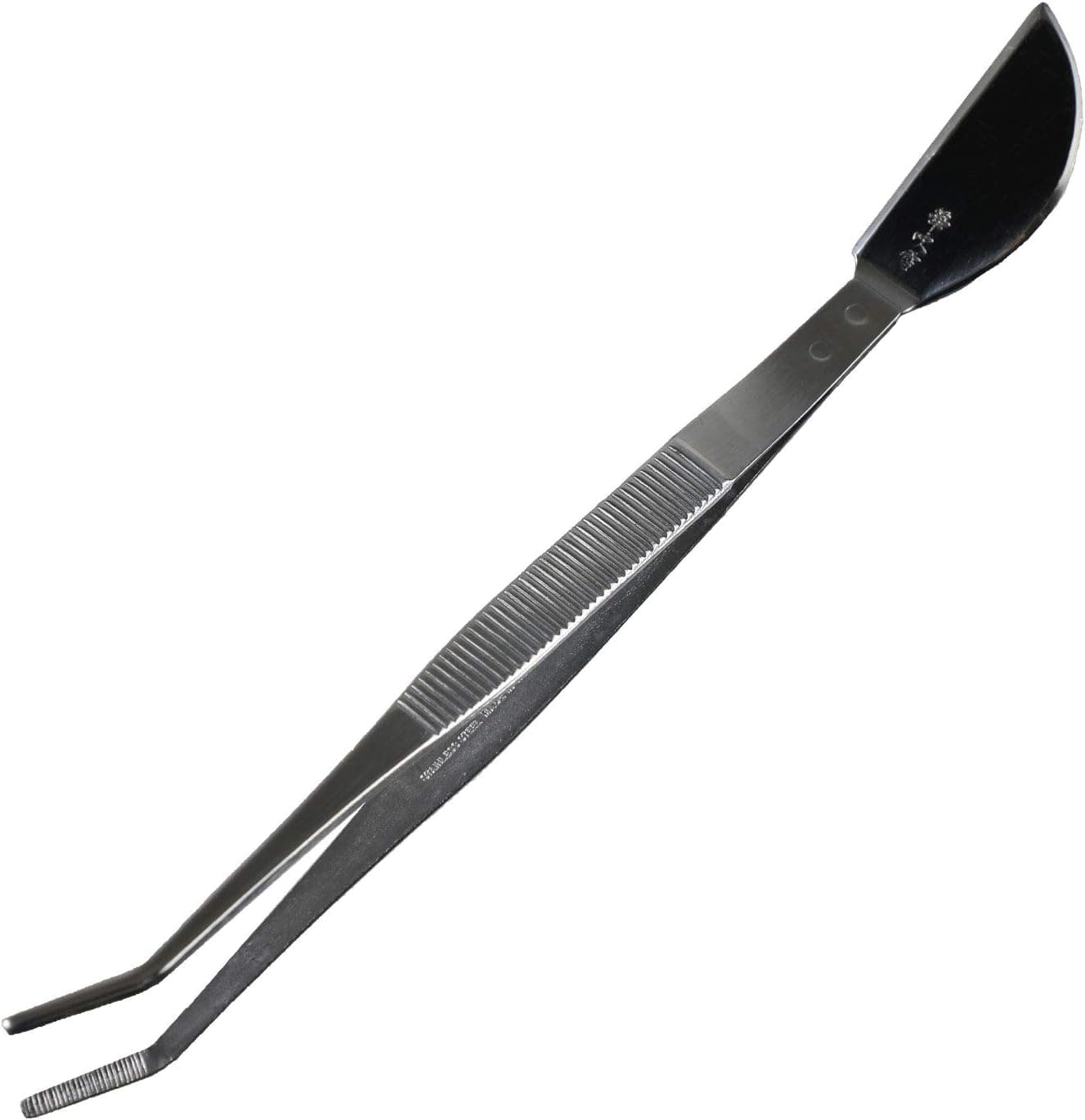
Wazakura's 8-1/4in (210mm) curved tip bonsai tweezer with spatula in uncoated stainless steel, made in Japan.
Price range: $ (Budget)
What we liked
- + Slightly shorter 8-1/4 inch length gives fine control
- + Uncoated stainless steel is simple to clean and maintain
- + Curved tips reach weeds under low branches easily
Trade-offs
- - Plain steel finish shows wear more visibly
- - Similar to the coated Wazakura version, so choose on finish
Who this shorter tweezer is for
Wazakura's 8-1/4 inch curved tip tweezer with spatula is aimed at bonsai owners who want a slightly more compact, precise tool than the brand's longer 220mm version, useful for reaching into denser foliage or working closer to a trunk without the extra reach getting in the way. The curved tips handle the same core jobs as the longer model, pinching buds, removing dead leaves and needles, and lifting weeds from tight spots, while the spatula end presses soil and helps seat moss after repotting. Because it skips the black coating in favor of plain stainless steel, it also suits owners who prefer a simple, low maintenance finish over the added look of a coated tool, and its shorter length can feel more natural in smaller hands or on smaller trees.
Dimensions, material, and finish
This version measures about 8.26 by 0.78 by 0.78 inches, or 210 by 20 by 20 millimeters, and weighs roughly 1.44 ounces, or 41 grams, slightly lighter and shorter than the 220mm black coated model in the same product line. It is made from stainless steel without any coating, made in Japan by Wazakura's artisan workshops. The uncoated finish means there is no paint or coating layer that can chip, so the tool's appearance depends entirely on how the steel itself weathers with use, and stainless steel is naturally resistant to rust even without a protective coating, which is why bare finish tools like this remain a common choice among bonsai owners who prioritize simplicity over cosmetics.
Using and maintaining an uncoated stainless tool
Day to day, this tweezer handles the same pinching, weeding, and moss placement tasks as any curved tip bonsai tweezer, with the shorter length giving slightly more precise control when working close to the trunk or inside a dense canopy where a longer tool would be awkward to maneuver. Because the steel is uncoated, maintenance is simple: rinse off soil or sap after use and dry the tool to prevent water spots, and there is no coating to protect from scuffs, since the bare steel is the finish. Over time, uncoated stainless steel can pick up light surface marks from repeated contact with rock, wire, or grit, which some owners see as a natural patina rather than damage, unlike a coated tool where the same contact can chip away the finish and expose bare metal underneath.
How it compares with the black coated version and rivals
The closest comparison is Wazakura's own 220mm black coated tweezer, which is the same design at a slightly longer length and with a black coating over the steel; choosing between them mostly comes down to whether you want the extra half inch of reach and the coated look, or the shorter length and lower maintenance uncoated finish. Against KAKURI's black coated bonsai tweezers at 8.8 inches, both this uncoated Wazakura model and KAKURI's coated version are positioned as premium Japanese made tools, though KAKURI's is longer and coated while this one trades length for a more compact, easy care design. Generic stainless bent nose garden tweezers sold for general use lack the specific curve and spatula combination built into this bonsai specific tool.
Verdict and who might choose differently
For an owner who wants precise control in a compact, low maintenance tool, this 210mm Wazakura tweezer is a solid pick, consistent with our score of 8.6 out of 10 for fit and build quality. It suits smaller trees and tighter working spaces particularly well, and its plain finish means there is no coating to worry about chipping. Owners who want the extra reach of a longer tool, or who like the more finished look of a black coated tweezer, should consider Wazakura's 220mm black coated version instead, since the two share the same core design and differ mainly in length and finish rather than in overall quality.
Frequently asked questions
How does this 210mm tweezer differ from Wazakura's 220mm version?
This model is slightly shorter at 210mm and made from uncoated stainless steel, while the 220mm version is a touch longer and has a black coating over the same stainless steel base.
Does the uncoated steel rust over time?
Stainless steel resists rust on its own without a coating, so with a rinse and dry after use this tool should not develop rust from normal bonsai work.
What is the spatula end for?
The flat spatula end is used for smoothing or pressing down soil and helping seat moss into place, the same function as on Wazakura's other curved tip tweezer models.
Prices change often, so check the current price and availability on Amazon.
Check price on AmazonBonsai Nest may earn a commission from the link above.