Wazakura Hand Forged Knob Bonsai Cutter Made in Japan 8-1/4 inch (210mm), Round Edge Concave Branch Cutter Black Review (2026)
Updated September 14, 2026 · Research-based review
Our verdict
Wazakura's hand forged 8-1/4 inch knob cutter uses a round headed blade to remove trunk knobs and thick branches with a spherical, fast healing cut. It handles heavier material than a standard concave cutter, but the carbon steel needs regular cleaning and its rounder jaws can remove more wood than a lighter touch calls for.
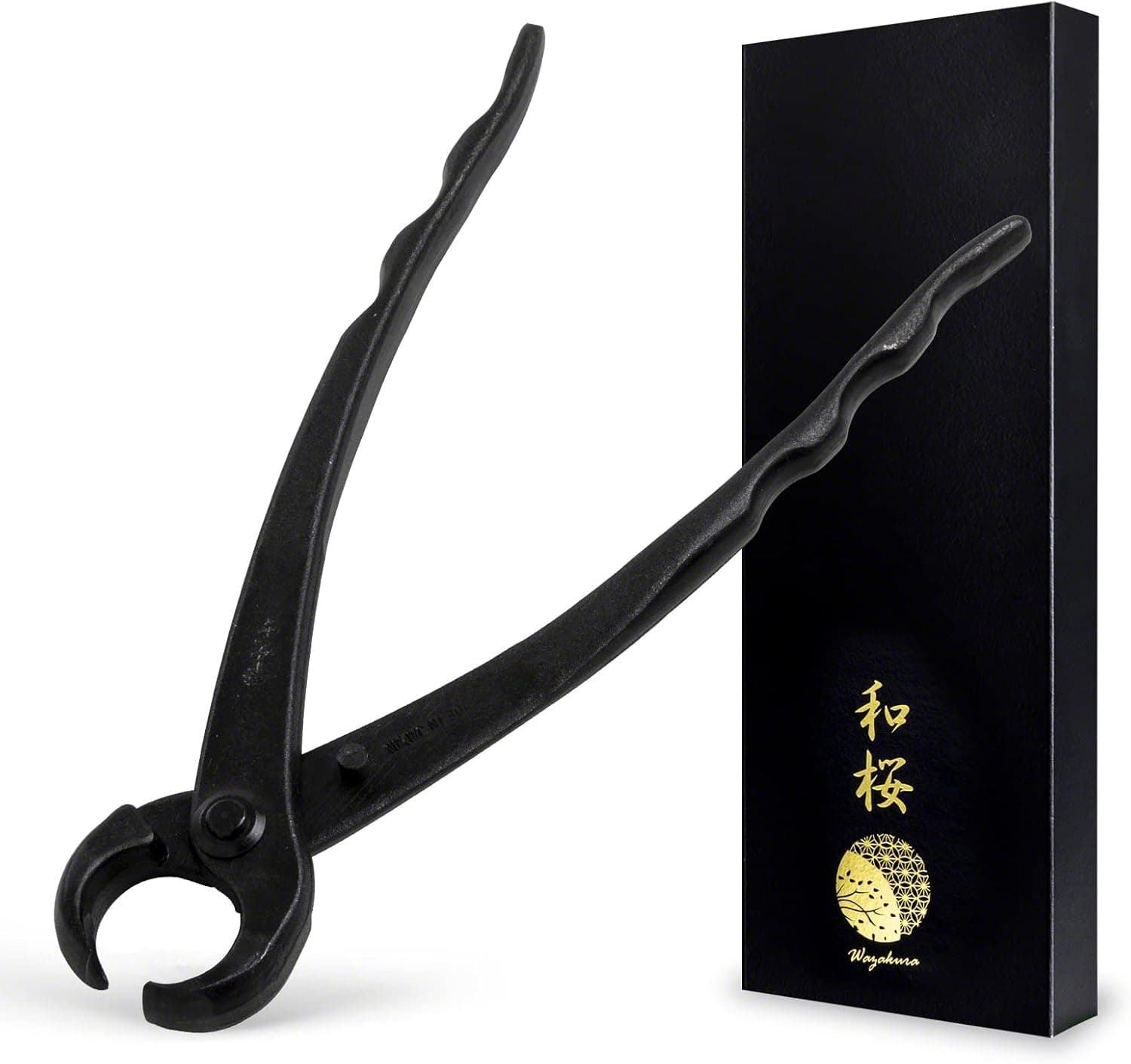
Wazakura's hand forged knob cutter made in Japan, 8-1/4 inch (210mm), with a round edge concave head in black.
Price range: $ (Budget)
What we liked
- + Hand forged Japanese steel gives crisp, controlled bites
- + 8-1/4 inch length suits most branch and knob work
- + Round edge head doubles as a deep concave cutter
Trade-offs
- - Black carbon steel needs cleaning and oiling after use
- - Round jaws can take more wood than needed in careless hands
Who this knob cutter is for
A knob cutter is a heavier duty relative of the concave cutter, built to remove trunk knobs, stubs from earlier prunings and thicker branches close to the trunk rather than the finer branch work a standard concave cutter handles. This Wazakura version is hand forged in Sanjo, Niigata by artisans using traditional methods, and at 8-1/4 inches with long handles it is built to give the leverage needed for cutting through heavier, woodier material than a typical pruning scissor or smaller cutter can manage. Growers working on trees with old pruning stubs, unwanted trunk knobs, or thick low branches that need removing close to the trunk line are the main audience, more so than someone doing routine leaf and twig trimming on a young or small tree.
What the round edge jaws do
The blade uses S55C carbon steel, hand forged and shaped by Sanjo artisans, then finished in black, with a jaw length of about 15mm and an overall size of roughly 8.26 by 1.96 by 0.51 inches, weighing around 8.1 ounces. Its round edge head creates a spherical, concave cut rather than a flatter one, which the maker states encourages faster healing and a flush finish once the wound calluses over. The long handles are specifically built to provide leverage when cutting through thicker woody material, and the rounded tip lets the tool make angled, precise cuts around knobs and stubs in tight spots near the trunk where a straight bladed tool would be harder to position.
Living with the tool and its jaw shape
Because the jaws are rounder and more aggressive than a standard concave cutter, they can remove more wood in a single bite than intended if used with a heavy hand, so growers newer to knob cutters should take smaller, test cuts before committing to a full pass on valuable material. As with Wazakura's other carbon steel tools, this one needs cleaning and a light coat of oil after use to prevent rust, since the black coating alone is not a substitute for drying the blade after cutting through sappy or wet wood. The brand's maintenance resources point to a sharpening oilstone and sap eraser as the basic upkeep kit for keeping the edge and pivot in working order.
How it compares with other cutters in the lineup
SPEEDWOX offers a similar length knob and concave combination tool in stainless steel rather than carbon steel, which trades some of the edge retention forged carbon steel offers for lower rust risk, a relevant difference for growers who do not want to oil a blade after every session. Masakuni's small spherical knob cutter targets a similar cutting style in a more compact size, suited to growers working on smaller material who still want the rounded, spherical cut this Wazakura tool produces on a larger scale. Choosing between them mostly comes down to steel type and size rather than a difference in what the rounded jaw shape itself achieves.
Verdict and who should consider a different tool
For growers dealing with trunk knobs, old pruning stubs or thick low branches that a standard concave cutter cannot comfortably handle, this Wazakura knob cutter matches its site score of 8.6 out of 10 with genuine leverage and a purpose built spherical cut. The trade offs are the upkeep any carbon steel tool demands and jaws aggressive enough to remove more material than intended if used carelessly, so a light touch matters more here than with a finer pruning scissor. Growers who mainly do routine branch and leaf pruning rather than knob or stub removal do not need this tool at all, and would be better served by a standard concave cutter or pruning scissor instead.
Frequently asked questions
What is a knob cutter used for?
It is used to remove trunk knobs, old pruning stubs and thicker branches close to the trunk, cutting a rounded, spherical wound that tends to heal flush.
How is this different from a concave branch cutter?
The round edge jaws and longer handles give more leverage for heavier material than a standard concave cutter, which is built more for routine branch removal.
Does the blade need oiling?
Yes, it is S55C carbon steel, so wiping it clean and applying oil after use is recommended to prevent rust, especially after cutting sappy or wet wood.
Can beginners use a knob cutter safely?
Yes with care, since the rounded jaws can remove more wood than intended in one bite, growers newer to the tool should take smaller test cuts rather than a full pass right away.
Prices change often, so check the current price and availability on Amazon.
Check price on AmazonBonsai Nest may earn a commission from the link above.