Wazakura Ashinaga Bonsai Pruning Scissors 8 inch (200mm) Made in Japan, Long Handle Bonsai Cutter in Carbon Steel, Japanese Gardening Tools Review (2026)
Updated September 14, 2026 · Research-based review
Our verdict
Wazakura's 8 inch Ashinaga scissors use long handles and S58C carbon steel to reach into root balls and dense growth for pruning, deadheading and root work. The long shank gives good control at repotting time, but carbon steel needs consistent oiling and grit in roots dulls the edge faster than clean stem cutting.
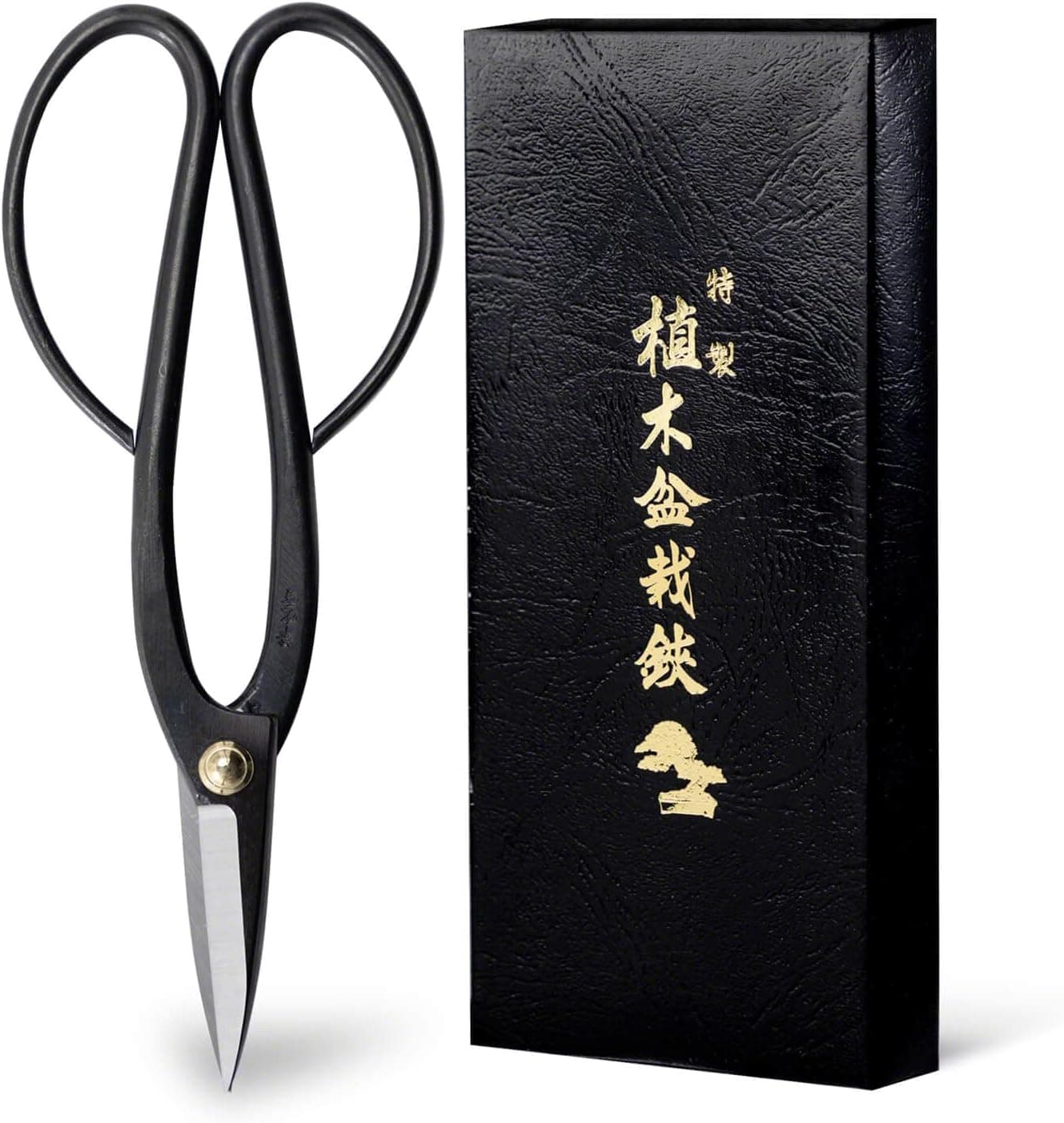
Wazakura's Ashinaga long handle bonsai pruning scissors, 8 inch (200mm), made in Japan from carbon steel.
Price range: $ (Budget)
What we liked
- + Long Ashinaga handles give leverage for cutting roots and twigs
- + Made in Japan carbon steel cuts cleanly through fibrous roots
- + 8 inch length reaches into root balls during repotting
Trade-offs
- - Carbon steel rusts if soil and water are left on the blades
- - Grit in roots can dull the edge, so sharpening is needed
Who these long handle scissors are for
Ashinaga, meaning long legs in Japanese, describes a scissor style with an extended shank between the handle and the blade, a shape built specifically to reach into crowded growth or deep into a root ball without the hand and fingers getting in the way. This Wazakura pair is 8 inches long, hand made in Sanjo, Niigata, and built from S58C carbon steel, positioning it as a multi purpose tool for repotting season as much as routine pruning. Growers who repot their own trees and need a scissor that can trim roots as well as twigs and buds in one tool are the clearest audience, more so than someone who only ever does light leaf trimming on the top of a tree.
What the slim shank and blade are built for
The scissors measure roughly 7.87 by 3.14 by 0.59 inches with a 50mm blade length and weigh about 5.4 ounces, built from S58C black carbon steel by artisans in a region of Japan with metalworking traditions dating back centuries. The slim body and long shank separate the hand from the cutting edge, which the maker states makes the tool versatile enough for pruning, repotting, deadheading and root cutting in one design, with a rated cutting capacity up to about 1/4 inch in diameter. That combination of reach and a single cutting capacity rating makes these more of a generalist tool than a scissor built for one specific job like fine leaf trimming or thick root removal alone.
Living with the scissors through repotting season
Cutting through roots exposes the blade to more grit and soil than trimming clean stems does, which dulls a carbon steel edge faster and makes more frequent sharpening a normal part of owning a root capable scissor like this one. As with Wazakura's other carbon steel tools, the maker is direct that this is a forged high carbon tool that will rust if not cleaned and coated after each use, so rinsing soil off promptly, drying the blade and applying a light oil are necessary steps rather than optional extras. Wazakura sells sharpening oilstones and sap erasers as companion maintenance tools for keeping the edge in working order between repotting sessions.
How it compares with other Ashinaga and root scissors
Wazakura also sells a Yasugi stainless steel version of the Ashinaga scissors at a similar 8 to 8.2 inch length, which trades some of this carbon steel pair's edge sharpness for meaningfully better rust resistance, a relevant option for growers who repot often and do not want to oil a blade after every session. Master Grade's 215mm root cutter is built more specifically for root work in alloy steel, which may suit growers who want a dedicated root tool separate from a general pruning and deadheading scissor like this Ashinaga pair. The right choice depends on whether a grower wants one long handle scissor that does several jobs or separate tools optimized for each task.
Verdict and who might prefer the stainless version
For growers who repot their own bonsai and want one long handle scissor that reaches into root balls and dense growth for pruning, deadheading and root cutting, this 8 inch Wazakura Ashinaga matches its site score of 8.6 out of 10 with genuine versatility from a single tool. The trade off is that cutting through gritty roots dulls the carbon steel edge faster than clean stem work, and the blade needs prompt cleaning and oiling to avoid rust after repotting sessions. Growers who repot frequently and would rather not maintain a carbon steel edge that often should consider Wazakura's stainless Yasugi steel Ashinaga scissors instead, accepting a small trade in outright sharpness for lower maintenance.
Frequently asked questions
What does Ashinaga mean and why does the handle matter?
Ashinaga means long legs in Japanese, referring to the extended shank between handle and blade that lets the scissors reach into root balls and dense growth without the hand getting in the way.
Can these scissors cut roots as well as branches?
Yes, Wazakura markets them as multipurpose for pruning, repotting, deadheading and root cutting, with a rated capacity up to about 1/4 inch in diameter.
Do these scissors rust easily?
They are forged high carbon steel, which the maker states will rust if not cleaned and coated with oil after each use, especially after cutting through wet soil and roots.
Is there a lower maintenance version available?
Wazakura also sells a Yasugi stainless steel Ashinaga scissors in a similar length, which resists rust better than this carbon steel version at some cost to edge sharpness.
Prices change often, so check the current price and availability on Amazon.
Check price on AmazonBonsai Nest may earn a commission from the link above.