Bonsai Jack Red/Maroon 1/4 inch Horticultural Lava Rock Soil Additive for Cacti, Succulents & Plants (2 Gallons) Review (2026)
Updated September 14, 2026 · Research-based review
Our verdict
A 2 gallon bag of screened 1/4 inch red lava rock that suits larger bonsai, cacti and succulent collections needing fast drainage. The bigger bag lowers cost per quart, though the maroon dust can stain light colored pots on first watering.
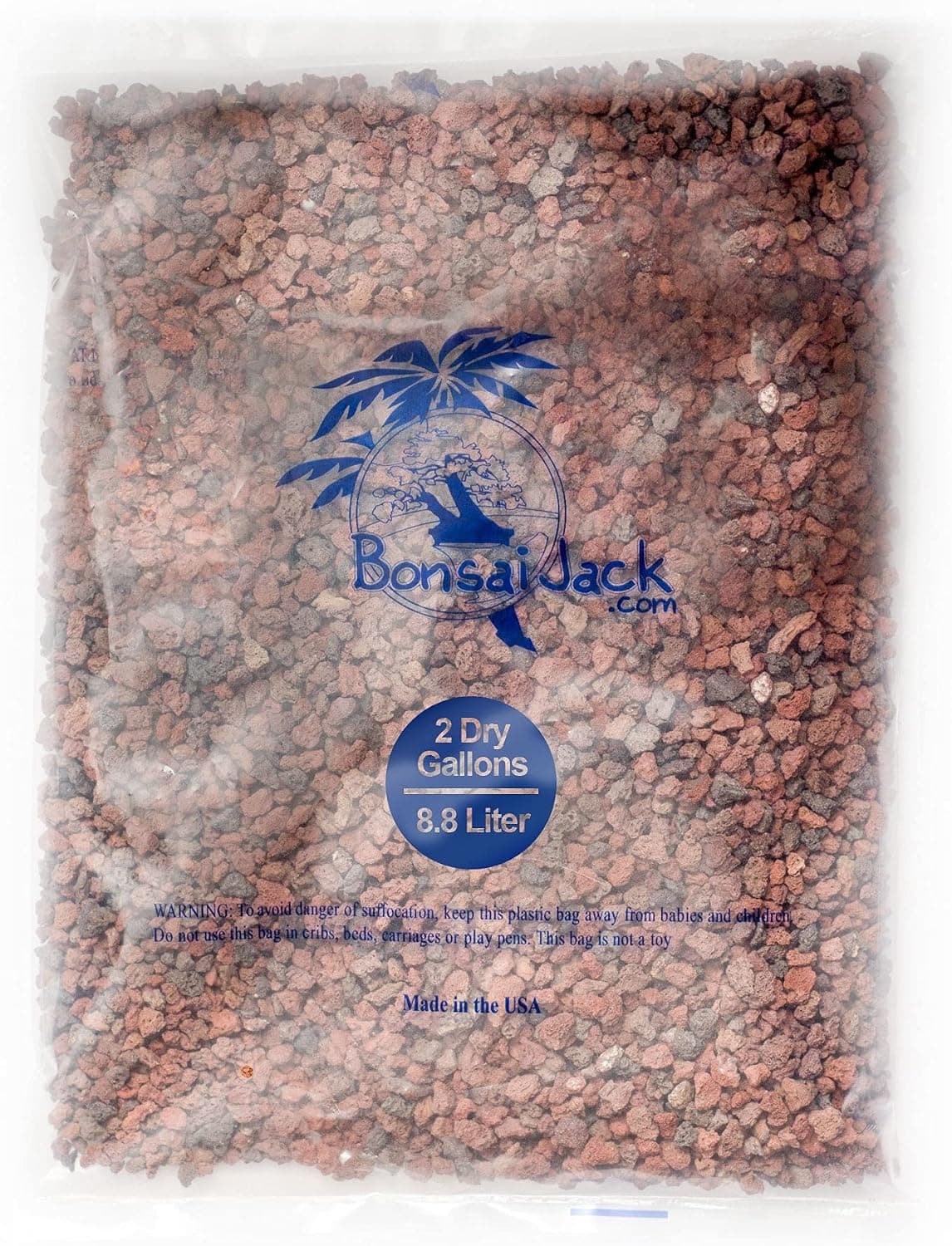
Bonsai Jack's red/maroon 1/4 inch horticultural lava rock in a 2 gallons bag for cacti, succulents and plants.
Price range: $ (Budget)
What we liked
- + 2 gallons of screened 1/4 inch lava suits larger collections
- + Maroon tone gives a warm, natural look as top dressing
- + Bigger bag lowers the cost per quart versus small packs
Trade-offs
- - Heavy bulk bag is awkward to store and handle
- - Red dust may stain light pots when first watered
Who this bag of lava rock is for
This is a bulk supply pick for growers who keep more than one or two pots and want fast draining aggregate on hand without reordering every season. Bonsai Jack screens the rock between roughly 1/8 and 3/8 inch so the finished material averages a 1/4 inch particle, which is the size most bonsai and succulent mixes call for. Anyone building their own substrate from akadama, pumice and lava will find the 2 gallon bag, equal to 8 dry quarts, a practical middle ground between small starter bags and the multi gallon sizes aimed at nurseries. Casual growers with a single small pot may not need this much volume at once, and could be better served by a 1 or 2 quart bag instead. For collectors expanding a bench of trees or repotting several cacti in one weekend, the larger volume avoids running short mid project.
What the maroon lava rock actually is
The material is sold as red or maroon colored, 1/4 inch horticultural lava rock, described by the seller as 100 percent pure volcanic rock with no added dyes or chemicals. Its natural reddish tone comes from the iron content in the parent rock rather than a coating, which is why the color runs through each piece rather than sitting on the surface. Lava rock of this kind is porous and lightweight compared with pumice or grit of similar size, and growers use it either mixed into a substrate for aeration and drainage or as a top dressing layer that also helps hold smaller particles in place during watering. The screening process removes fines and oversized pieces so the bag should be reasonably consistent, though as with any natural mined material some variation between batches is normal.
Living with the bag day to day
Because this is a bulk bag rather than a small pouch, storage is the main practical consideration. Once opened, the lava rock keeps indefinitely if kept dry, so a lidded bin or the resealed original bag both work for extending use across seasons. When first watering pots dressed with this rock, expect some fine red dust to rinse off the surface, which can temporarily discolor light colored ceramic or plastic pots; a quick pre rinse of a handful of rock in a colander before top dressing reduces this. Handling the full 2 gallon bag is heavier and bulkier than smaller packs, so growers without much storage space or who only repot occasionally may find a portion of the bag goes unused for a long stretch. The rock itself needs no special care beyond staying dry in storage.
How it compares with other lava rock options
Within lava rock aggregates, the main choice is red versus black and how tightly the material is sifted. Tinyroots sells a black lava rock sifted to a similar 1/8 to 1/4 inch range in a smaller 2.25 quart bag, which suits growers who want a darker top dressing and do not need bulk volume. The Bonsai Supply offers a comparable black 1/4 inch lava rock in a 2 quart bag at a similar price point per quart, so the choice between it and this maroon option often comes down to color preference for the finished pot rather than performance, since both are marketed as similarly screened 1/4 inch material. Bonsai Jack itself also sells a black version in the same particle size, so growers who prefer this brand's screening consistency but want a darker top dressing have that option instead of switching brands entirely.
Verdict and who should look elsewhere
This bag suits growers with several pots or a substrate mixing habit who want a reliable, screened 1/4 inch red lava rock without buying a small bag every few months, backed by the site's own score of 8.6 out of 10 for fit and value. The main trade off is bulk handling and the initial rinse needed to control dust, neither of which is a real problem for anyone with basic storage space. Someone repotting a single small tree or succulent once a year would likely get more practical value from a 1 or 2 quart bag of the same product, and growers who specifically want a black finish for top dressing should look at Bonsai Jack's black lava rock or a comparable black option instead of this maroon one.
Frequently asked questions
What particle size is Bonsai Jack's red lava rock screened to?
It is screened to roughly 1/8 to 3/8 inch pieces so the finished material averages about 1/4 inch, which fits most bonsai and succulent soil recipes.
Does the red lava rock contain any dyes?
The seller describes it as 100 percent pure volcanic rock with no added dyes or chemicals, so the maroon color comes from the rock's natural iron content.
Will the red lava rock stain my pots?
Some fine red dust can rinse off when a pot dressed with it is first watered, which may briefly discolor light colored pots; rinsing the rock before use reduces this.
How much lava rock is in the 2 gallon bag?
The 2 gallon size is equal to 8 dry quarts of screened lava rock, according to the seller's own listing.
Prices change often, so check the current price and availability on Amazon.
Check price on AmazonBonsai Nest may earn a commission from the link above.