Kikuwa Bonsai Cut Paste for Deciduous - 160 Grams - Made in Japan, Putty Based Wound Sealant Review (2026)
Updated September 14, 2026 · Research-based review
Our verdict
This putty style cut paste suits growers doing structural pruning on deciduous bonsai, sealing large branch or trunk cuts so they callus cleanly instead of dying back. The soft, moldable putty texture is the main strength, and the trade-off is that it is formulated for deciduous trees, not pines or conifers.
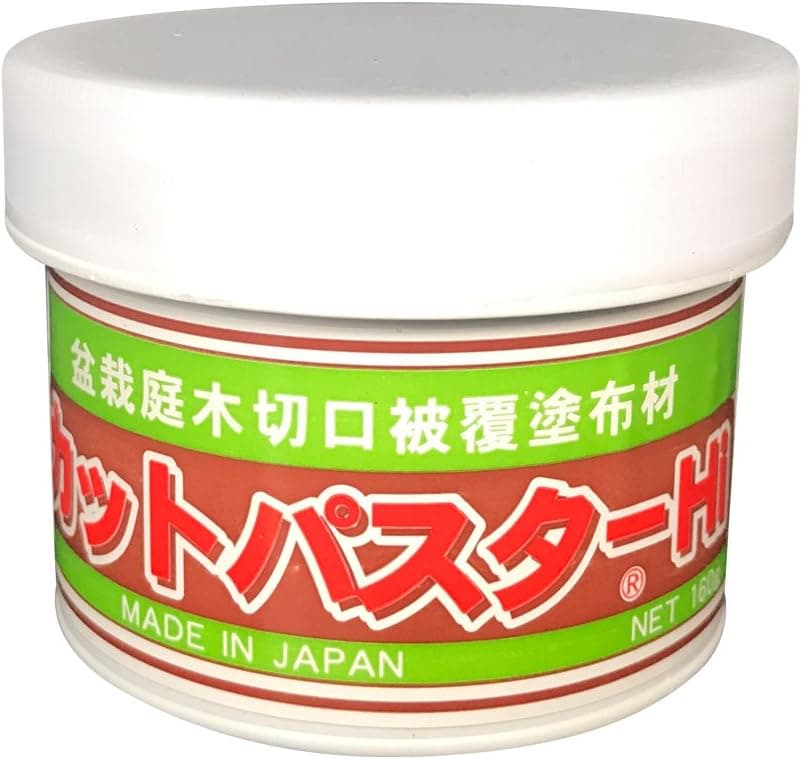
Kikuwa's 160 grams putty based bonsai cut paste for deciduous trees, a Japanese wound sealant.
Price range: $ (Budget)
What we liked
- + Putty based paste stays soft and molds into large cuts
- + Formulated for deciduous trees that callus quickly
- + 160 grams tube lasts through many pruning sessions
Trade-offs
- - Deciduous formula is not intended for pines and conifers
- - Putty can be messy to remove from hands and tools
Who reaches for a deciduous cut paste like this
Removing a large branch or reducing a trunk on a deciduous bonsai, maple, elm, or hornbeam among others, leaves a wound that needs help forming clean scar tissue rather than drying out or rotting. Kikuwa's cut paste is made specifically for that job on deciduous species, which callus differently than conifers and generally heal faster once the cut is sealed. It suits anyone doing significant structural work, big chops, large branch removal, or trunk shaping, where the wound is too big to trust to natural healing alone. Growers only doing light pinching and small twig trimming on deciduous material will not need it as often, since minor cuts on healthy deciduous trees often seal well on their own without paste.
What the putty is and how it is meant to work
This is a putty based, clay like wound sealant rather than a liquid or spray on paint, sold in a 160 gram jar and made in Japan. Being putty based means it stays workable rather than hardening into a brittle shell, and it is designed to be kneaded into a soft ball before use, then flattened between the fingers into a thin patch that can be pressed directly over the wound. The formula is built to seal the cut, reduce sap bleeding right after a fresh cut, guide how the resulting scar tissue forms and looks as it heals, and protect the exposed wood from disease and infection while new bark closes over it. It is intended for deciduous trees specifically, where the callusing process differs from conifers.
Applying it and keeping the jar usable
To apply, a small amount is worked between the fingers until soft and pliable, then pressed and smoothed over the fresh cut so it forms a complete seal with no gaps at the edges where water or pests could get in. Because it stays soft rather than curing hard, it can be reshaped or topped up if it shifts before the wound has properly callused. The putty texture means it is genuinely sticky while working with it, so keeping a damp cloth nearby for hands and tools makes cleanup easier. Storing the jar with the lid pressed on firmly between uses keeps the remaining paste from drying out, since a putty that dries in the jar becomes harder to knead back into a workable state.
Trade-offs and choosing the right cut paste
The clearest trade-off is that this formula is built for deciduous trees, so it should not be assumed to work the same way on pines, junipers, or other conifers, which callus differently and generally need Kikuwa's separate evergreen formulated paste instead. Compared with liquid pruning sealers like Tanglefoot, which paint on and dry to a harder film, this putty style paste stays soft and is easier to reshape around an irregular cut, though it is messier to apply with bare hands. Against lower cost generic wound dressings sold in multi packs, Kikuwa's Japan made paste carries a stronger reputation specifically within the bonsai community for guiding clean scar formation on structural cuts.
Verdict and who should buy the conifer version instead
For anyone doing real structural pruning on deciduous bonsai, big chops, trunk reduction, or large branch removal, this putty paste seals the wound cleanly and helps guide healthy scar tissue formation as the tree recovers. The 160 gram jar covers many pruning sessions across a season of styling work. Growers working primarily on pines, junipers, or other conifers should buy Kikuwa's evergreen formulated cut paste instead, since this one is not built for how conifers callus. Anyone who prefers a less hands on application than kneading putty might consider a liquid pruning sealer, accepting a harder, less moldable seal in exchange for easier application.
Frequently asked questions
Can Kikuwa Cut Paste for Deciduous be used on pines or conifers?
No, this formula is made for deciduous trees; conifers callus differently and generally need Kikuwa's separate evergreen or conifer formulated cut paste instead.
How is putty based cut paste applied to a pruning wound?
A small amount is kneaded between the fingers until soft, then flattened and pressed over the fresh cut so it forms a complete seal with no gaps at the edges.
Does this cut paste harden after it is applied?
It stays soft and moldable rather than curing into a hard shell, which lets it be reshaped or topped up if it shifts before the wound has fully callused.
How big is the jar and how many cuts will it cover?
It comes in a 160 gram jar, which typically covers many pruning sessions across a season for a grower doing regular structural work on deciduous trees.
Prices change often, so check the current price and availability on Amazon.
Check price on AmazonBonsai Nest may earn a commission from the link above.